



- Ford has teamed up with six Australian universities to develop autonomous solutions for challenging terrain and situations.
- The program aims to develop autonomous vehicle technology that helps remove risk to human life in hazardous situations.
- As well as emergency services, the technology would have applications across the mining, agriculture, and forestry industries.
Ford Australia is looking to take its rugged Ranger Super Duty to the next level with an ambitious collaboration between Ford and Australian universities that could even make the region the global centre for vehicle automation for the harshest, most dangerous and remote environments.
While vehicle automation globally is generally focused on urban areas for uses like taxis and 'last mile' deliveries, other environments - like extreme terrain, fires or floods, or remote roads - need more advanced technology to navigate challenges like a lack of lane markings, gradients and large wildlife.
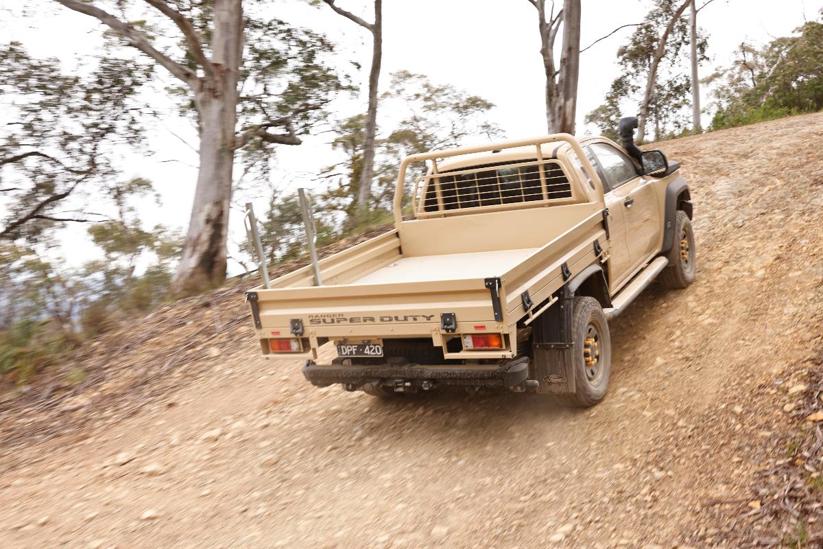
This is where Australia comes in. As we all know, Australia regularly catches on fire, and during or just after a bushfire, rescuers’ and first responders' lives potentially hang in the balance as they drive into potentially deadly environments to find survivors or put out flames.
Now a major all-Aussie collaboration between six Australian universities, Ford Australia and other industry players, has formed to take on this challenge, in what could establish Australia as the epicentre for extreme-case vehicle automation.
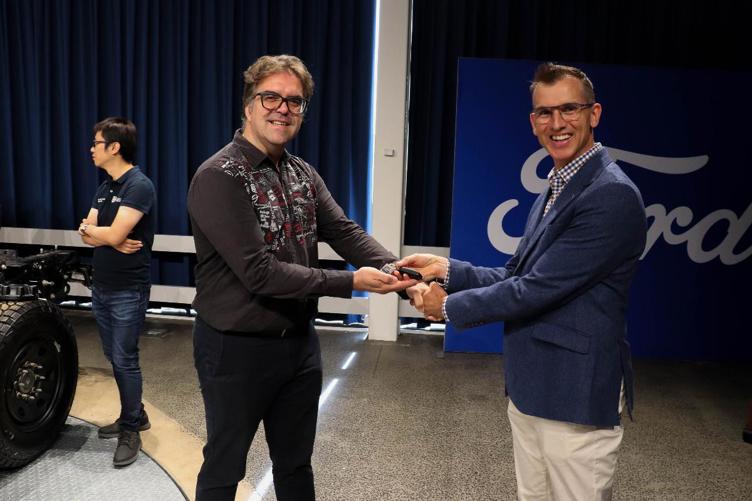
According to Professor Sebastian Glaser, Centre Director of the Australian Research Council’s (ARC) Training Centre for Automated Vehicles for Rural and Remote Regions (AVR3), headquartered at the Queensland University of Technology (QUT), Australia has unique uses for autonomous vehicles.
"What we want to do is develop autonomous vehicle technology that helps remove risk to human life in situations like bushfires, makes roads safer by automating monotonous driving tasks like those on farms, and frees up humans so they can do other work, like freeing up paramedics to deliver patient care rather than driving," said Glaser.
"The opportunities are endless - there are so many uses that we can test for in Australia and that could benefit people outside urban areas."
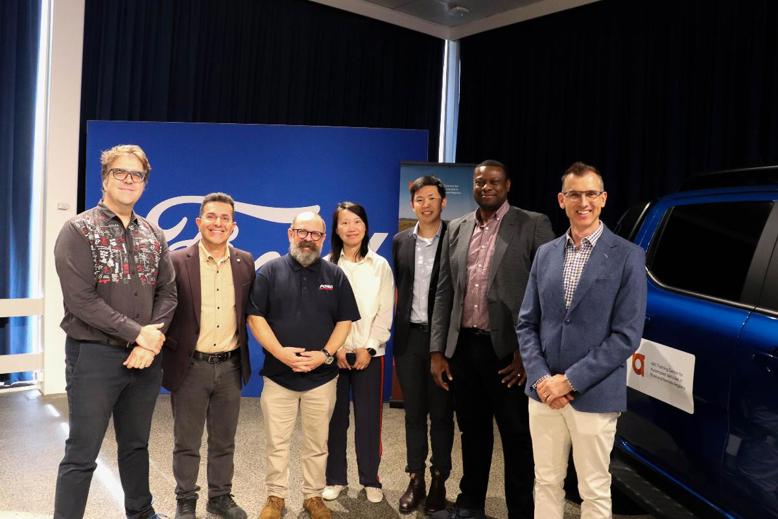
AVR3 is an AU$11m program between researchers from QUT, Swinburne University of Technology, Deakin University, Sydney University, University of Technology Sydney, and University of Western Australia, as well as industry partners like Ford, that has now joined the collaboration.
"When our Aussie team was working on Ranger and Ranger Super Duty, we spoke to customers across heavy industry - mining, agriculture, forestry, emergency services - to really understand their day-to-day work and the exposure they have to harsh conditions," said Jeremy Welch, Special Projects Engineer at Ford Australia.
"It was clear to us that these customers needed extremely heavy-duty vehicles, but we also saw that they could benefit from automation for risk management, productivity, and cost.
"We knew that developing a smart truck would make it easier to integrate autonomous technology for the next phase of Ranger’s evolution, which is automation."
While the Ford Ranger is already automated by some mining companies, AVR3 aims to expand on these uses, in particular, how automation can be safely used on public roads
"This is the next evolution for our vehicles," said Matt Sullivan, Ford's International Market Group's engineering director.
"To be able to go from autonomy with BlueCruise (Ford's advanced Level 2 system) in an urban environment out into a rural community and take us to the next level where there are undefined roads, unsealed activities and multi-terrain environments."


