



- New Vision Pulse tech uses ultra-wideband (UWB) signals to precisely detect real-time hazards.
- UWB modules are used in most new cars, smartphones, fitness trackers and smart tags.
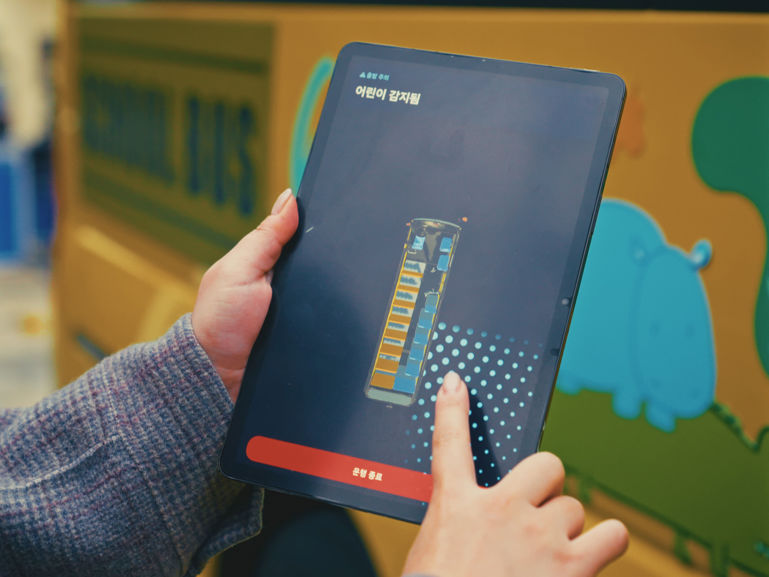
- The system has been trialled in school buses to allow drivers to know the exact location of young children around the bus.
Hyundai Motor Company and Kia Corporation have revealed new vehicle safety technology called Vision Pulse that uses ultra-wideband (UWB) signals to detect the real-time position of obstacles.
The technology uses UWB modules embedded in the vehicle to emit a signal and then measures the travel time between it and any other UWB modules nearby. UWB modules are used in many new vehicles, as well as smartphones, wearable devices like fitness trackers and smartwatches, as well as smart tag trackers like Apple AirTags.
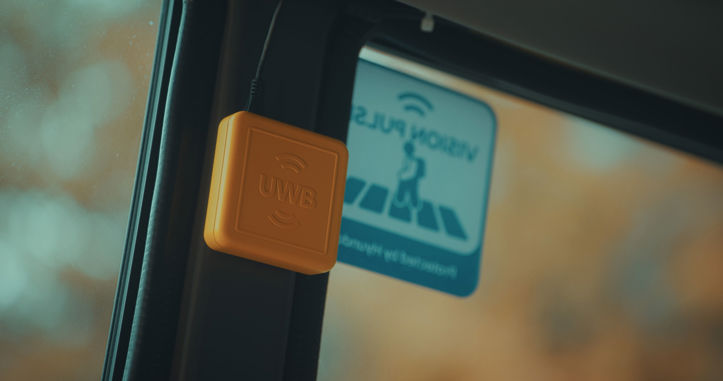
The technology can identify vehicles, bicycles, and pedestrians using the UWB modules, and then calculate their exact position relative to the car.
Current blind spot detection technologies rely on fixed devices or relatively slow communication networks, but Vision Pulse eliminates these limitations by leveraging the UWB modules for precise and rapid communication, ensuring high accuracy, while also offering cost efficiency by reducing the reliance on more expensive sensors such as LiDAR and radar.
The main advantage of this system is its integration with existing hardware, as vehicles already equipped with Hyundai and Kia’s Digital Key 2 do not require additional modules to use the technology, while the majority of modern smartphones and wearable tech already use them as well.
UWB operates on GHz bandwidth, so there is minimal interference from other signals, with "exceptional diffraction and penetration capabilities", and the system can detect objects in complex urban intersections with an impressive 10-centimetre margin of error across a 100-metre radius, with more than 99 percent detection accuracy under adverse weather or nighttime conditions.
While Hyundai and Kia are only assessing the technology for use in cars, it has been carrying out pilot programs in industrial settings such as the Kia PBV Conversion Centre in Hwaseong and Busan Port where the technology is intended to prevent collisions between workers and machinery.
Hyundai Motor and Kia have also showcased Vision Pulse in a newly-released video titled "Sight Beyond Seeing: The Technology That Sees the Unseen" that highlights the deployment of the technology on school buses, ensuring the safety of kindergarten children by using protective keyrings with UWB modules that can be easily attached to backpacks and used to track the precise location of children on and around the buses.
While the technology has been showcased in practical applications like this, it remains a pre-development technology, with Hyundai and Kia currently considering the potential for applying Vision Pulse to mass-production vehicles in the future.