



- A study found touchscreen use increased lane deviation by over 40% during routine in-car tasks.
- Touchscreens reduced pointing accuracy and speed by more than 58% compared with non-driving conditions.
- Researchers measured eye movement, steering consistency and physiological stress.
A new study has put hard numbers behind a feeling most drivers already know too well: fiddling with a touchscreen while driving is a bad idea, and not just a mildly annoying one.
Researchers from the University of Washington and Toyota Research Institute have found that interacting with in-car touchscreens significantly degrades both driving performance and task accuracy, even when the tasks are the sort manufacturers expect drivers to do on the move.
Buttons died for this?
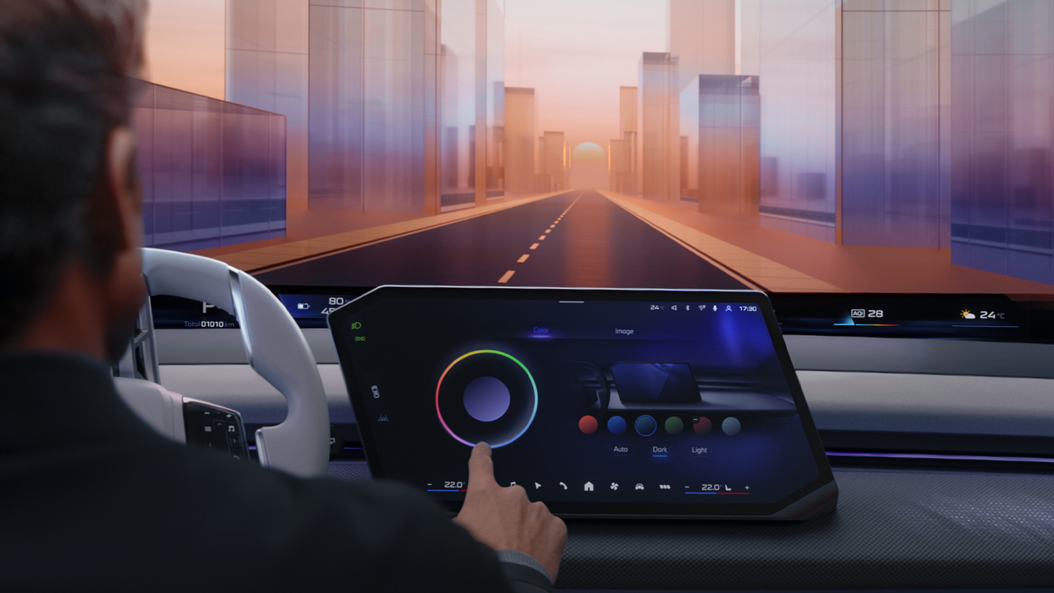
The research, published in September in the Proceedings of the 38th Annual ACM Symposium on User Interface Software and Technology, placed 16 participants in a high-fidelity driving simulator. While navigating a simulated urban environment, drivers were asked to complete routine infotainment tasks: adjusting audio, dealing with messages and browsing media using a central touchscreen.
To see what was really going on, researchers tracked eye and hand movement, steering behaviour, pupil dilation and skin conductivity - all signals that reveal cognitive load and stress.
The results weren’t flattering for screen-first interiors. When touchscreen interaction was introduced, lane deviation increased by more than 40%. At the same time, pointing accuracy and interaction speed on the screen dropped by over 58% compared with non-driving conditions.
In short, drivers became worse at driving and worse at using the screen, all at once.
It’s not texting
Crucially, this wasn’t about texting or social media doom-scrolling. The study focused on everyday interactions that have replaced physical knobs and buttons in many modern vehicles. Tasks that once relied on muscle memory now demand eyes, hands and mental bandwidth simultaneously.
As the researchers note, touchscreen menus force drivers into divided attention, even when the action feels trivial. The more complex the task, the sharper the decline in performance.
That finding challenges a design trend that’s been gathering momentum for two decades, with large tablet-style displays marketed as a premium feature, and in some cases replacing almost all physical controls.
Screens are staying. So now what?
Despite the results, the study’s authors don’t expect a wholesale return to button-heavy dashboards. Touchscreens are cheaper, flexible and easy for manufacturers to update, which makes them hard to abandon.
Instead, the research points toward mitigation. Suggested fixes include reducing menu depth for common tasks, keeping frequently used controls permanently visible, increasing button size and contrast, and using systems that detect high driver cognitive load and temporarily limit distractions.
The takeaway is blunt but useful: interfaces should be designed around how people actually behave behind the wheel, not how designers wish they would.
Whether carmakers listen (or keep chasing ever larger screens) may shape the next phase of in-car safety just as much as airbags or driver aids ever did.