



- New system will provide 60% of power needs.
- In summer, Toyota will feed excess power back to the grid.
- Payback will come in just over 5 years, says the company.
A new 700-kilowatt solar power system on top of Toyota New Zealand's 35,000 square-metre warehouse and National Customer Centre in Palmerston North is expected to generate the equivalent of 60% of the facility's power.

TNZ claims the system is one of the largest in the country. At peak times, it will even inject renewable energy back into grid to power the equivalent of 35 domestic homes.
The company says the Singaporean-manufactured solar panels were selected partly because they have one of the lowest points of degradation of such products; they are expected to still be producing at 90% or more of total capacity (698.88kW) after 30 years of operation.
Toyota NZ chief risk and value chain officer Mark Young says sustainability is a core feature of the purpose-built warehouse and National Distribution Centre (NDC), which was enlarged to the size of five rugby fields in 2018: “We’re incredibly proud of the solar array going atop the building and the benchmark this will set for future Toyota developments in NZ. Already 11 of 63 Toyota Stores have installed solar power on their roofs."
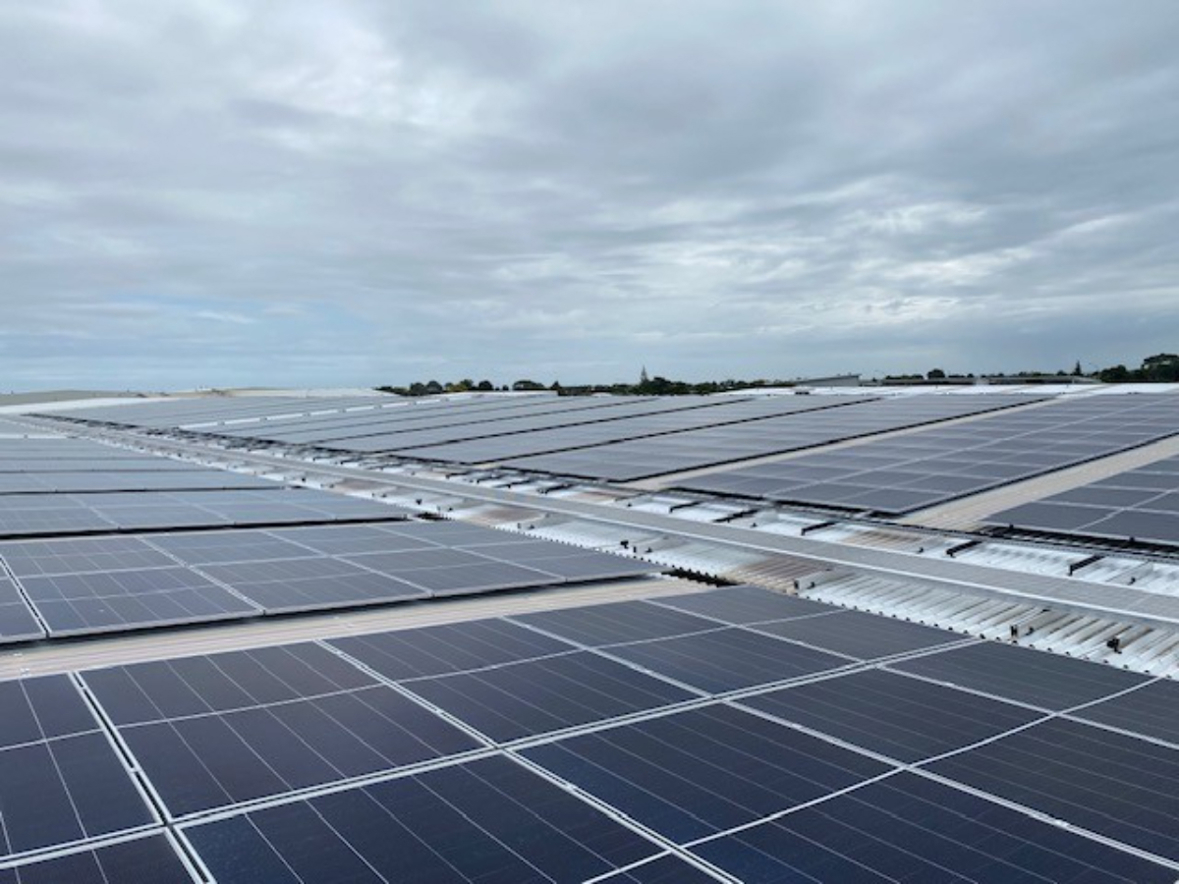
Solar power production capacity from the NDC is expected to avoid approximately 93 tonnes of CO2 emissions per year – equivalent to a Toyota RAV4 Hybrid driving the length of NZ 481 times, says the company.
Forecast solar performance is 921 MWh per annum. Based on historical energy consumption data of the building, the system has an expected payback period of approximately five and a quarter years.
The scale of the installation means Toyota will be generating more electricity from its roof during peak sunshine hours than it needs.
On a typical summer’s day, the panels will generate more electricity than the building consumes from 6am to 6pm. Excess power of around 350MWh will be injected into the local lines network, providing more renewable energy for up to 35 Palmerston North households over the course of a year. In winter, the peak period reduces to 9am to 4pm.
Mark Young says installing solar panels in a large scale also makes strong commercial sense: “While we have made a substantial upfront capital investment, the panels will reduce the average monthly electricity bill by around 50%. We expect to have a total return on investment of more than 600% over the life of the panels."