



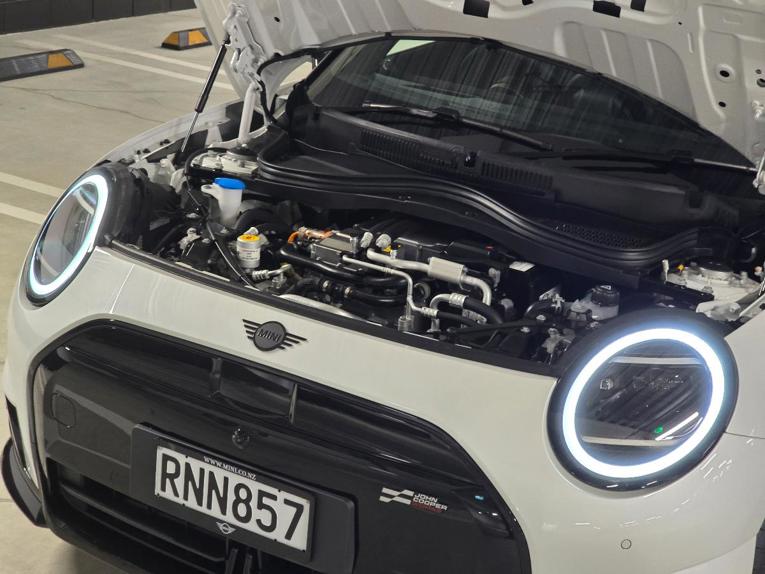
While, on the outside, the fully electric version of the latest Mini JCW looks exactly the same as the ICE version (as is the case with all three-door BEV/ICE Minis), underneath they are, in fact, totally unrelated cars.
This is because the petrol-powered Mini hatch is built in the UK on the BMW UKL platform that also sits under the likes of the previous generations of Mini hatch, Countryman and Clubman, as well as the BMW X1, 2 Series and FWD 1 Series generations.
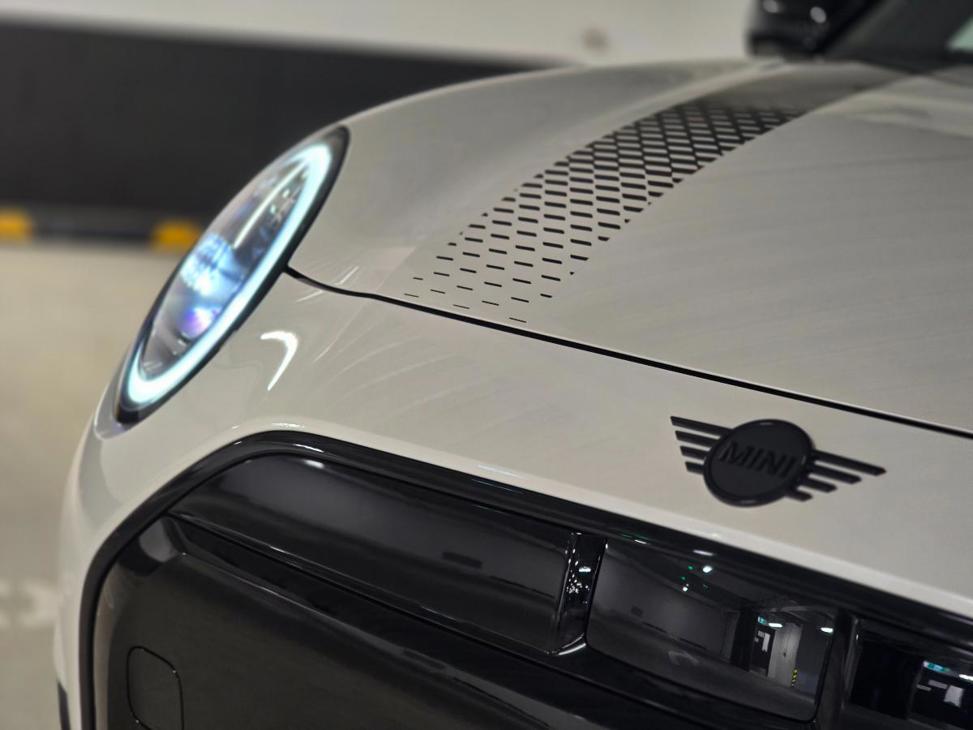
The electric version, however, comes out of China where it is built alongside the electric Mini Aceman (that it shares its all-electric underpinnings with) in a joint venture between BMW and GWM.
While the two share almost identical styling, they don’t actually share a single panel and are just totally different cars that happen to look the same. But take a closer look and you can see differences - mainly the fact that the BEV has flush door handles, while the ICE models have more traditional ones, and the BEV has shorter, more sculpted doors compared to the ICE model’s larger, cleaner shape. It’s a once you see it, you won’t be able to un-see it kind of thing…
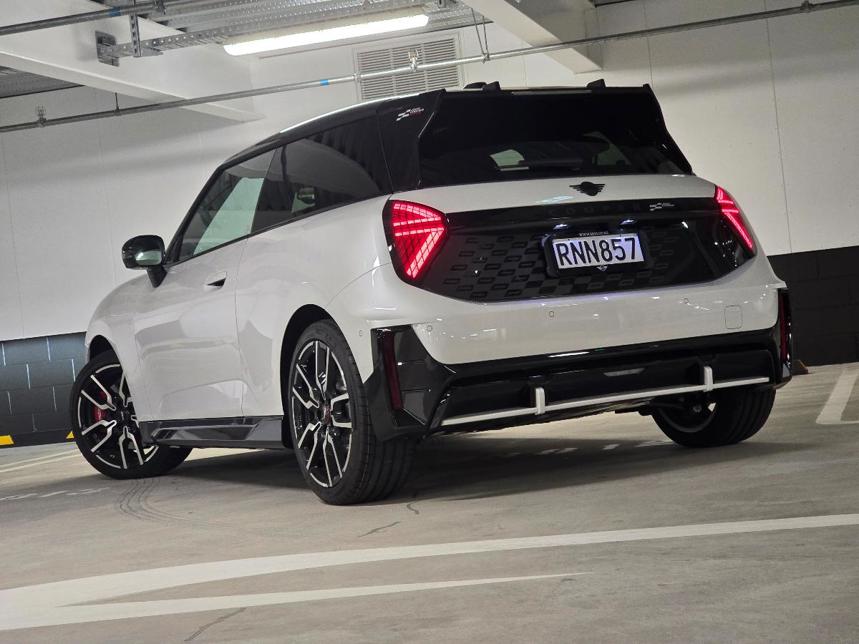
The electric version of the JCW model essentially shares everything with the standard Cooper Electric three-door, including its powertrain, but with a tad less range (371km versus 402km) and a fractionally quicker 0 to 100km/h time (5.9 seconds versus 6.7).
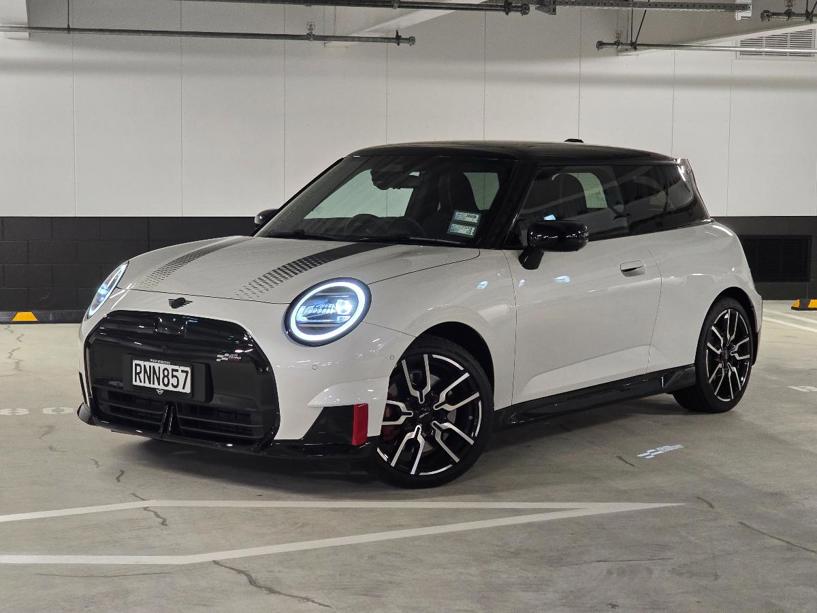
It’s a handsome, assertive little hot hatch that sticks closely to Mini’s evolved design language. If you already love the Mini look, this will hit the right notes.
This is because rather than being a considerably hotter version of the standard car, the JCW is more of a ‘tweaked’ model, with the extra 30kW of power and 20Nm of torque Mini quotes only being available when you use the sneaky little boost paddle on the left side of the steering wheel.
On the outside: what are the Mini John Cooper Works Electric’s main design features?
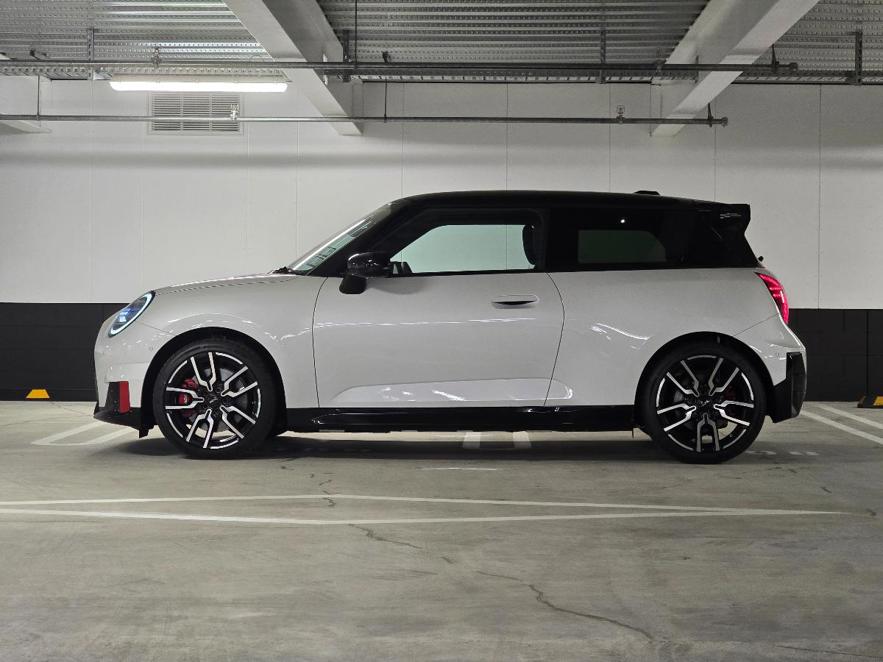
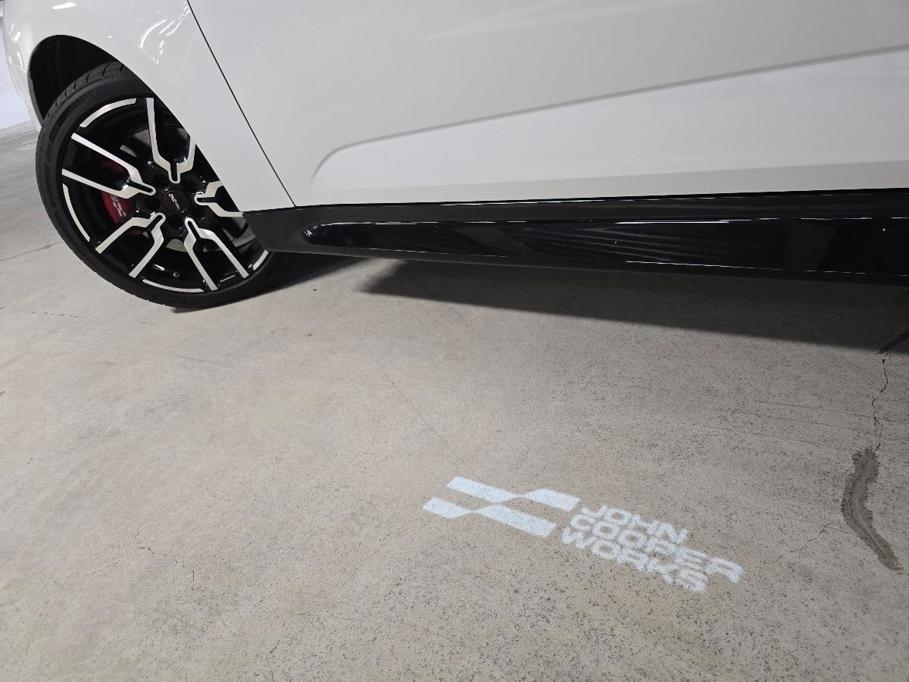
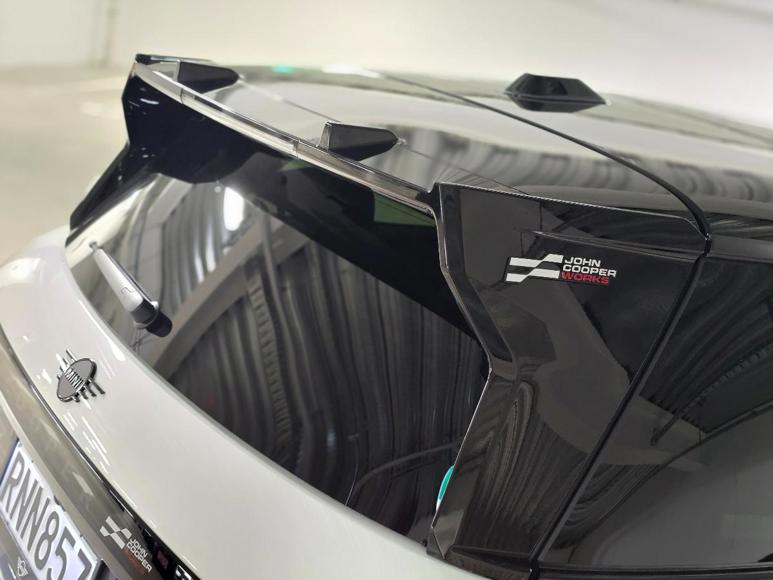
On the outside, the most conspicuous JCW cue is a larger spoiler mounted on the rear hatch that is somewhat comical at first glance, but suits the car’s playful aggression that is revealed when you drive it.
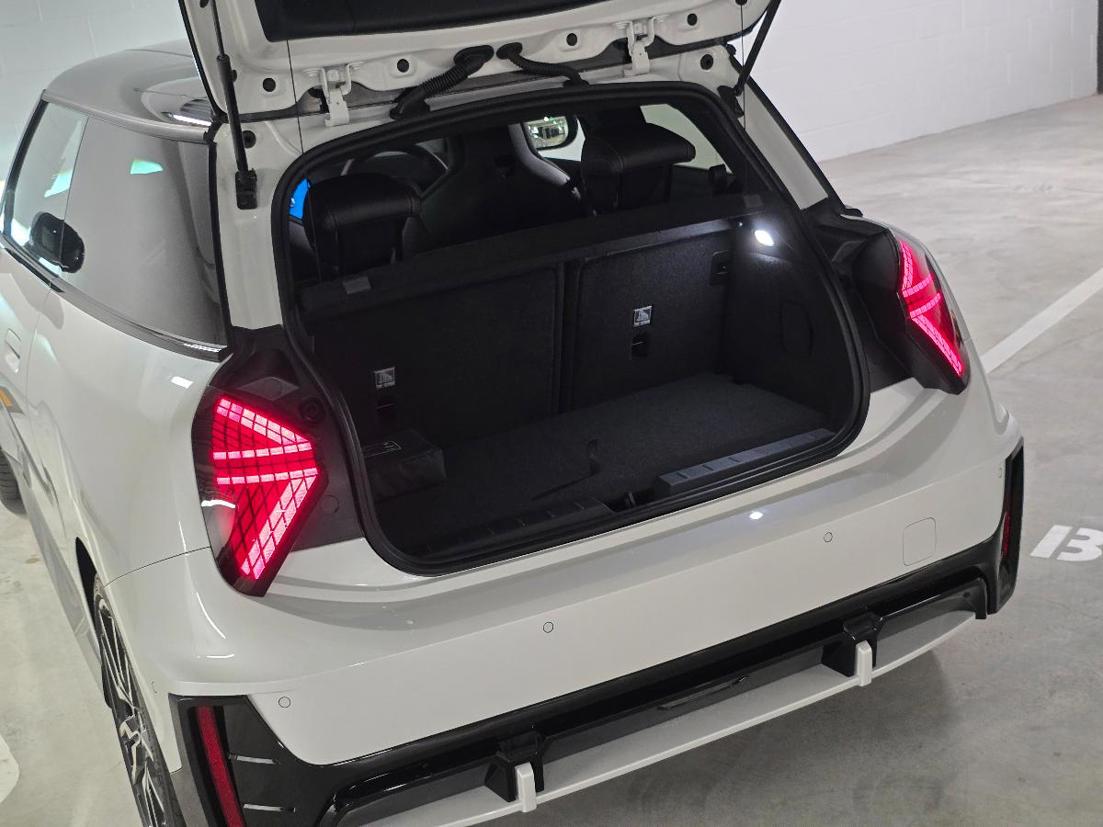
Subtle red and black gloss accents are scattered around the exterior, paired with a patterned gloss black section across the rear hatch that ties the look together. The overall aesthetic is very much modern BMW-era Mini: a few light throwback touches, such as the familiar bonnet view and stance, but little that feels actually overtly retro.
It’s a handsome, assertive little hot hatch that sticks closely to Mini’s evolved design language. If you already love the Mini look, this will hit the right notes - even if we could wish for a bolder design departure by now.
OVERVIEW
On the inside: what’s the Mini John Cooper Works Electric cabin like?
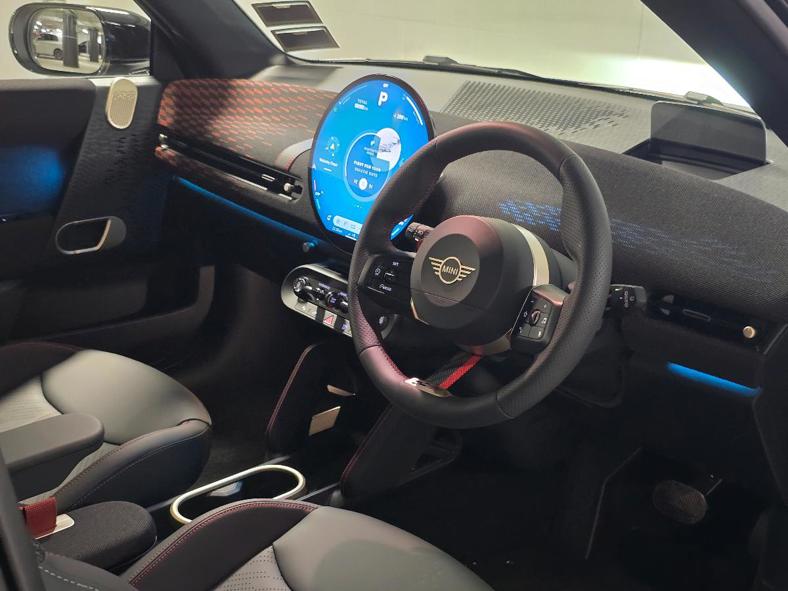
The JCW’s cabin blends high-quality materials with clever design, and while there are hard plastics present, they’re well integrated and mostly positioned away from regular touch points.
There’s also a deliberate dash of drama engineered into the front-end traction behaviour: the front wheels scrabble and tug at the wheel under power.
Fabrics and metals dominate the areas you interact with, giving a tactile, premium feel, while the fabric trims on the dash and doors are a highlight, with a sporty chequered flag design a nice touch, as is the neat woven fabric “spoke” on the steering wheel.
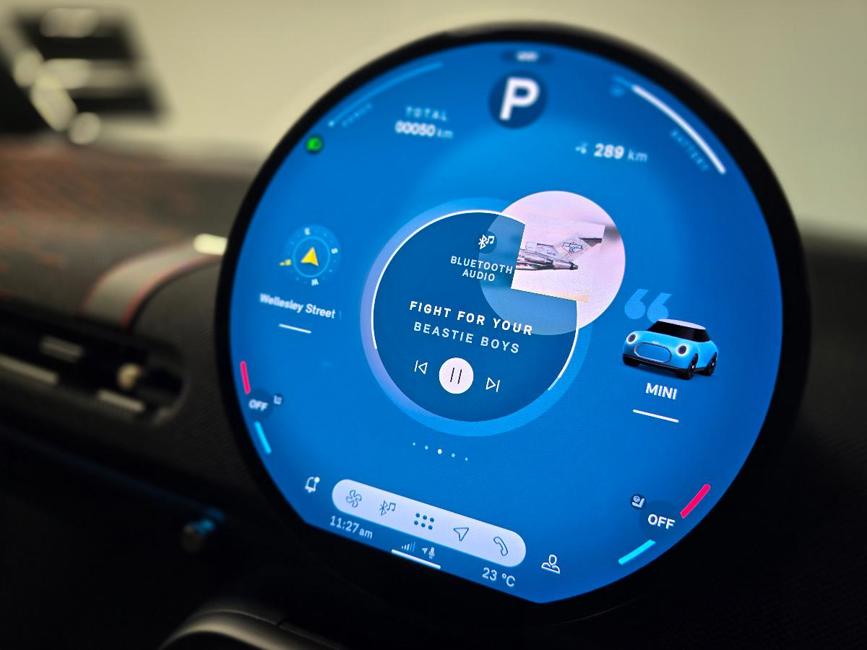
The seats are impressively comfortable and are finished in Mini’s ‘Vescin’ vegan synthetic leather and cloth combo. Of course Mini’s trademark retro nods remain - like the large central circular display and a “pretend key” style power button - but they’re now genuinely functional touches.
The central screen, which was becoming somewhat contrived, is now a big touchscreen that’s mostly useful, though it does need a very positive touch (particularly when swiping - a feather touch won’t get much response here). While there are a number of physical buttons scattered around the cabin, Mini has still managed to hide some key settings in deeper menus of the touchscreen.
Space is good for a truly small car, with a spacious and comfortable cabin up front, while rear legroom is decent for short trips, though not ideal for long journeys with adults. One ergonomic quirk: the interior door handles sit lower than you expect, with an indentation where you instinctively reach first - annoying at first, but easy to adapt to.
INTERIOR
On the road: what’s the Mini John Cooper Works Electric like to drive?
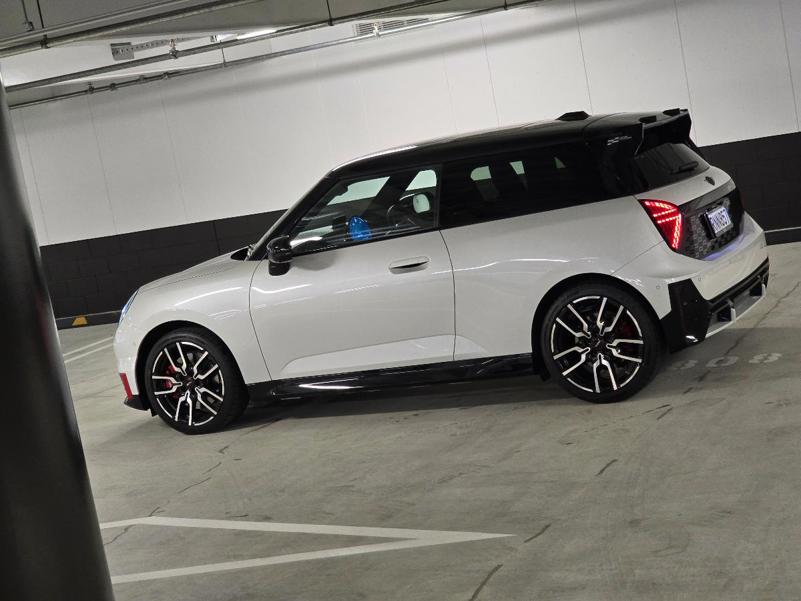
It’s an absolute blast. The JCW feels glued to the road, with sharp, direct steering that delivers the classic “go-kart” Mini vibe. The low centre of gravity thanks to its battery and the car’s chassis tuning make twisty roads addictive, with cornering being precise, adjustable, and confidence-inspiring.
It’s not the feral, unhinged JCW of old, but that’s likely for the better; modern JCWs have become more rounded and usable on a daily basis.
As you would expect, power delivery is instantaneous, delivering a thrilling initial surge typical of modern EVs. It doesn’t sustain that instant punch forever, but the overall performance is still hot-hatch worthy and immensely entertaining, while using the boost paddle to get extra punch out of corners is a fun twist that feels like you are downshifting.
There’s also a deliberate dash of drama engineered into the front-end traction behaviour: the front wheels scrabble and tug at the wheel under power, leading you to believe that it may something of a handful in the wet, but intriguingly, it behaves exactly the same in the wet as it does in the dry, suggesting that the electronics allow some theatrics before tidying things up. However, it never feels fake, only fun.
One downside to the sharp handling (and Mini’s insistence on being “Go-kart like” in all ways) is that ride quality is very firm. Around town, it can crash and bash over rough surfaces, which does become wearing day to day.
This is the same as in the Aceman SUV, but the firmness better matches the hatch’s character, and once you acclimate, the trade-off feels worth it for the handling, but comfort-sensitive drivers may hesitate.
TECHNICAL
On ownership: what’s the Mini John Cooper Works Electric warranty and servicing situation?
The Mini John Cooper Works Electric comes with Mini’s standard unlimited kilometre warranty that covers the whole vehicle for 5 years, body rust perforation for 12 years, paint for 5 years and genuine Mini parts replacement for 2 years.
It may not be much faster than the standard hatch, but the JCW is a joyous, high-quality electric hot hatch that leans into Mini’s playful spirit.
While ICE models get 3 years/unlimited kilometres roadside assist, the BEV models up this to 8 years, while also getting an 8-year/unlimited kilometre warranty on the high voltage battery.
In terms of servicing, Mini offers a choice of 4 or 6 year service packages for $1505 (4-year) or $2250 (6-year) that includes a standard vehicle check, as well as air conditioning microfilter replacement, brake fluid replacement and charging the high voltage battery up to 80 percent. An additional package that covers brake pads and discs, and wiper blades is also available.
On the whole, what do we think of the Mini John Cooper Works Electric?
It may not be much faster than the standard hatch, but the JCW is a joyous, high-quality electric hot hatch that leans into Mini’s playful spirit. The materials and build feel premium, the driving experience is engaging and adjustable, and the engineered theatrics - from the torque tug at the wheel to the delightfully absurd fake performance soundscape - add character without taking itself too seriously.
It’s not the feral, unhinged JCW of old, but that’s likely for the better; modern JCWs have become more rounded and usable on a daily basis, and while the SE JCW isn’t ludicrously fast, it’s plenty quick and delivers thrills largely without compromise.
The firm ride will be an acquired taste for some, and the infotainment can take time to get used to, but the overall package is compelling. It’s a pricey little car, yet it feels worth it given the quality, uniqueness, and fun. If you’re a Mini fan - or simply want an EV that prioritises driving joy - the Mini John Cooper Works Electric is a standout.
Mini John Cooper Works Electric FAQs
What kind of car is the Mini John Cooper Works Electric?
It's a small, all-electric three-door hatchback.
Does the Mini John Cooper Works Electric have hybrid or EV technology?
As the name suggests, it is a full EV, with a 49kWh battery and a single electric motor on the front axle.
What’s the energy consumption of the Mini John Cooper Works Electric?
Mini claims a combined average of 16.0kWh/100km, but real world driving is closer to 19, while enthusiastic driving bumps things up over 20.
Is the Mini John Cooper Works Electric safe?
All models of electric Mini hatches are covered by ANCAP's 5-star safety rating.
What safety and assistance features does the Mini John Cooper Works Electric have?
What are the Mini John Cooper Works Electric's main rivals?
- Smart #1 Brabus ($74,990): bigger, but much faster and more powerful.
- Abarth 500e ($41,990): flawed but fun, considerably cheaper.
- Toyota GR Yaris automatic ($64,990): not electric, but a proper hot hatch and hugely entertaining.
- MG4 XPower ($59,990): mad quick, but quite unruly and nowhere near as sharp.
- GWM Ora GT ($38,990): one from left field? Slow, but brings the looks for much less.


