



- Kiwi maker started in 2017, now across Australasia.
- Chargers still designed and made in Christchurch.
- 'Charging should just happen' says company founder Ed Harvey.
Christchurch-based smart EV home-charging station manufactuer Evnex has just passed the 20,000 sales mark. It sold its first unit in 2017 and it took 8 years to hit the 10,000 mark; the second 10,000 has taken just 9 months.
“Crossing 20,000 chargers is a proud moment for me and the Evnex team,” says Ed Harvey, founder and CEO of Evnex.
Harvey started the company from his parents’ farm in Marlborough as a 24-year-old, because he wanted a charger for the 1997 Honda Accord he'd converted into an EV.
“When we started out, an EV was a rare sight on New Zealand roads," says Harvey. "Now, almost a third of new cars sold can be plugged in. Our job is to make charging them the easiest part of owning one.
“The idea has always been simple: charging should just happen, overnight or when the sun's out, when power is cheapest and cleanest.”
A big part of the growth has come from expansion into the Australian market. Evnex has partnered with brands including EnergyAustralia and AGL for solar-smart charging. Australia is now the company's largest market, with roughly twice the sales volume of NZ, and this month, the number of online Evnex chargers reached parity in both countries.
Evnex says it has facilitiated enough power for around 450 million kilometres of driving, displacing more than 30 million litres of petrol and saving around 40,000 tonnes of carbon emissions.
At standard retail electricity prices, that much charging costs around $29.5 million. But Evnex says its customers likely paid roughly half that, because much of the electricity came from home solar or was drawn from the grid during cheaper off-peak hours.
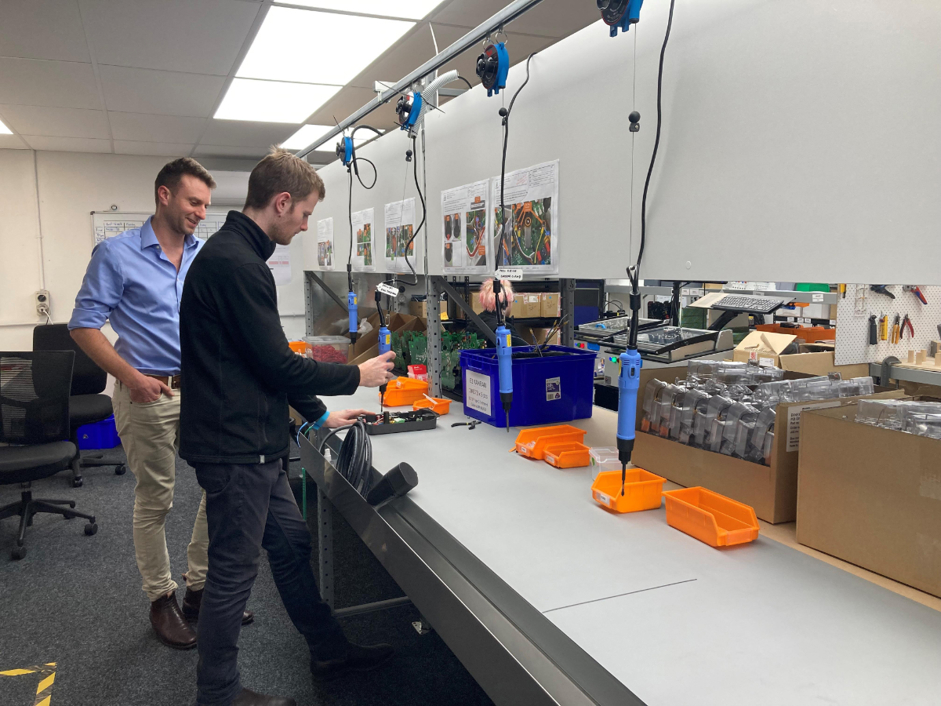
The company has grown to 48 staff across NZ and Australia, with its chargers designed and manufactured in Christchurch.
“The next 20,000 will come a lot faster than the first,” says Harvey. “We’ve had spikes in sales in the past but this time it’s different. This is the true start of the mass adoption curve rather than a fad."