


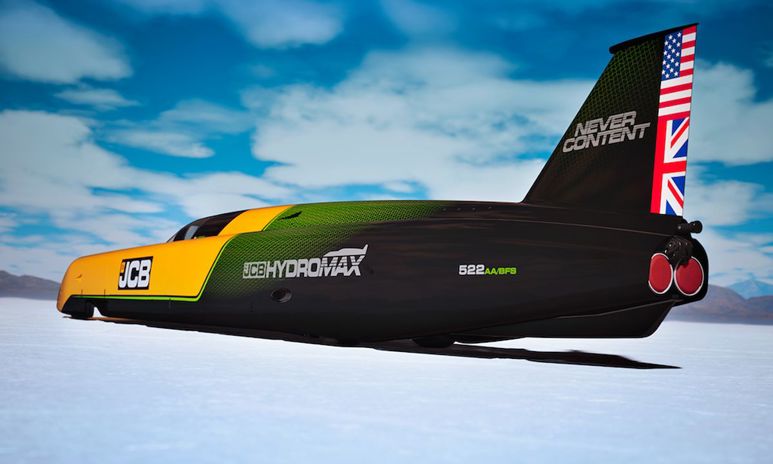
- JCB and Andy Green have set a new FIA land speed record for hydrogen combustion powered vehicles.
- The feat follows on from the team breaking the SCTA record earlier in the week at Bonneville Speed Week.
- Powered by two JCB heavy machinery engines, Hydromax set an average speed of 406.320km/h.
If you have been following our coverage of JCB’s progress at the Bonneville Salt Flats this week, you will remember the team making headlines with a 368.347mph (592.798km/h) run during the SCTA Speed Week. While that was a significant milestone for the program, the team has now pushed the Hydromax streamliner even further to secure an official FIA world land speed record with an average speed of 406.320mph (653.909km/h).
This new mark was established after the vehicle, piloted by Land Speed Record legend Andy Green, completed two mandatory runs in opposite directions within a one-hour window, as required by the Fédération Internationale de l’Automobile (FIA).
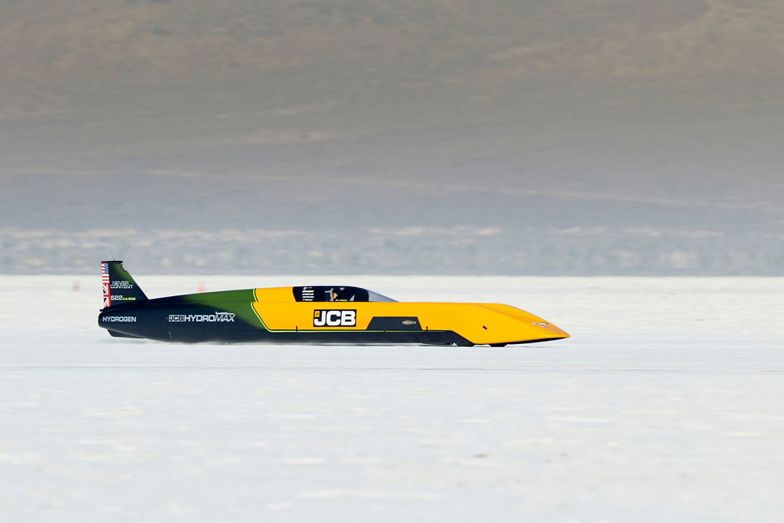
On the first pass, the Hydromax recorded a speed of 400.623mph (644.740km/h), which was followed by a second run of 412.135mph (663.267km/h). This performance comfortably exceeds the previous hydrogen internal combustion record of 185.5mph (298.533km/h) set by BMW in 2004, as well as the 303mph (487.631km/h) mark held by hydrogen fuel cell vehicles.
The achievement also means the Hydromax has surpassed the long-standing 350.092mph (563.418km/h) diesel land speed record set by Green in the JCB Dieselmax in 2006.
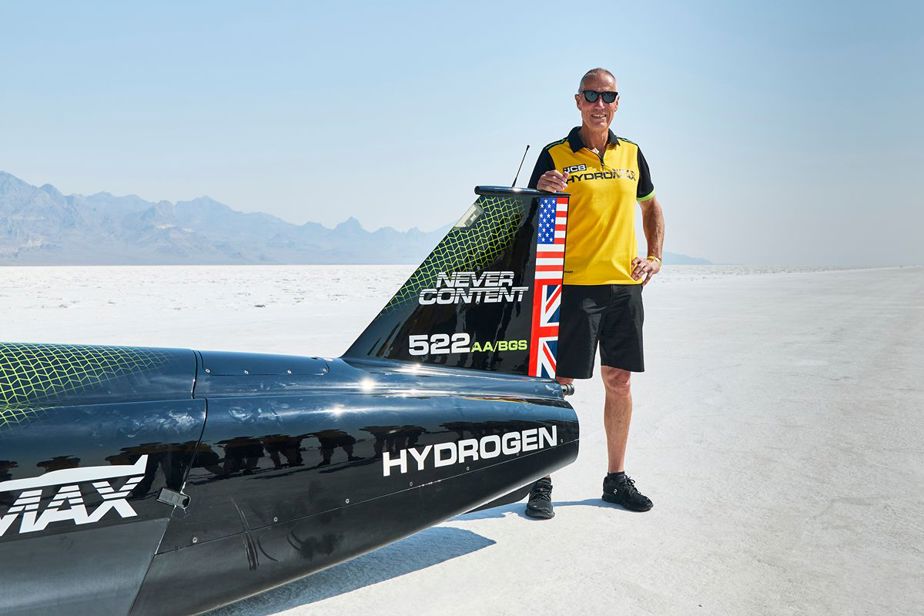
"Twenty years ago we came to Bonneville with JCB Dieselmax and showed what British engineering could do with diesel power." said JCB Chairman Anthony Bamford.
"Today we have done it again - this time with engines powered by hydrogen. This record was set by production-based engines, the same engines powering JCB diggers right now. That is the point of JCB Hydromax: it shows hydrogen works, and it works today at the highest level with zero emissions."
The 32-foot vehicle utilises two hydrogen internal combustion engines that produce a combined 1600bhp (1193kW). These units are manufactured at JCB’s engine plant in Derbyshire and are the same engines currently being integrated into the company’s commercial machinery.
The project has been a fast-moving engineering challenge, with development beginning only in February of last year. The record remains subject to official ratification by the FIA, but the governing body has already acknowledged the milestone's importance for the industry, with FIA President H.E. Mohammed Ben Sulayem saying the run was a truly historic milestone for motorsport showcasing how innovation, performance, speed, and sustainability can go hand in hand.
"Bonneville is the spiritual home of the world land speed record, and JCB Hydromax has just written itself into that history," said Wing Commander Andy Green on the effort.
"The car was terrific - stable, strong and fast. Setting a world land speed record with hydrogen power, twenty years after Dieselmax, is a huge privilege. This record is a huge achievement by a world class team and superb technology".
The Hydromax now joins Dieselmax alongside the company's other speed-record holders, including the Fastrac tractor and the JCB GT backhoe loader.


