


- Rimac releases film on plane landing on a moving train at 120km/h.
- Nevera R used as reverse-driven reference car during training.
- Engineers also built custom Kevlar seat for pilot using hypercar tech.
Rimac has pulled back the curtain on one of the more unusual engineering collaborations in recent memory, and it involves a hypercar, a stunt plane and a moving freight train.
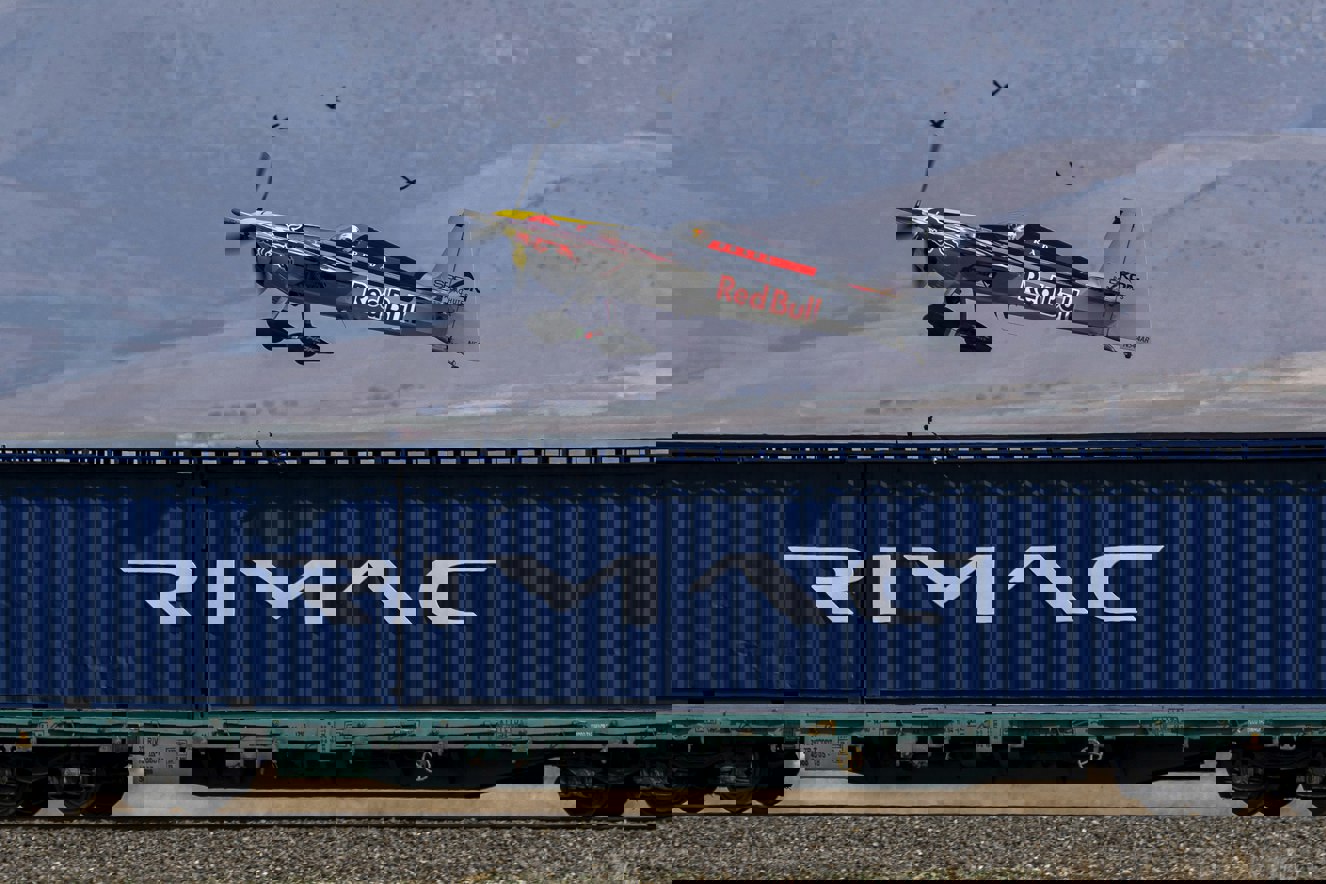
The Croatian EV maker has released an extended film documenting Red Bull pilot Dario Costa’s world-first landing on a cargo train travelling at 120km/h, completed in February this year.
While the stunt itself grabbed headlines, the new footage focuses on what came before it: months of technical preparation, simulation and coordination between Costa and Rimac’s engineering team.
Training with a hypercar (in reverse)
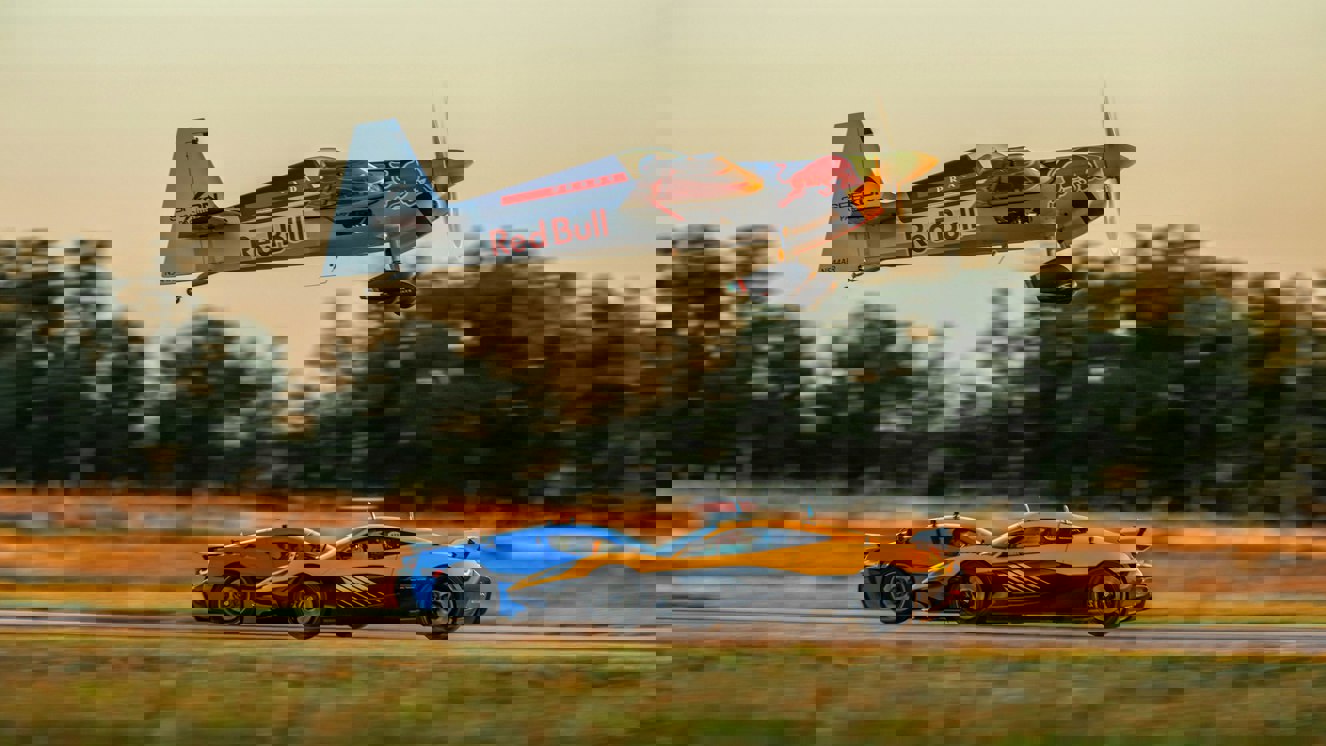
One of the more intriguing elements of the programme was the role of the Rimac Nevera R.
Rather than acting as a pace car in the traditional sense, it was used as a high-speed moving reference, driven in reverse to mimic the relative motion Costa would experience during his landing approach.
Rimac’s chief development driver Miroslav Zrnčević was tasked with holding the car perfectly steady at speed while Costa rehearsed overhead.
“Doing it at 140 km/h sounded easy, but it was really not,” Zrnčević said. “I had to be centimeter-precise in a lateral way; 100 percent on point driving in reverse.”
The Nevera R’s capability here is no accident. It holds the production-car record for the fastest speed achieved in reverse at 275km/h, giving engineers a uniquely stable platform for this kind of training.
Engineering beyond the car
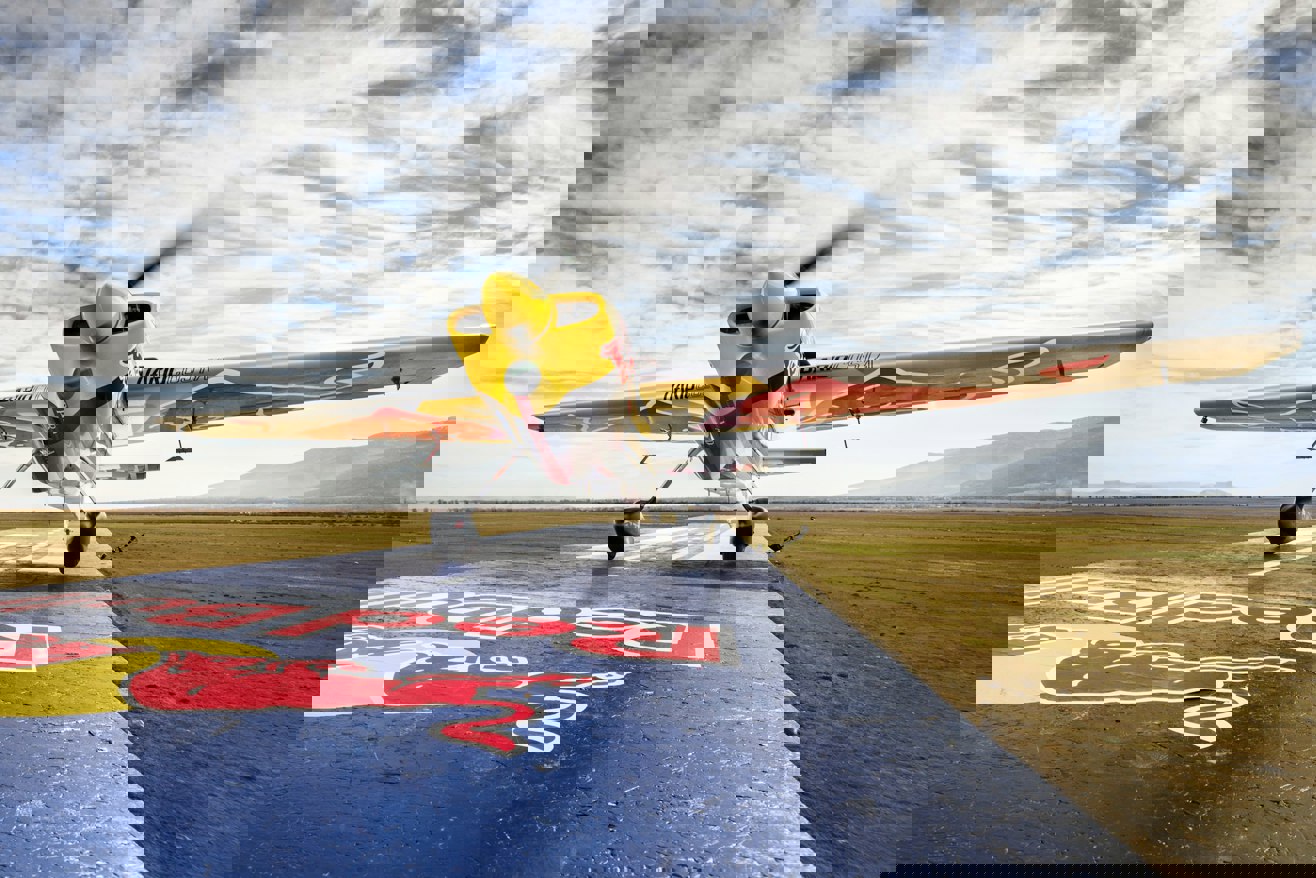
The collaboration didn’t stop at the runway or the rails.
Rimac engineers also developed a bespoke cockpit seat for Costa’s aircraft, using composite expertise drawn from the Nevera programme. Built from Kevlar and shaped from 3D body scans, the seat was designed to improve stability, feedback and endurance under high G-forces.
That detail proved critical. As Costa explains, the final approach to the train is effectively blind, with the aircraft’s nose obscuring the landing point. In those final moments, physical feedback becomes the primary reference.
A wider look inside Rimac
The film also offers a glimpse inside Rimac’s Zagreb facility, where both the Nevera R and the Bugatti Tourbillon were being assembled side by side at the time of filming.
“It is a crazy moment in history,” said Mate Rimac, pointing to the simultaneous development of high-performance electric and combustion-driven machines under one roof.
More than a stunt
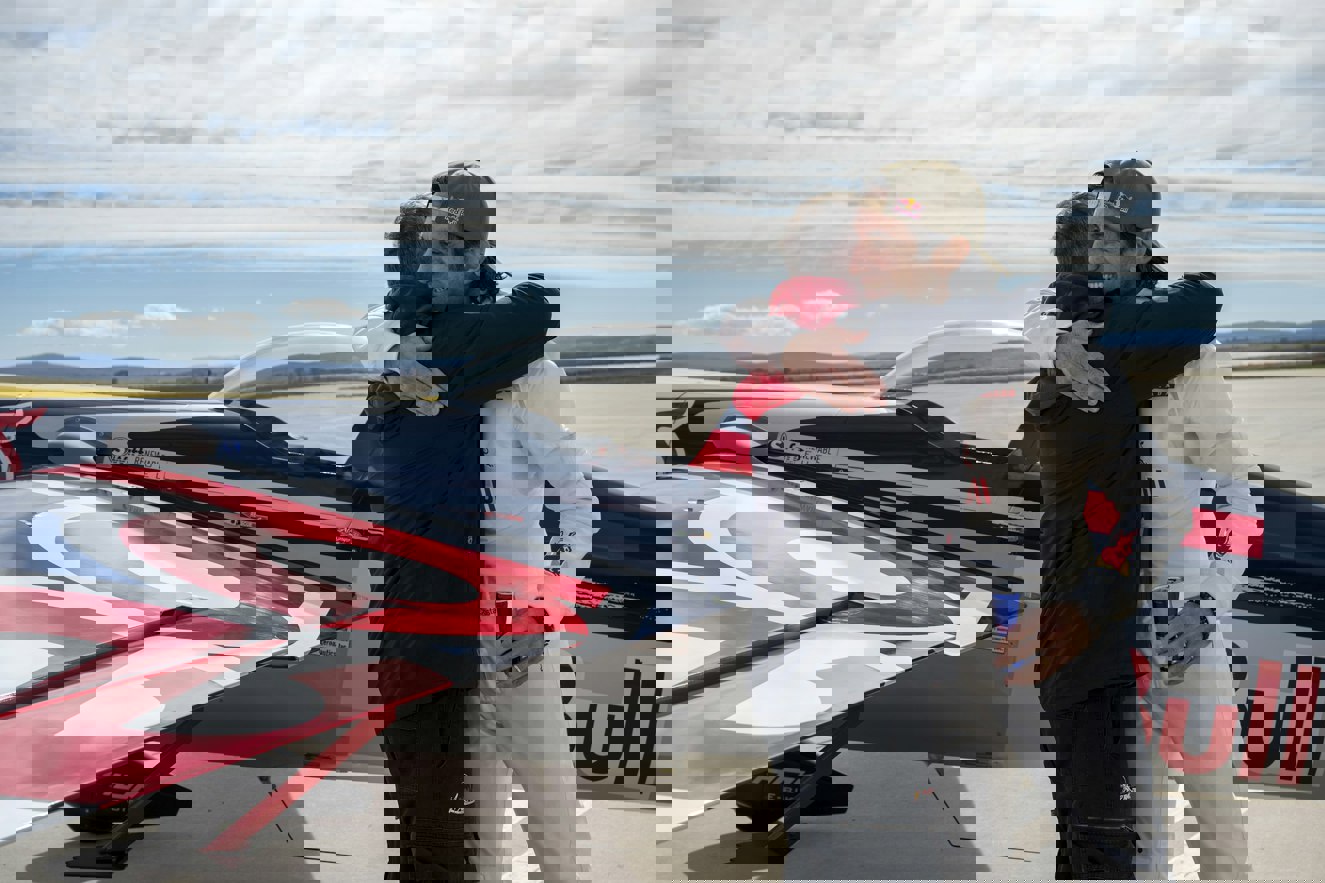
While the landing itself is the headline, the broader takeaway is how automotive engineering is being applied well beyond the road.
From aerodynamics to materials science, Rimac’s involvement highlights the crossover between hypercar development and extreme performance in other fields.
And if this project is anything to go by, the boundaries between them are getting thinner by the day.


