


The new Audi RS 5 is a car that confounds expectations. Even the name. The bouleversement of the brand's badging about-face this year has had a lasting effect on this model.
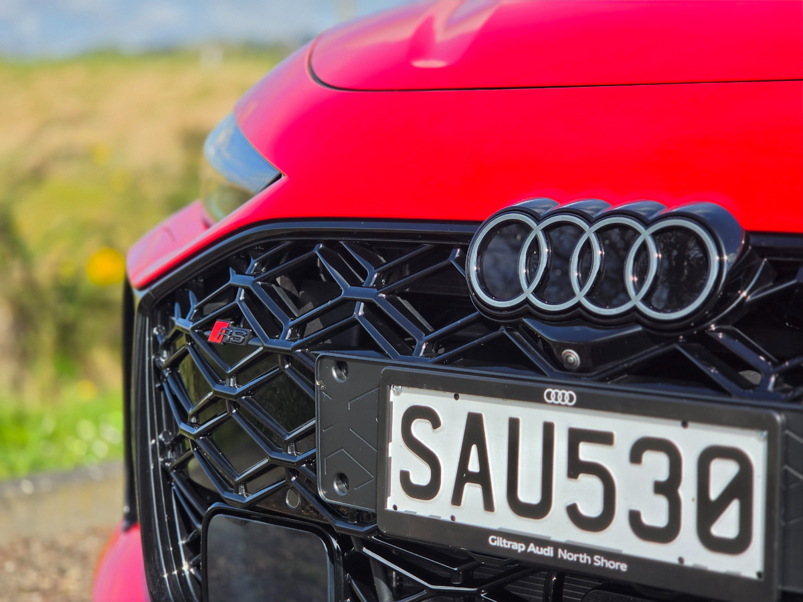
If you remember, back in 2023 Audi decided that going forward, EVs would have even model numbers and combustion cars odd, so the subsequent A4/S4 replacement became the A5/S5. Earlier this year, Audi decided that naming strategy was a massive mistake and switched it all back again... except for the aforementioned A5/S5, because it was already out there.
You don't have to like or approve of the path the Audi RS 5 has taken, but you can't deny it's a remarkable thing in many different respects.
It didn't seem to matter quite as much with those cars, but the RS 4 is such an Audi-icon. A whole separate thing. And during our time with the RS 5, several car-literate people were indeed confused why this exciting RS 4-shaped and RS 4-sized thing before them wasn't... an RS 4.
The RS 5 has also gone PHEV and as a result, it's piled on the weight: it's nearly 2.4 tonnes, or more than 500kg extra over the previous RS 4. Confounding expectations again (and a spoiler alert): it's vastly more powerful, even faster and feels more nimble than ever in the corners, thanks to some clever chassis technology.
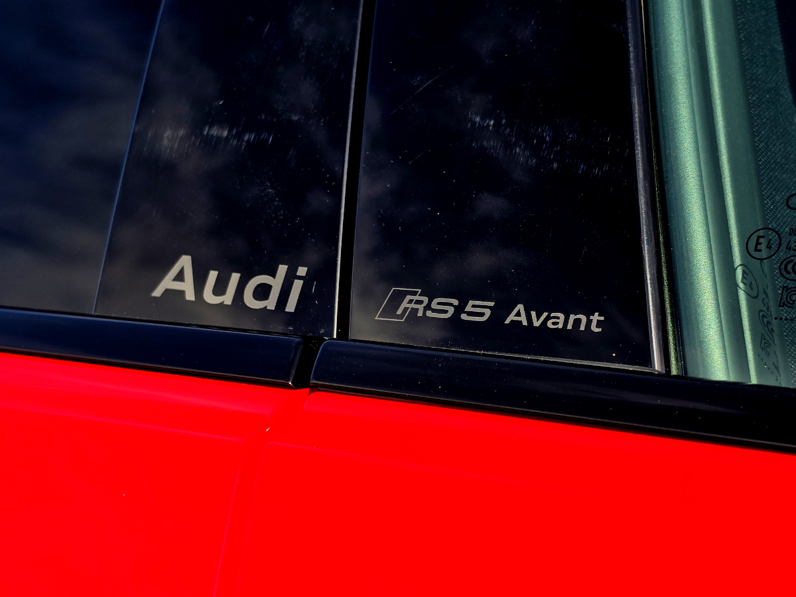
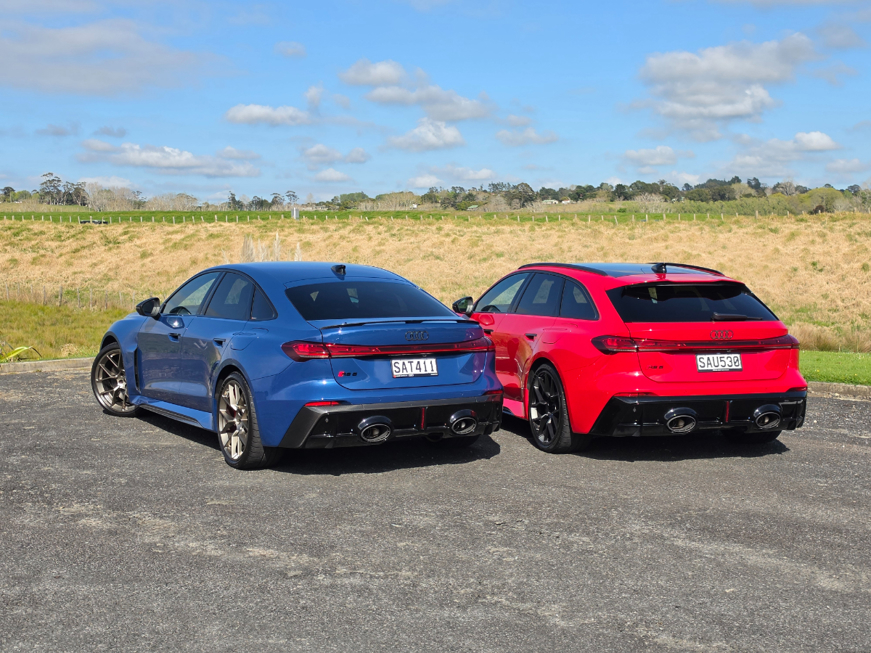
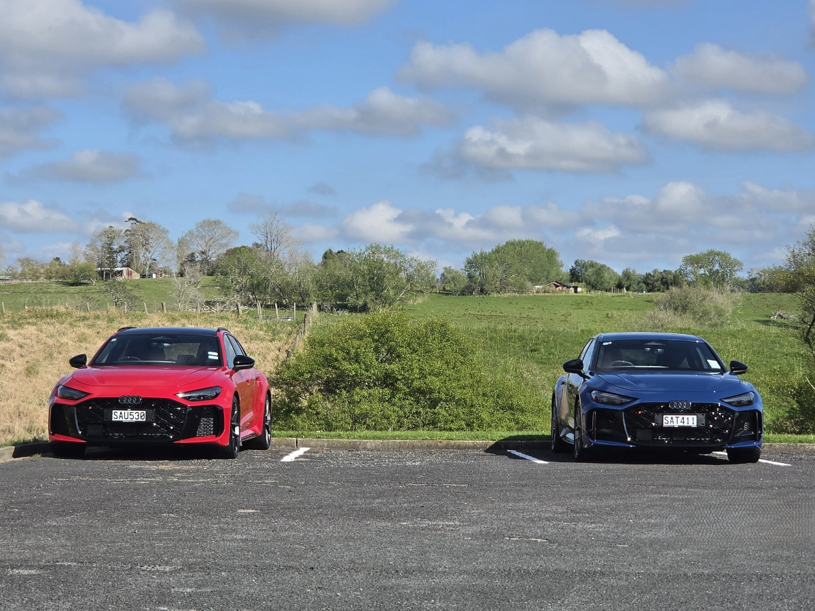
You might have been expecting this to be an Avant, because this model usually is and the OG RS 2 from 1994 was exclusively a wagon (hang on, that's a different name as well...). But the new generation comes in both $194,990 sedan and $196,990 Avant forms; Audi hasn't had both since the legendary B7-generation RS 4 of 2008.
On the outside: what are the Audi RS 5's main design features?
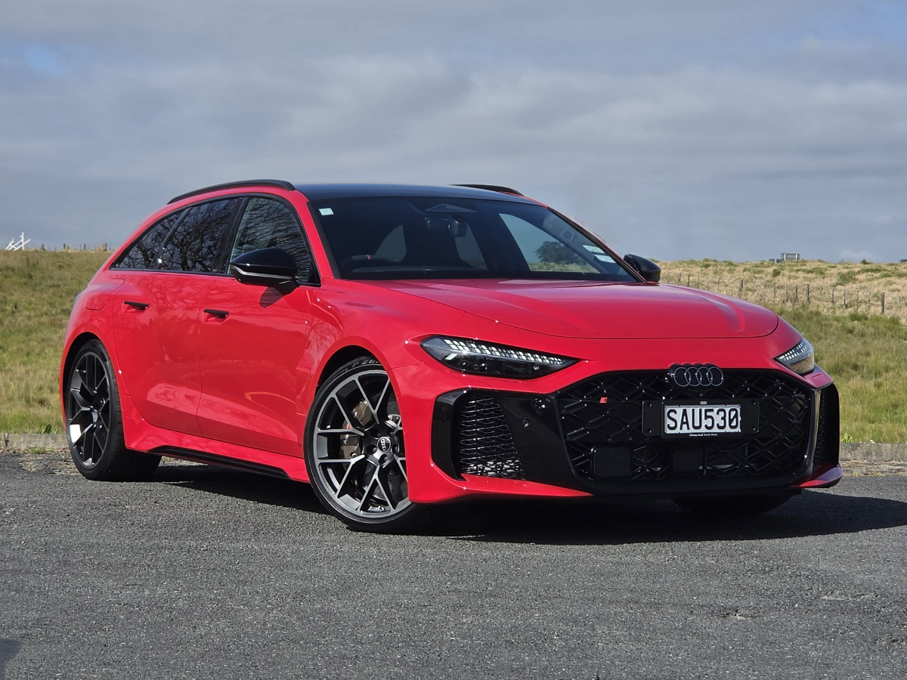
While this is clearly identifiable as an RS 4-ish thing to anybody with even a mild interest in Audi Sport, you'd never mistake the RS 5 for a regular A5 or S5. It's a whopping 90mm wider and 15mm lower, and looks even more ground-hugging thanks to the way those 21-inch wheels fill the bulging arches.
Audi is all about lights. There are darkened matrix LEDs front and the brand's signature OLED units at the rear, both with checkered-flag motifs in their illumination.
If you like your RS cars a bit more low key, the Avant is the one (although it's not low-key per-se); the wagon body shape absorbs all those extra curves more effectively. The sedan looks like it's bursting at the seams at the back.
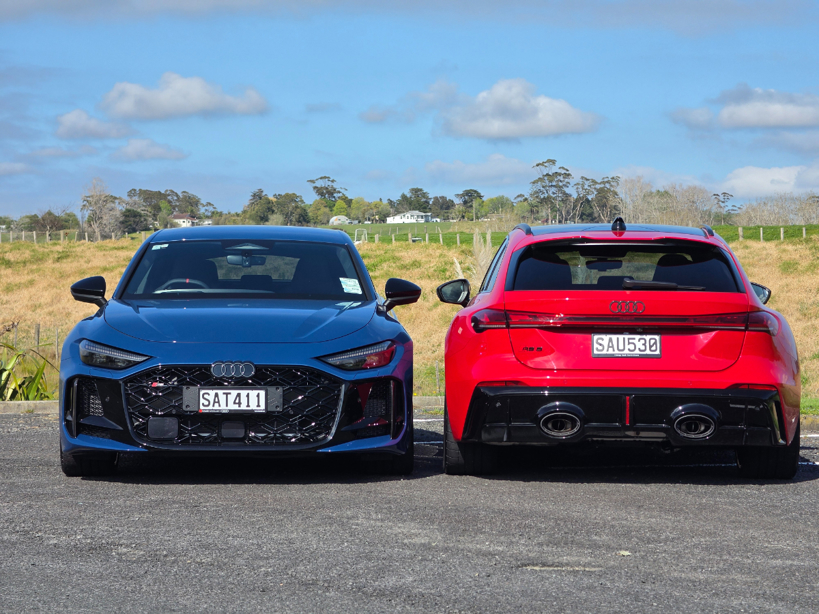
Both cars have enormous oval exhaust pipes, mounted in quite a central location. That's because the visible parts of the new system are all functional, and the position of the tips is conducive to a more direct connection to the engine. Some previous RS cars have had comestic exhaust outlets, you know.
There are styling options aplenty. Both our test cars had the $7000 Audi Sport package, which adds the more aggressive "RS bumper plus" and increases the top speed to 285km/h. Neither are strictly necessary, but the package does unlock some other stuff, including a special Bedford Green colour and the bronze calipers for our Avant's brake system (more about that later). That's some clever suggestive-selling right there.
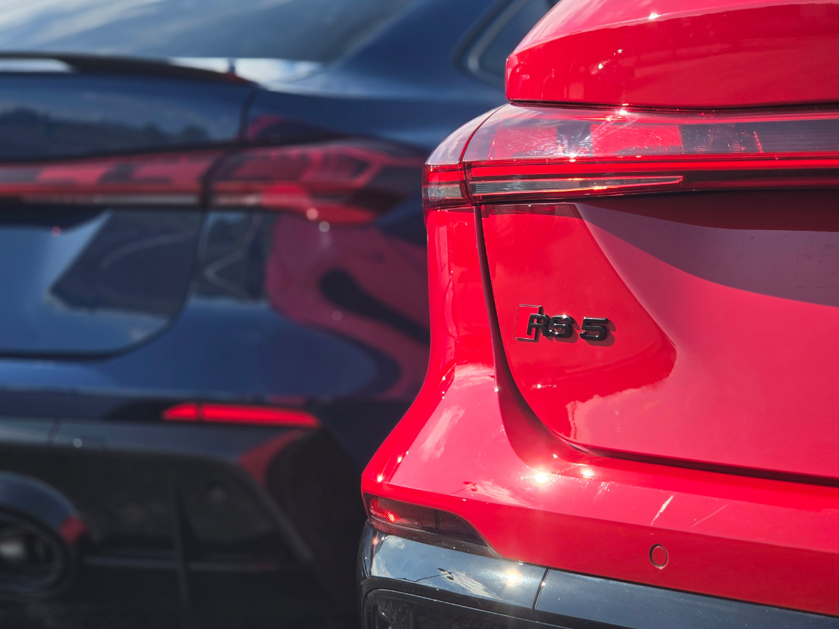
Audi is all about lights. There are darkened matrix LEDs front and the brand's signature OLED units at the rear, both with checkered-flag motifs in their illumination. There's a flag in the high-stop brake light under the rear spoiler of the Avant, too.
OVERVIEW
| Price | $194,990-$196,990 |
| Body style | 5-door liftback or 5-door wagon |
| Wheels and tyres | 21in alloy wheels, 285/30 Pirelli P Zero R tyres |
| Length | 4896mm |
| Wheelbase | 2903mm |
| Weight | 2355-2370kg |
| Website | audi.co.nz |
On the inside: what's the Audi RS 5 cabin like?
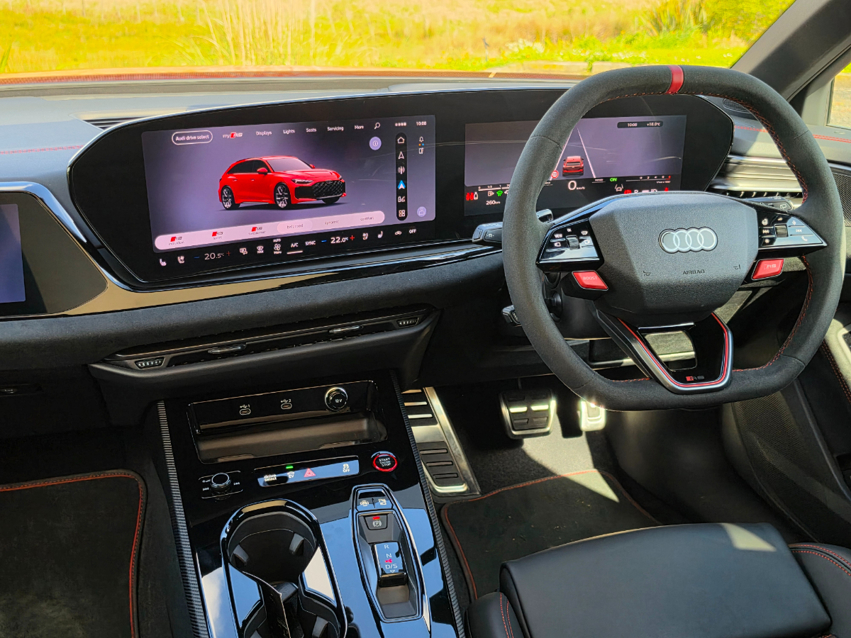
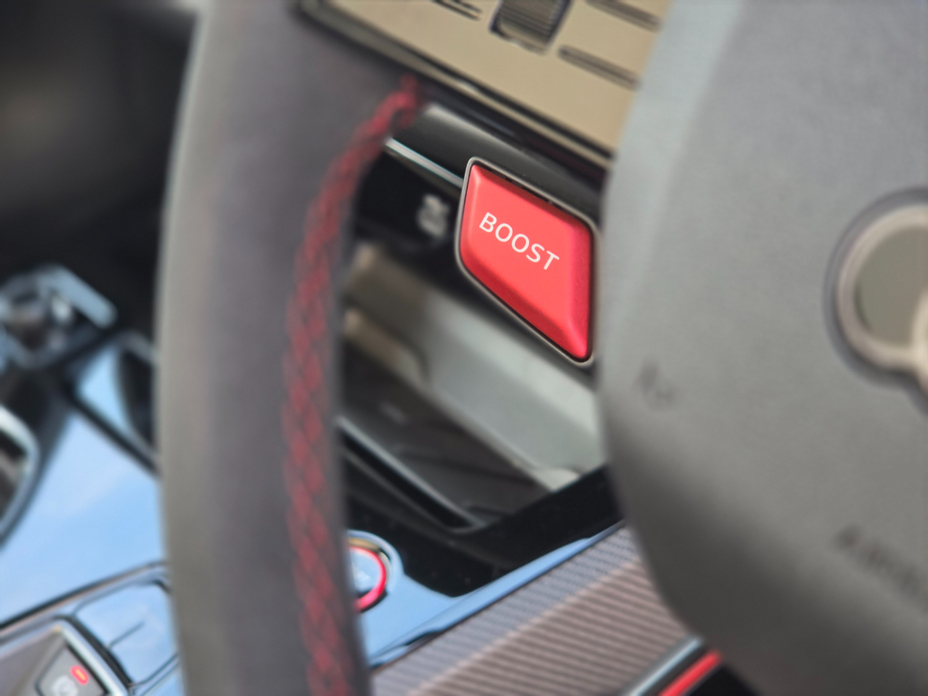
At first glance there's not a huge amount to differentiate the cabin of the RS 5 from the techy surroundings of an A5 or S5: you get the expected branding, sportier upholstery ("Sports seats plus" standard) and a fancy steering wheel with Boost and RS buttons.
The RS 5 is noticeably lower to get in and out of, but inside it's a decently spacious family car.
But there's more as you dig deeper. There are RS-specific instruments, the head-up display is configurable and can include guides for launch control and acceleration, and the Audi Driving Experience function in the infotainment system can record and analyse lap times - or even map your own racetrack using GPS. If you want some drift coaching, you've come to the right place.
One of the brilliant things about this type of performance car is that it can also serve as a practical day-to-day driver. The RS 5 is noticeably lower to get in and out of, but inside it's a decently spacious family car.
One area where RS-configuration hits back a bit is cargo space. Neither the Avant or sedan are especially capacious at 361 and 331 litres respectively; and as the numbers suggest, the wagon isn't that much bigger than the sedan.
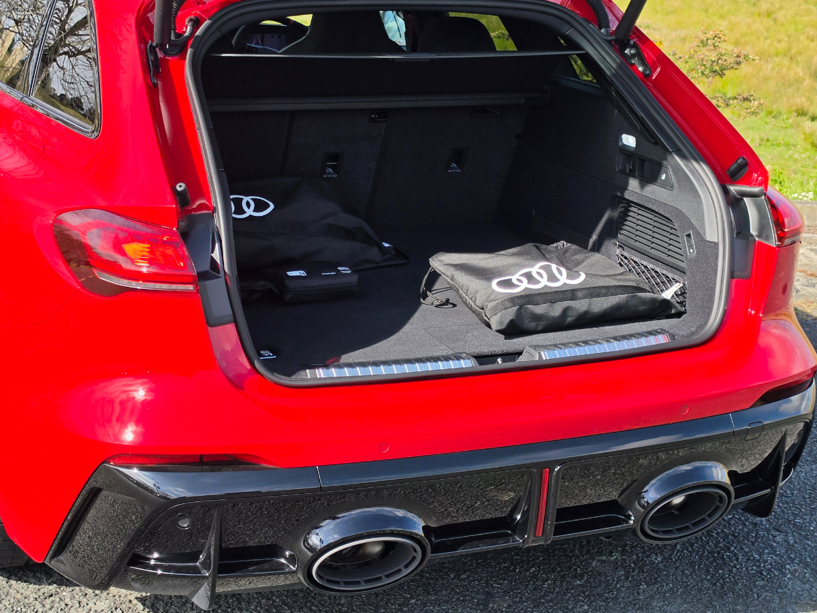
The underfloor position of the big battery is to blame. The A5 Avant e-Hybrid has the same issue (pretty much the same battery), but an S5 Avant offers 448l.
However, that battery positioning does help create near-perfect weight distribution, which helps with the next section.
INTERIOR
| Head-up display | Yes |
| Infotainment screen | 14.5 inches plus 10.9in passenger display |
| Phone projection | Wireless Android Auto and Apple CarPlay |
| Wireless phone charger | Single |
| USB ports | 2x USB-C front, 2x USB-C rear |
| Climate control | Dual-zone front, single-zone rear |
| Front seat heating/ventilation | Yes/yes |
| Front seat adjustment | Power, memory for drive and exterior mirrors |
| Boot capacity | 361 litres |
| Rear seat split/fold | 40/20/40 |
| Power tailgate | Yes |
On the road: what's the Audi RS 5 like to drive?
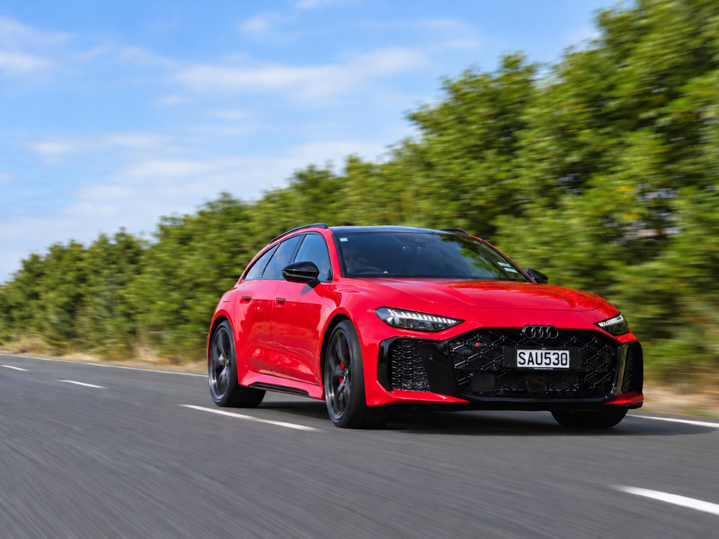
Part of the pitch for the RS 5 is that it can serve as a zero-emissions commuter during the week, the 22kWh battery providing a claimed 84km range; we got around 70km real-world city running on test. With a 130kW/460Nm e-motor to draw on, it's also acceptably lively on electric.
It's staggeringly agile. The RS 5 feels like a four-wheel-steer machine, which it kind of is because that rear axle is pretty much pushing the car into the corner.
The EV range in turn helps with the emissions profile, because PHEVs register amazing fuel economy on official test cycles.
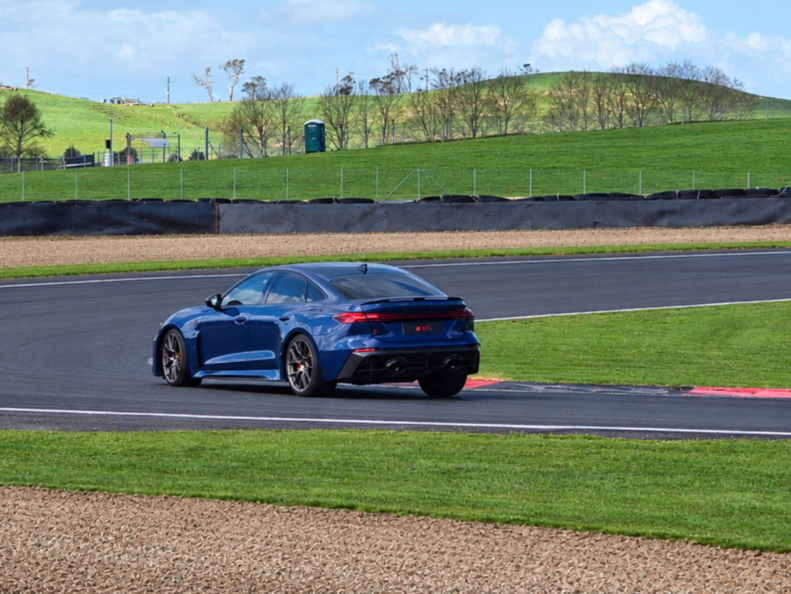
All very good and might help get an RS 5 purchase past a few... significant others. But that's not what the PHEV system is really about. It's actually a key element of the RS 5's performance potential, because the electric output is used for some amazing things.
It's a big contributor to an outrageous 470kW/825Nm total output, which completely overcomes the RS 5's weight to clock a 0-100km/h time of 3.6 seconds. The sheer shove served up in rolling acceleration is staggering, and even you're in one of the more meek (sic) driving modes, you can have full-everything for 10 seconds with one touch of the steering wheel Boost button.
The centre differential of the quattro system is always preloaded, which means it's always ready to react. The new thing for RS (and the world, according to Audi Sport) is electro-mechanical torque vectoring at the rear; essentially, the ability of the axle to feel power individually to each wheel. Dynamic Torque Control employs a dedicated 8kW/40Nm to apportion power in literally less than the blink of an eye.
Steering and supension are specifically tuned for this car; in fact, the entire rear suspension setup is bepoke. The body is 10% stiffer than a standard A5.
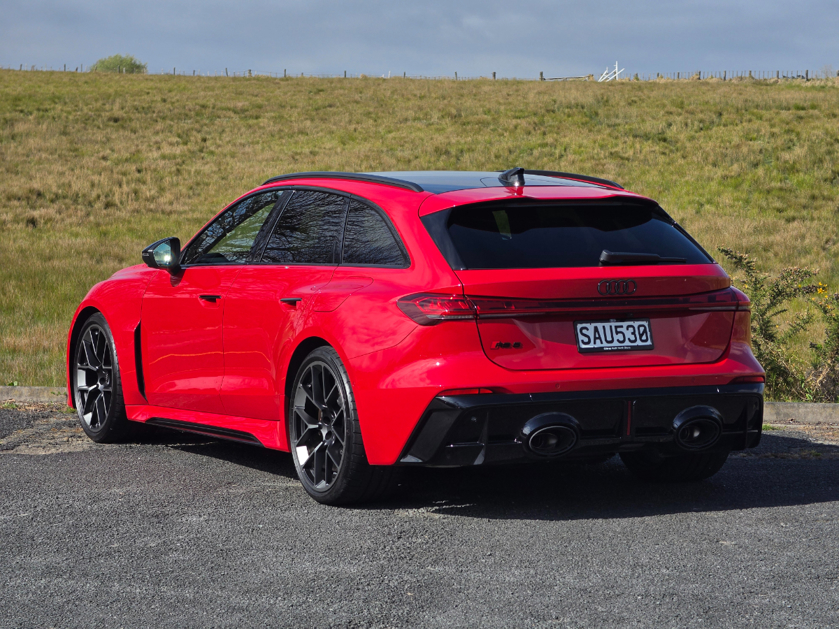
It's staggeringly agile on winding backroads; the RS 5 feels like a four-wheel-steer machine, which it kind of is because that rear axle is pretty much pushing the car into the corner by feeding extra power to the outside wheel.
The RS 5 is heavy. When you really get going, it does not feel heavy at all. Nor does it feel harsh at sensible speeds, despite the extreme handling potential. It's not luxury-car comfortable, but the twin-valve shock absorbers do a pretty good job of creating a compliant family car ride when required.
But you could also argue this is also one of the most track focused RS cars ever. Of the six drive modes, only three are EV-compatible. The other three are either so aggressive (RS sport) or task-specific (RS torque rear, aka drift mode), they're really only suitable for the circuit. Or some very bad behaviour.
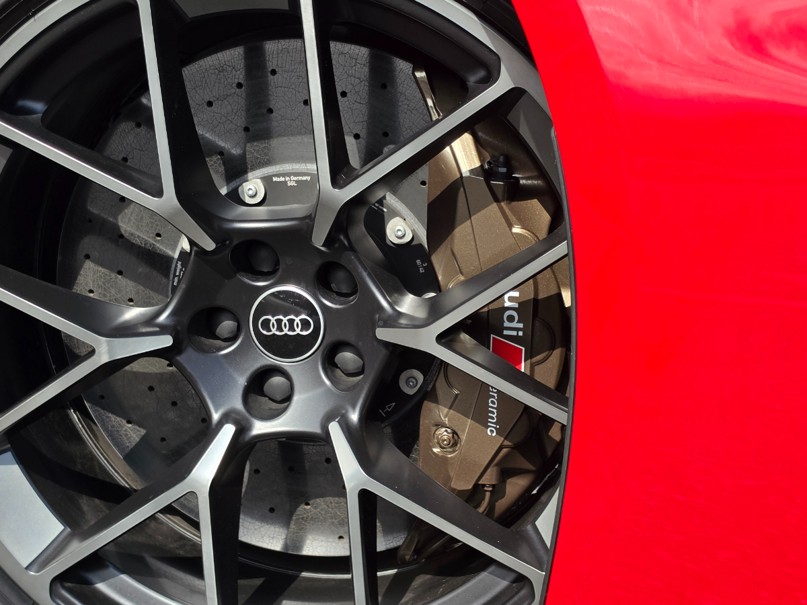
Our test cars even had the optional RS ceramic brake system, at $23,000. Not as numb in road use as similar systems in years past, but still only something you'd order if you were serious about doing some circuit driving.
The RS 5 only has an AC plug, so you can't fast-charge at a DC station. But like we said... it's not really about that. Because electric power is important to the dynamic package, in the RS models the system keeps the battery at 90% charge. You can also set the management to reserve a specified level of battery charge regardless of drive mode.
SPECIFICATIONS
| Powertrain type | Plug-in hybrid |
| Capacity, battery | 2894cc, 22kWh (usable) |
| Power | 470kW (combined) |
| Torque | 825Nm (combined) |
| Transmission | 8-speed, AWD |
| Power to weight | 198kW/tonne |
| Adaptive suspension | 2-valve dampers |
| Efficiency | 4.5-3.9l/100km weighted combined, 10.2-9.6l/100km with discharged battery (manufacturer claims) |
| Tank size and fuel type, range | 48 litres, 95-98 octane, 83-84km (provisional) |
| Tow rating | 1.9 tonnes |
On ownership: what's the Audi RS 5 warranty and servicing situation?
The vehicle warranty is 5 years/150,000km, while the high-voltage battery is covered for 8 years/160,000km.
Servicing is required every 12 months or 15,000km.
On the whole: what do we think of the Audi RS 5?
You don't have to like or approve of the path the Audi RS 5 has taken, but you can't deny it's a remarkable thing in many different respects. It's not the top of the Audi Sport range in size or price terms, but you could easily mount an argument that it's the most important and interesting RS car out there right now. Especially when you factor in all that RS 4 heritage.
We've already had our say about Audi Sport's use of Bob Dylan's 1960s electric tumult to advertise the RS 5 PHEV. But here's another idea. Original Elvis was lean, mean and quite pure in his musical taste. Later Elvis got bigger and a lot more blingy. But Fat Elvis was even more entertaining than Original Elvis. If you see what we mean.
Audi RS 5 FAQs
What kind of car is the Audi RS 5?
A 5-door liftback or Avant wagon.
Does the Audi RS 5 have hybrid or EV technology?
It's a plug-in hybrid (PHEV).
What’s the fuel economy of the Audi RS 5?
There's no official NZ 3P-WLTP figure yet, but Audi quotes 4.5-3.9l/100km combined and 10.2-9.6l/100km with a discharged battery.
Is the Audi RS 5 safe?
The RS 5 has not been tested by ANCAP. The standard A5 carries a 5-star rating (although that doesn't officially apply to the RS version due to its structural and bodyshell changes).
What safety and assistance features does the Audi RS 5 have?
| Intelligent lights | Darkened LED matrix |
| Rain sensing wipers | Yes |
| Airbags | Dual front and side, far side, rear-side, curtain |
| Adaptive cruise control | Yes |
| Driver attention monitor | Yes |
| Traffic sign recognition | Yes |
| Forward collision warning | Yes |
| Blind spot warning/assist | Yes/yes |
| Lane departure warning/assist | Yes/yes |
| Rear cross traffic alert/braking | Yes/yes |
| Reverse collision braking | Yes |
| Parking sensors | Front and rear |
| Camera system | 360 degree, 3D display |
What are the Audi RS 5's main rivals?
- BMW M3 ($197,700-$202,100): The RS 5's arch rival, also in sedan or wagon.
- Mercedes-AMG GLC 53 ($158,400): You can't buy a C 63 in NZ right now, but you can have a 330kW GLC SUV.
- Audi S6 Avant e-tron ($202,990): Pure-electric, and one very stylish/fast Audi Avant.
- Hyundai Ioniq 5 N ($149,990): Pure-EV, but brings petrol-like powertrain character.
- Tesla Model 3 Performance ($86,900): Super-fast EV and it can even drive itself.


