



What’s this new car all about then?
The Geely EX2 is a small, five-seat electric hatchback that has already made a considerable impact in China, where Geely says more than 450,000 were sold in 2025, making it the world's best-selling small EV.
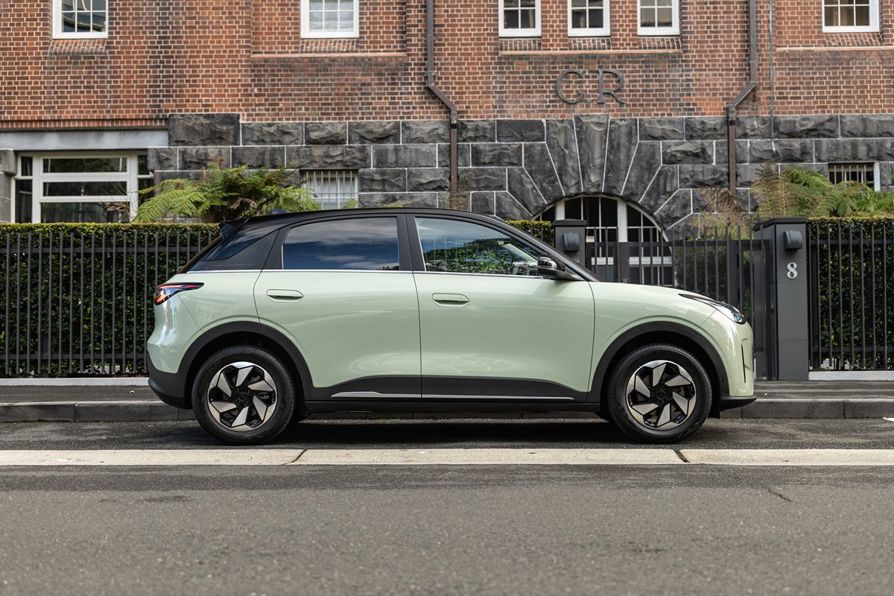
And on paper it is easy to see why. At 4135mm long and 1805mm wide, it is firmly in small-car territory, but clever packaging gives it proportions and practicality that make it feel considerably larger from the inside.
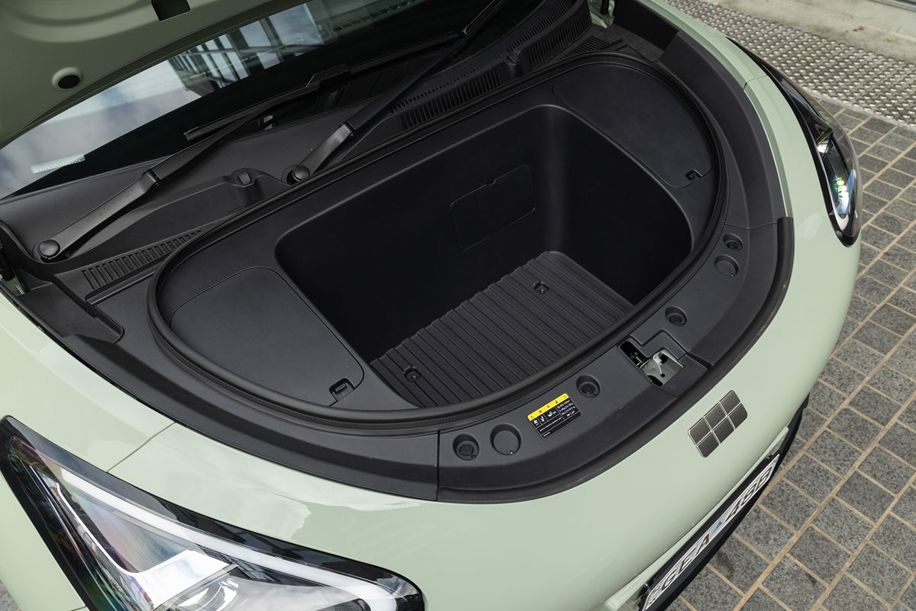
The key to that is Geely's GEA (Global Intelligent New Energy Architecture), the same basic architecture used by the larger EX5 and Starray EM-i. In the EX2 it has been packaged around a rear-mounted electric motor, leaving plenty of space at the front for a genuinely useful 70-litre frunk.
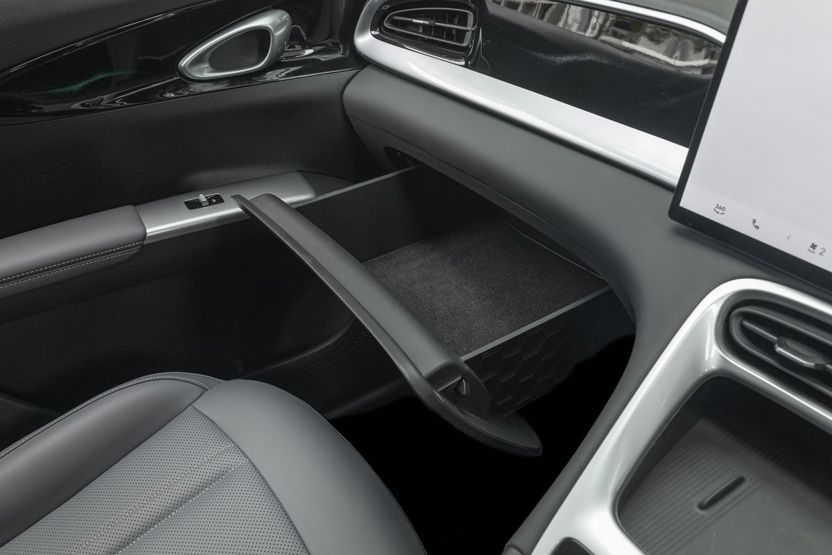
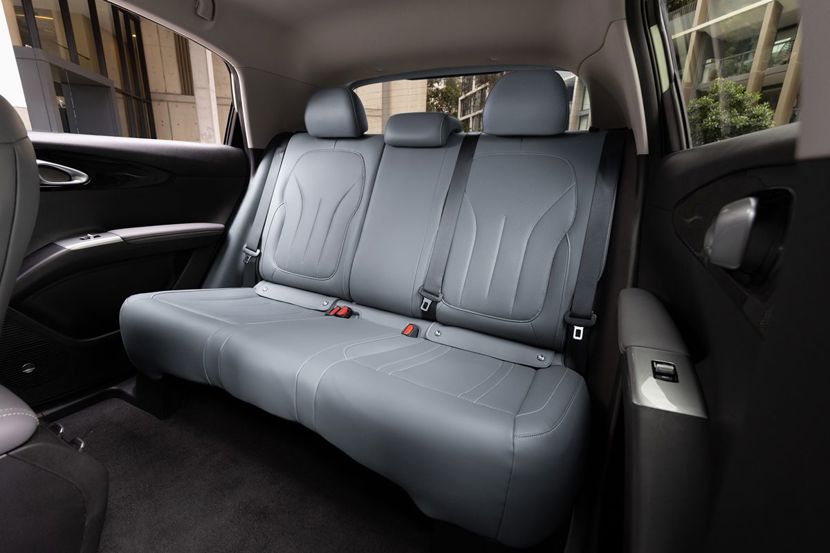
There is also a 375-litre conventional boot, expandable to 1320 litres with the rear seats folded, while a drawer-style glovebox and under-seat storage help explain Geely's claim of more than 30 storage spaces throughout the cabin.
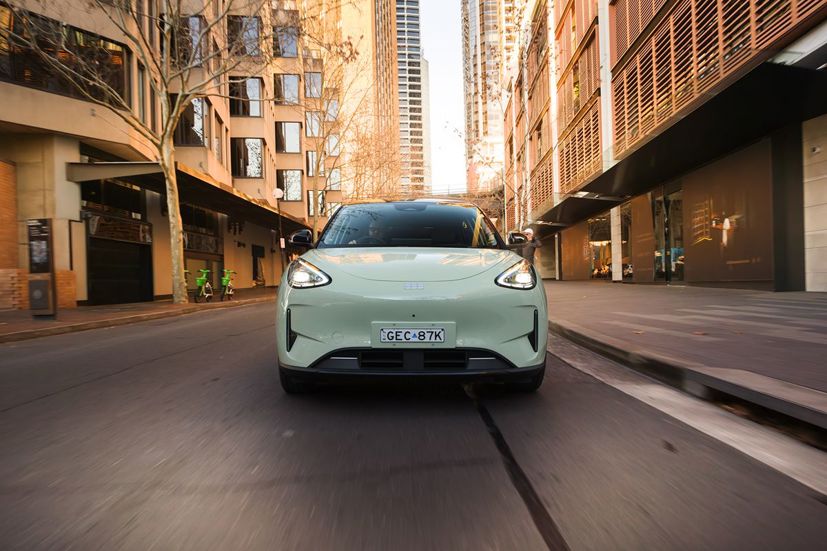
Styling is another part of the EX2's appeal. The rounded nose, feather-like LED signature and friendly "smile" face give it a distinctly cheerful character, while the Inspire's contrasting black roof and metallic detailing add a little more visual attitude.
Underneath, the EX2 is rather more serious than its cute appearance suggests. Both versions use an LFP battery with dedicated liquid cooling, rear-wheel drive and a multi-link independent rear suspension, while the 11-in-1 electric drive unit packages the motor and control systems into one compact unit.
How much is it?
The Geely EX2 starts in New Zealand at $32,990 for the Complete and tops out at $37,990 for the Inspire.
That makes the $5000 step up to the Inspire fairly significant in the context of a small EV, but it also buys considerably more than a handful of cosmetic upgrades.
Where the Complete gets a 35.3kWh battery, 60kW/150Nm rear electric motor and a claimed 252km WLTP range, the Inspire steps this up to a 47.1kWh battery and 85kW/150Nm motor, lifting range to 345km.
Both have 6kW AC charging, while DC charging rises from 60kW in the Complete to 80kW in the Inspire. The latter can replenish from 30 to 80 per cent in as little as 25 minutes under Geely's claimed charging conditions.
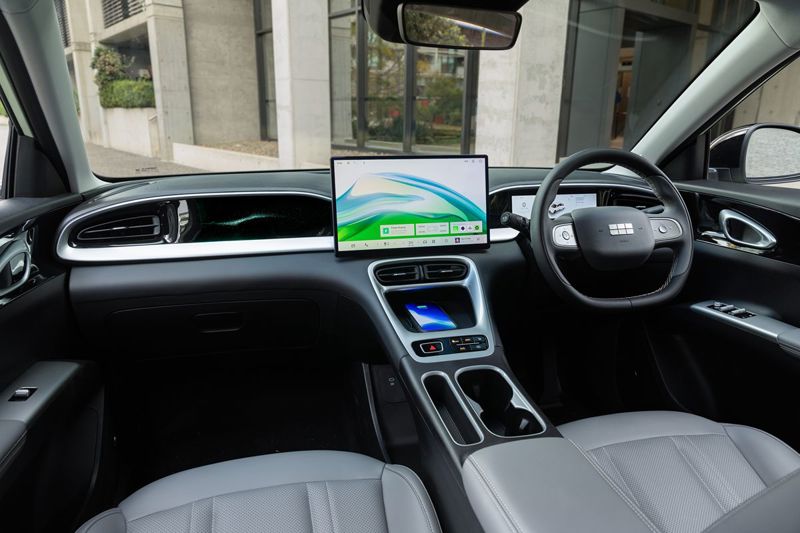
The equipment list is strong for an inexpensive small EV, too. Both get the 14.6-inch multimedia screen, 8.8-inch digital instrument display, powered front seats, four drive modes, LED lighting, wireless Apple CarPlay and Android Auto and a comprehensive active safety suite.
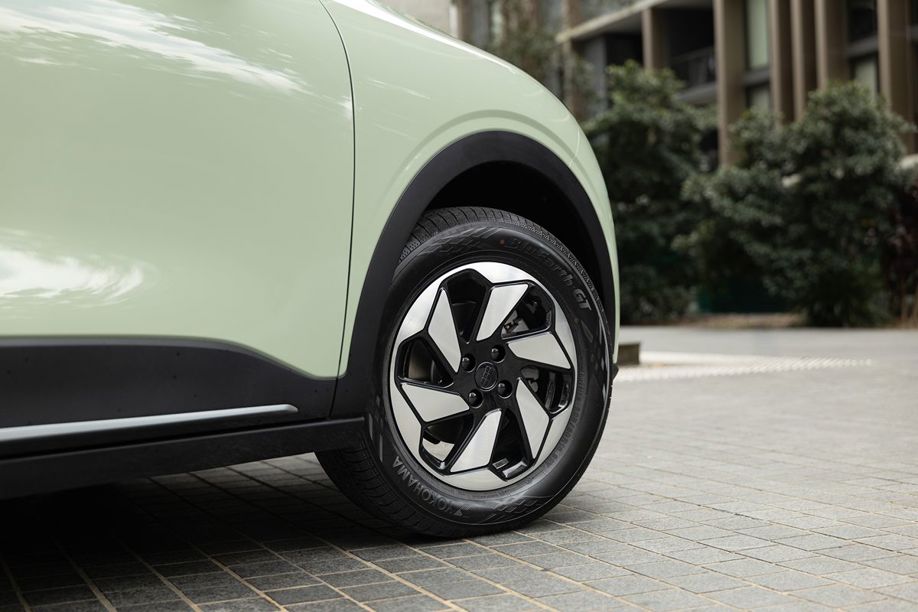
Spend more on the Inspire and you get the larger battery and motor, 16-inch alloys, a power tailgate, a contrasting black roof, heated front seats and steering wheel, wireless phone charging, ambient lighting, six-speaker audio and a 360-degree transparent-view camera system.
At $37,990, the Inspire isn't exactly a bargain-basement EV, then, but the extra $5000 is buying a meaningful improvement in the car itself rather than simply making the same car a bit nicer.
What's it like to drive?
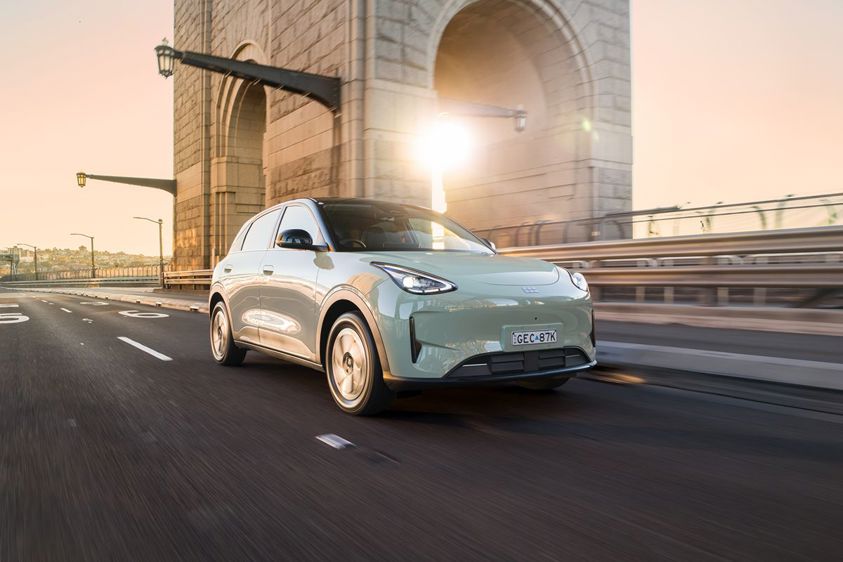
This is where the EX2 gets interesting, because that will very much depend on what you expect from a small city EV.
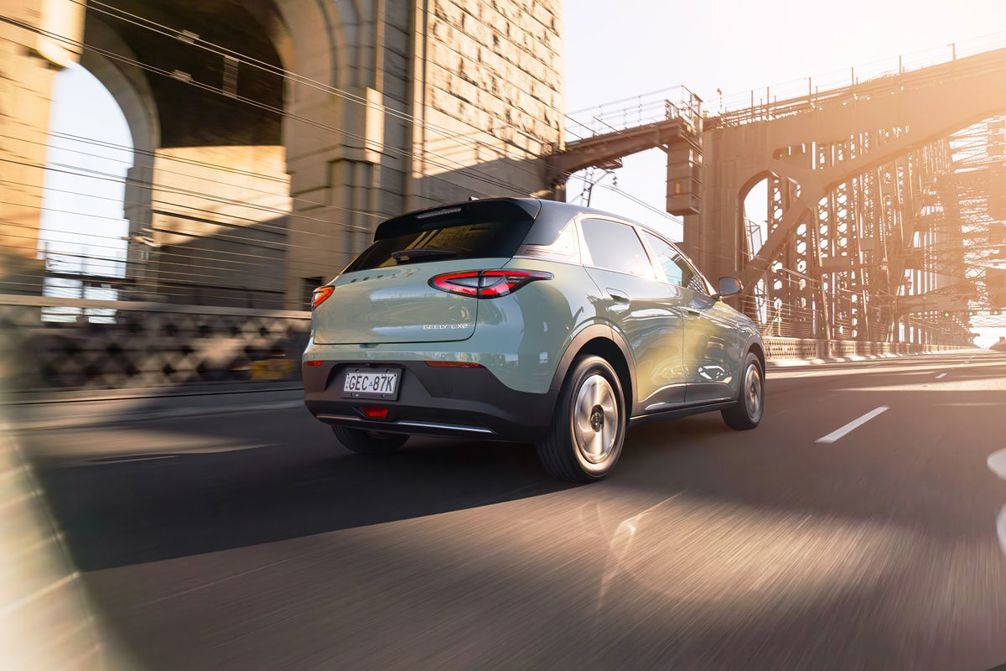
The rear-wheel-drive layout immediately gives the EX2 a point of difference. In a class dominated by front-drive cars, the front wheels only have to worry about steering, while the rear-mounted motor handles propulsion. Geely also gets a 41-degree maximum steering angle, contributing to an incredibly tight 9.9m turning circle, something that is immediately noticeable in urban driving.
On the open road the EX2 is light, nimble and surprisingly chuckable, with precise, accurate steering and a natural fluidity to the way it changes direction. Geely says the New Zealand-specification EX2 has received a ride and handling tune developed with Geely Technology Europe, formerly the Lotus Tech Innovation Centre, specifically for European and Australasian tastes.
Despite the RWD configuration adding a bit of spark to handling, it needs to be remembered that the EX2 isn't a sporty RWD hatchback that happens to be cheap - it's a cheap, practical hatchback that happens to have a surprisingly entertaining chassis underneath it.
Which is essential to remember because the EX2 isn’t quick. The 85kW Inspire was the only version we drove at the launch, and with a claimed 0-100km/h time of 11.5 seconds, it is perfectly adequate around town. But going for that gap into faster moving open road traffic is something that needs to be tempered.
We even managed to enrage a woman in a Mazda3 at the launch because we totally underestimated the EX2’s languid pace when making a dive for what initially seemed to be a more than big enough gap at a roundabout…
And while we didn’t get to drive the 60kW Complete, it takes a glacial 14.2 seconds to reach 100km/h, so is likely to be more effective at enraging otherwise mild mannered hatchback drivers.
That said, both should be perfectly adequate as urban runabouts, which is exactly where the EX2 is aimed. A target that is further confirmed by the EX2’s superb refinement - the cabin impressively quiet over both smooth expressways and rougher surfaces, which could well prove to be an important advantage in New Zealand, where coarse-chip road surfaces can expose tyre and suspension noise very quickly.
In short, the EX2 looks unlikely to be the budget EV for someone chasing outright performance. But it is one of the more interesting and refined little cars to drive in this price bracket.
What's the pick of the range?
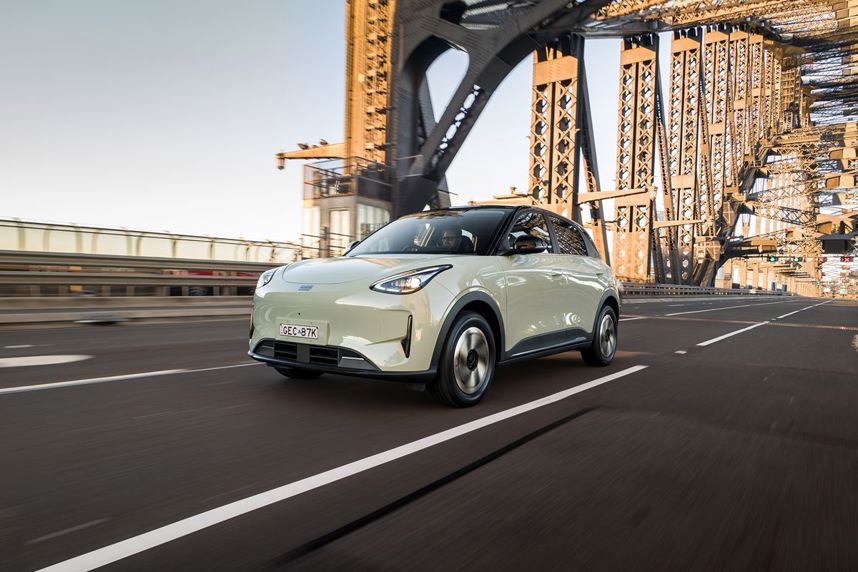
This one is pretty easy: even without driving the Complete, we would definitely go for the Inspire.
The Complete's $32,990 price looks attractive, and it gets a remarkably comprehensive equipment list for the money. But the 252km WLTP range and lethargic performance are likely to be sticking points.
That's not necessarily a problem if the EX2 is being bought specifically as an urban runabout, but the $5000 jump to the $37,990 Inspire gets you a substantially more useful 345km WLTP range, a 47.1kWh battery instead of 35.3kWh, and 85kW of power rather than 60kW.
The Inspire also increases maximum DC charging from 60kW to 80kW, which is another benefit that matters if you're using the car for longer trips, or wanting to pack the maximum amount of charge in at a supermarket DC charger when you are just popping in to buy bog rolls...
And then there is the equipment. Heated front seats and steering wheel, power tailgate, wireless charging, ambient lighting, six-speaker audio, alloy wheels and the surround-view camera make the Inspire feel substantially more complete rather than simply more expensive.
The Complete's 252km official range is enough for most daily commuting, but the Inspire's 345km gives you considerably more breathing room before you need to think about charging, and while the Complete is the value play, it doesn’t quite come across as the best value for money option, meaning the Inspire is the one we'd spend the extra $5000 on.
What other cars should I consider?
The obvious rivals are other affordable EVs such as the BYD Atto 1 ($30,990 to $36,990), Dongfeng Box ($32,990), MG4 Urban ($38,990) and GAC Aion UT ($39,990 to $43,990 - although a cheaper short range entry level model could be on its way here), as well as the upcoming Arcfox T1 ($34,990) and, potentially the Leapmotor B03X depending on where it is priced.
Then there are the larger SUV-style rivals like the GWM Ora 5 ($36,990) and Forthing Taikon ($39,990) that offer an even roomier alternative in the EV segment.
But the EX2 has a couple of useful differentiators against that group, most notably rear-wheel drive, a genuinely useful frunk and a surprisingly spacious cabin for its compact footprint, including rear seats that are surprisingly accommodating for such a compact car.


