



What’s this new car all about then?
Here's a weird fact to clutter up your brain for no good reason: the only car currently on sale new in New Zealand that is comparable to Honda's new Super-One EV is the Suzuki Jimny.
You may ask "how?" or "why would you make that comparison?" or even "what the hell are you talking about?", but hear me out - the Honda Super-One is an offshoot of the N-One kei car Honda has built and sold in Japan since 2012.
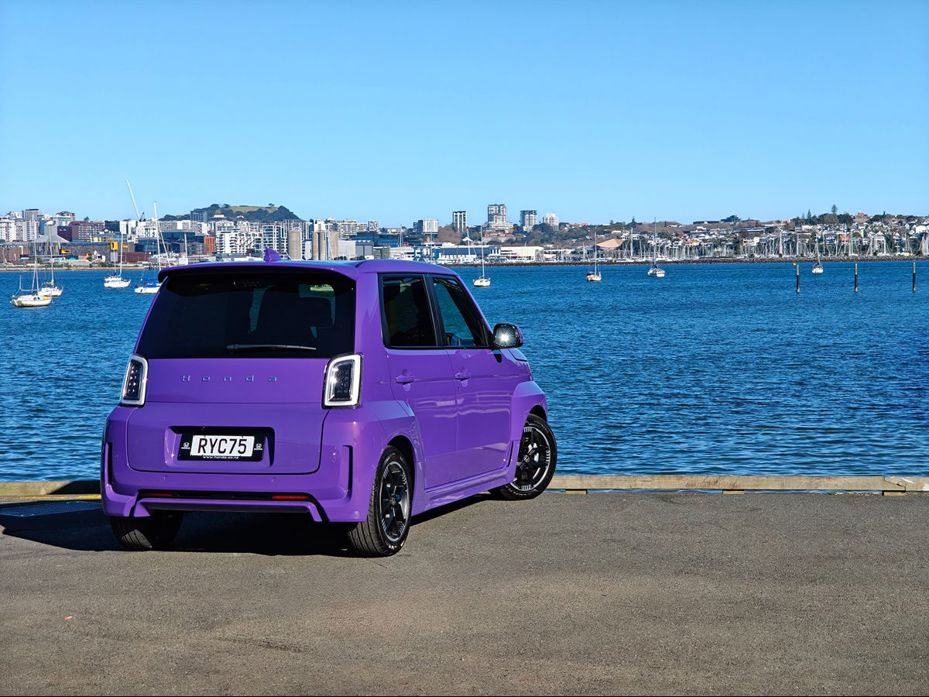
Short for keijidosha ('light vehicle' in Japanese), kei cars adhere to strict dimensions and power outputs to qualify for big tax breaks in the Japanese domestic market - that is maximum dimensions of 3.4m long, 1.48m wide and 2.0m tall, with a maximum engine displacement of 660cc and maximum output of 47kW.
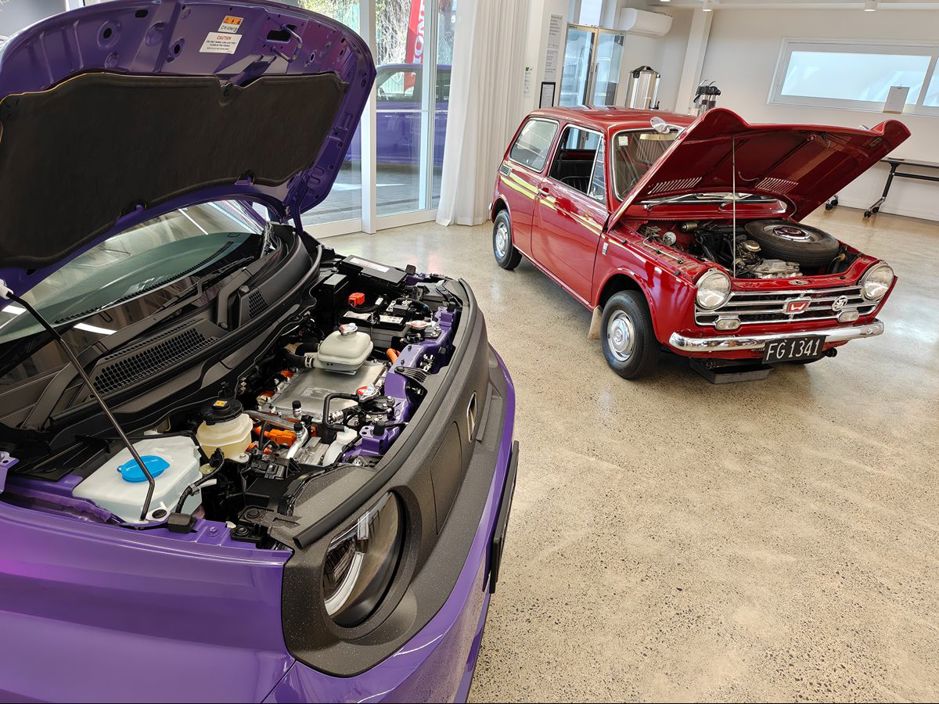
All of which the Honda N-One conforms with in its home market, but the Super-One blows this out of the water for export markets with a superb widebody kit that allows for a wider track and tyres, while also making it look like the 1983 City Turbo II, which is just awesome.
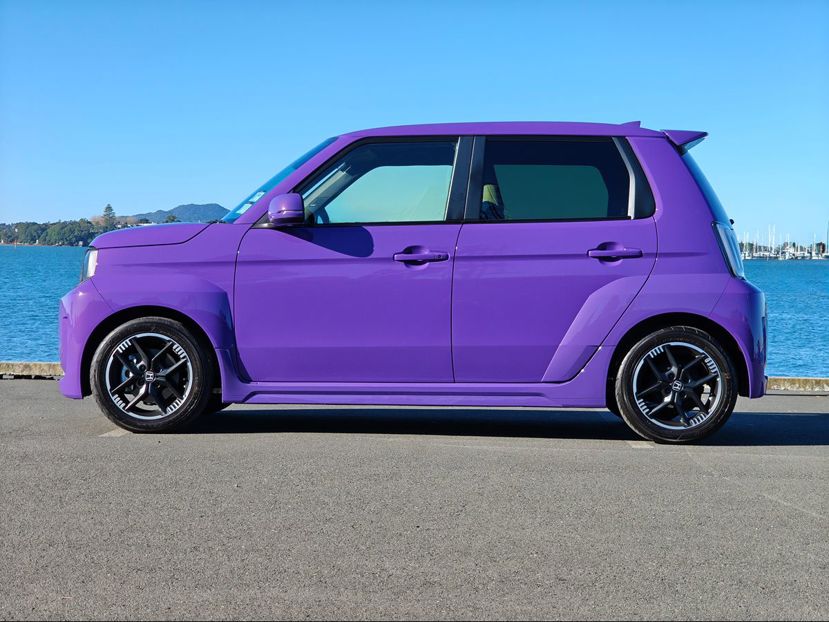
What has this got to do with the Jimny then? Well, that's exactly what Suzuki does with its diminutive off-roader - while the version we get here packs extended wheel arches and a throbbing 75kW four-cylinder engine, the narrow body JDM version packs a 47kW 660cc triple and loses the wheel arches to fit neatly into the kei class.
This makes the Honda Super-One and the Suzuki Jimny the only brand new kei (or at least kei-adjacent) vehicles you can buy new in New Zealand. See, told you it was a weird fact that would clutter up your brain for no good reason.
Like the Jimny, the Super-One gets a power boost for our shores, but in a different way - the Super-One's standard drive modes - Eco, Normal, City and Sport - all deliver the standard 47kW of the JDM N-One, but the export model gets a separate "Boost" mode that pumps things up to a throbbing 70kW, while also adding fake gear shifts and a growly engine noise for good measure.
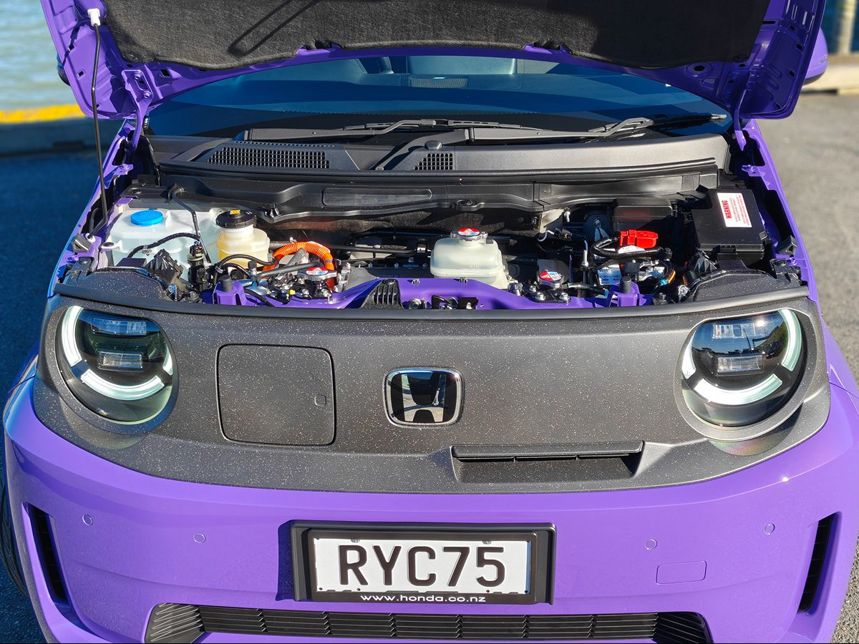
The Super-One packs a 29.6kWh battery and a single electric motor driving the front wheels. Honda claims a frugal 12.1kWh/100km energy consumption and a range of up to 253km under the NEDC test cycle. Under the more real-world reflective WLTP cycle it returns a combined figure of around 206km, while the city-only driving range (probably a more useful figure for a car like the Super-One) is 320km.
If you are currently rolling your eyes and loudly proclaiming to your cat that this isn’t anywhere near enough and how are you supposed to tow your boat from Auckland to Wellington and back without stopping, then just stop reading now, because the Super-One just isn’t for you…
No, the Honda Super-One is proudly and unashamedly a city car, conceived to blast around busy urban streets with minimum effort and maximum zippiness (that’s a word, I checked). Its MacPherson strut front and torsion beam rear suspension is textbook small city car set up, even with drum brakes on the rear ‘cos it only weighs 1093kg anyway.
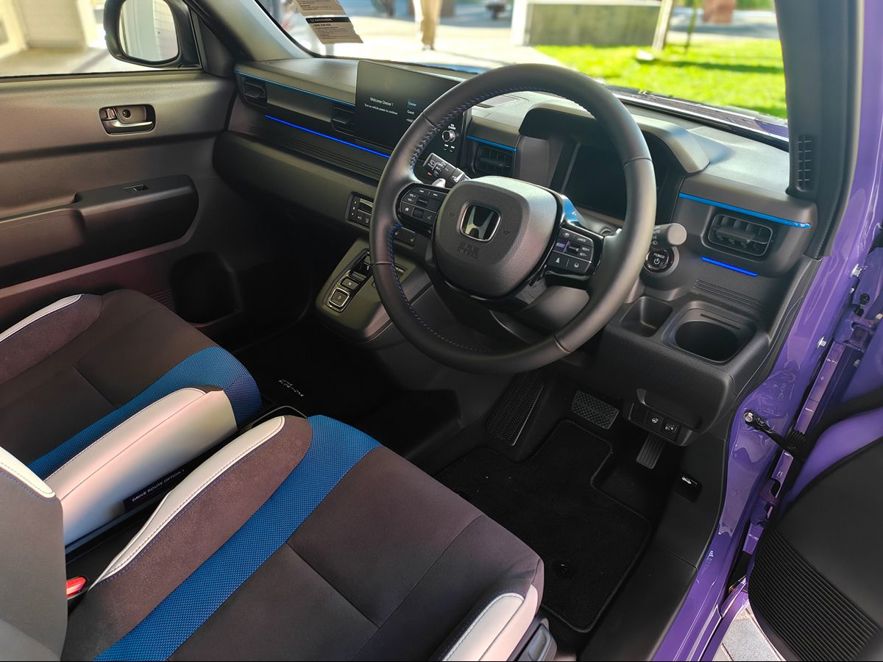
But at the end of the day, the Super-One is still a tiny city car that costs $41,900, so it is utterly packed to the brim with technology and features that you wouldn’t normally expect to see on a tiny urban blaster.
In fact, it boasts keyless entry and push button start, wireless Android Auto and Apple CarPlay, a premium Bose 8 speaker audio system, LED headlights, taillights and DRLs, interior ambient lighting, a heated steering wheel and Honda's brilliant ‘Magic Seat’ rear seat folding system.
Safety and driver assists are likewise high-end offerings with adaptive cruise control, auto high beam support and traffic jam assist complementing the standard array of safety assists.
What’s it like to drive?
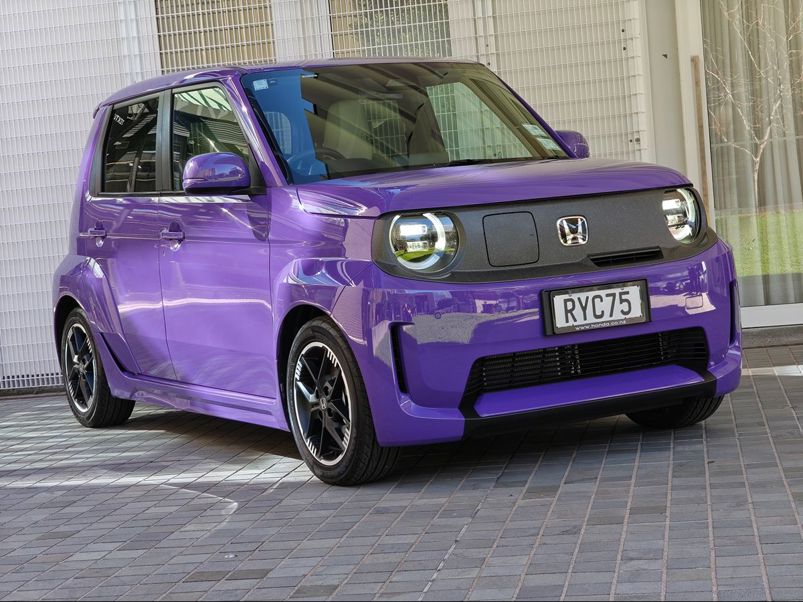
Driving the Super-One is simply a remarkably fun experience, particularly in city conditions. Its low weight and responsive electric motor make it feel quick off the line, even just using the standard 47kW modes, while it is also exceptionally manoeuvrable, complemented by an extremely small turning circle.
In its normal driving mode with 47kW on tap, it is an easy and responsive city car. It feels brisk off the line and considerably more perky than its tiny power output might suggest. Dropping it into “City” drive mode adds one-pedal driving into the standard mix, while engaging "Sport" mode introduces those simulated gear shifts and engine sounds to the 47kW output, which is fun but hardly essential.
The real excitement comes from the "Boost” mode that is activated by a separate dedicated button on the steering wheel. Pushing the purple button provides a noticeable surge in performance, allowing the car to launch quickly enough to spin its front wheels, with a deeper fake roar and more pronounced gear shifts.
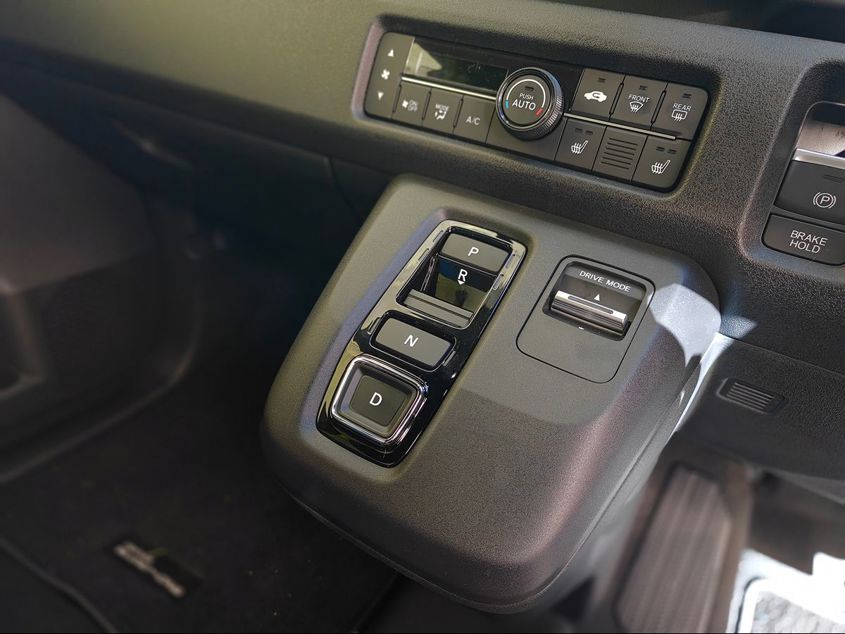
Contrary to its name the mode doesn’t just provide a short-lived boost in power, rather it is essentially a “track” mode on top of Sport that can be left engaged all the time if you want to just go silly with all that power.
One slight irritation is the fact that the full 70kW power boost is permanently tied to the Boost mode, meaning you always have to have the fake engine noise and gear shifts to get the full 70kW output - there’s no way to have smooth, silent electric running with all 70kW on tap.
It’s a small niggle, and not really a big problem, because smashing around the city in Normal mode on 47kW is just about perfect - you can give it full throttle everywhere and still stay within legal limits. Well, more or less.
The Super-One’s steering is incredibly direct and responsive, making the car feel nippy and accurate. This directness is well-judged, allowing for stable and precise handling through corners without feeling overly twitchy on straight roads.
Handling wise, the Super-One feels glued to the road, giving the driver a sense of high performance and agility even at modest speeds, while the ride is firm and sporty but not uncomfortable, avoiding the harshness that can sometimes affect lightweight vehicles.
While there is noticeable road and wind noise due to minimal soundproofing - this and the hard plastics used in the interior betray the Super-One’s budget kei car origins - but this actually contributes to the engaging experience, enhancing the sensation of speed.
What’s the pick of the range?
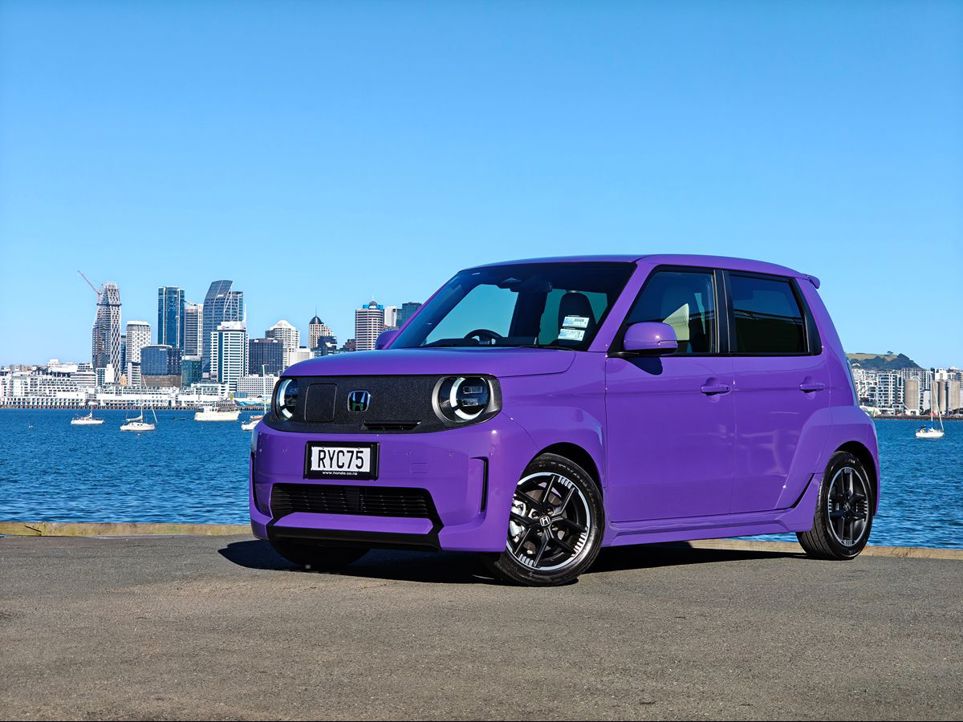
At time of launch the Super-One is only available in two forms - the standard Super-One and the Super-One Kuro Edition.
The standard car gets all the same standard equipment as the Kuro Edition, with the latter asking an extra $3k for a gloss black roof, gloss black mirrors, a gloss black insert in the rear hatch and a gloss back roof spoiler. In case you were wondering, 'kuro' means 'black' in Japanese. The Kuro Edition is only available in the Boost Violet Pearl paint finish, while the standard car is also available in Mono Grey and Crystal Pearl Black.
The black roof and big wing of the Kuro Edition do look very cool, but then you could just as easily get an aftermarket wing and have the roof and mirrors wrapped for less than $3k on the standard car anyway…
What other cars should I consider?
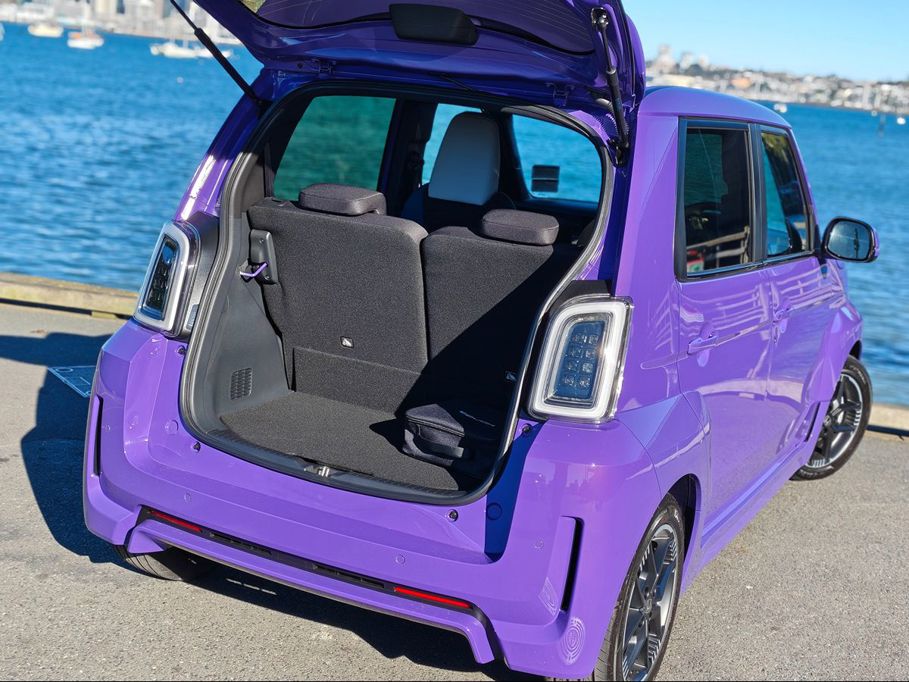
That is a good question! And the answer is… not actually that easy.
Given that, aside from the Suzuki Jimny, there aren’t any kei car/kei car adjacent vehicles on the market here, so a direct comparison in terms of size isn’t really possible.
However, among small electric city cars there are a few, such as the cheaper Dongfeng Box ($32,990, currently on special at $29,990) and BYD Atto 1 ($30,990 to $36,990), as well as the $37,990 Fiat 500e, all of which are - believe it or not - bigger than the Super-One.


