



The Range Rover Sport, with its famously "reductive" styling, is now a familiar sight. It was launched back in 2022 and has progressed through a multitude of models and engine options. You might not even look twice at one these days (although it does still look stunning in any guise).
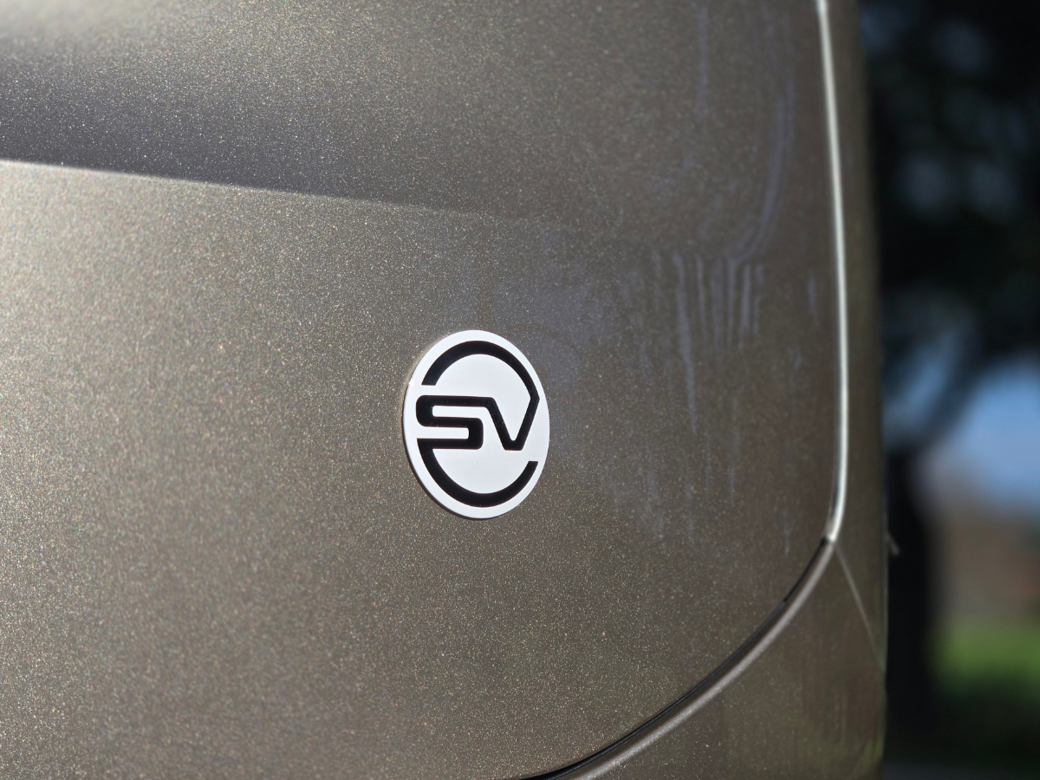
Anyway, brace yourself for this one. It's a Range Rover Sport SV, and with a few choice options on board as featured here, it'll set you back $378,600. Made you look again, right?
SV is the ultimate Range Rover Sport. This model grew out of two special editions powered by the BMW-sourced "P635" (that's ps output) 4.4-litre mild hybrid V8. Edition One and Edition Two were rolled out from 2023, evolving into the production SV we see now. The "SVR" badge used on the previous performance-Sport is no more.
On the outside: what are the Range Rover Sport SV's main design features?
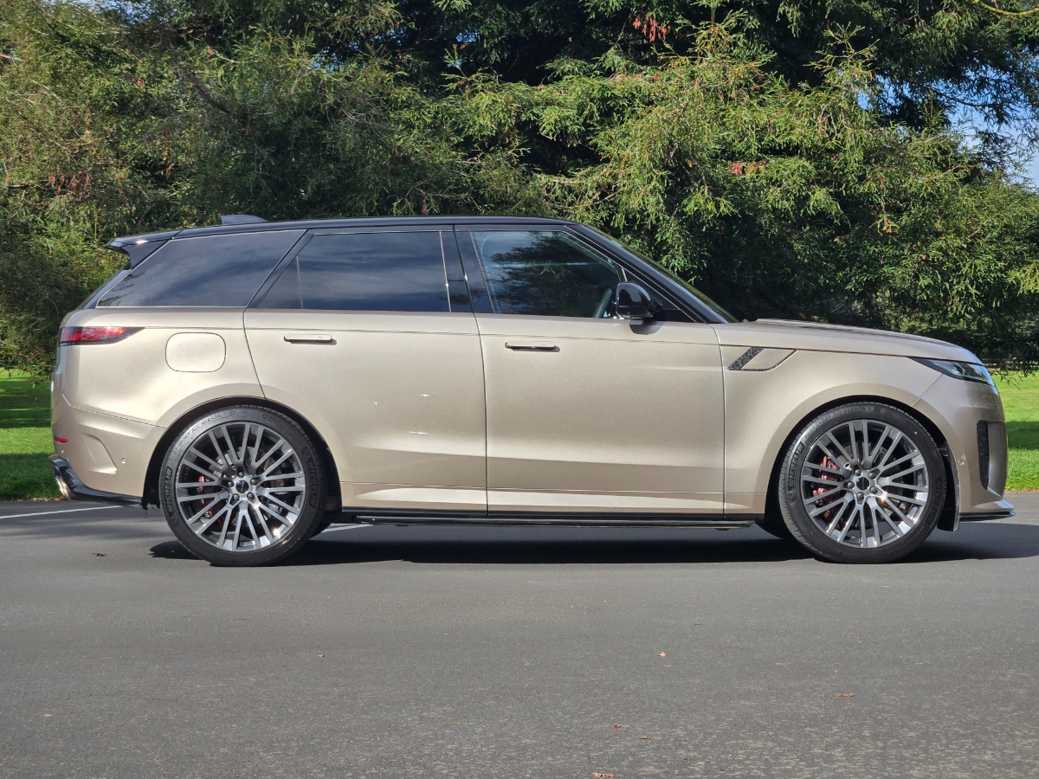
You won't need us to talk you around the exterior of the Range Rover Sport. With that reductive design ethos, what would we talk about anyway?
The SV is much less boisterous and obvious than the previous-generation SVR, but it's a second quicker to 100km/h and infinitely more capable over tricky backroads.
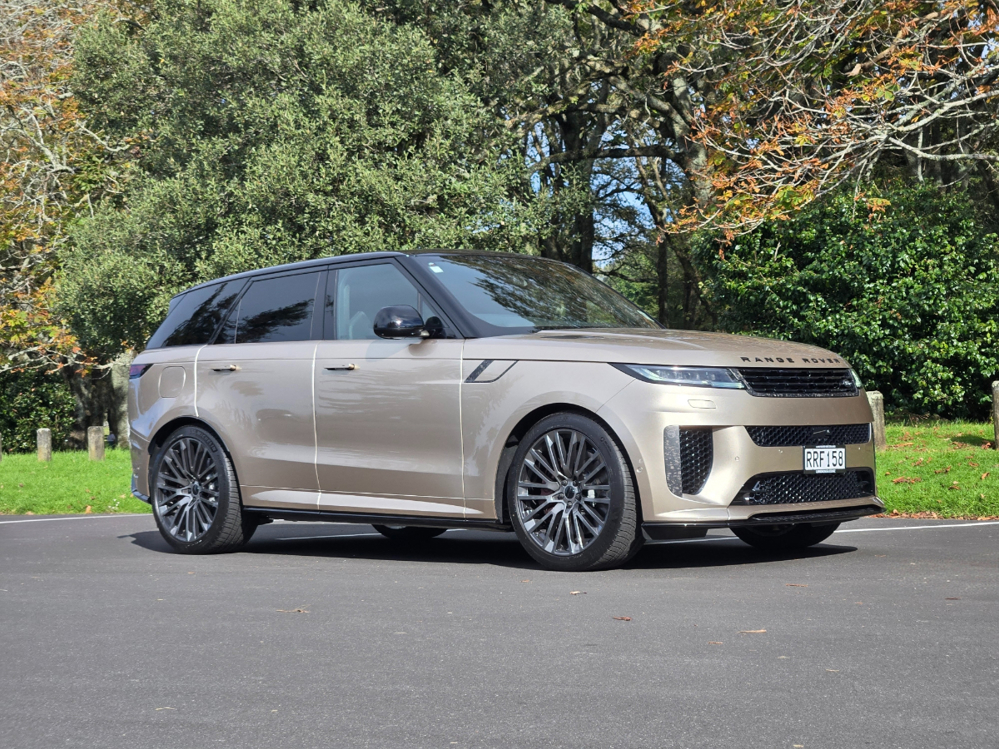
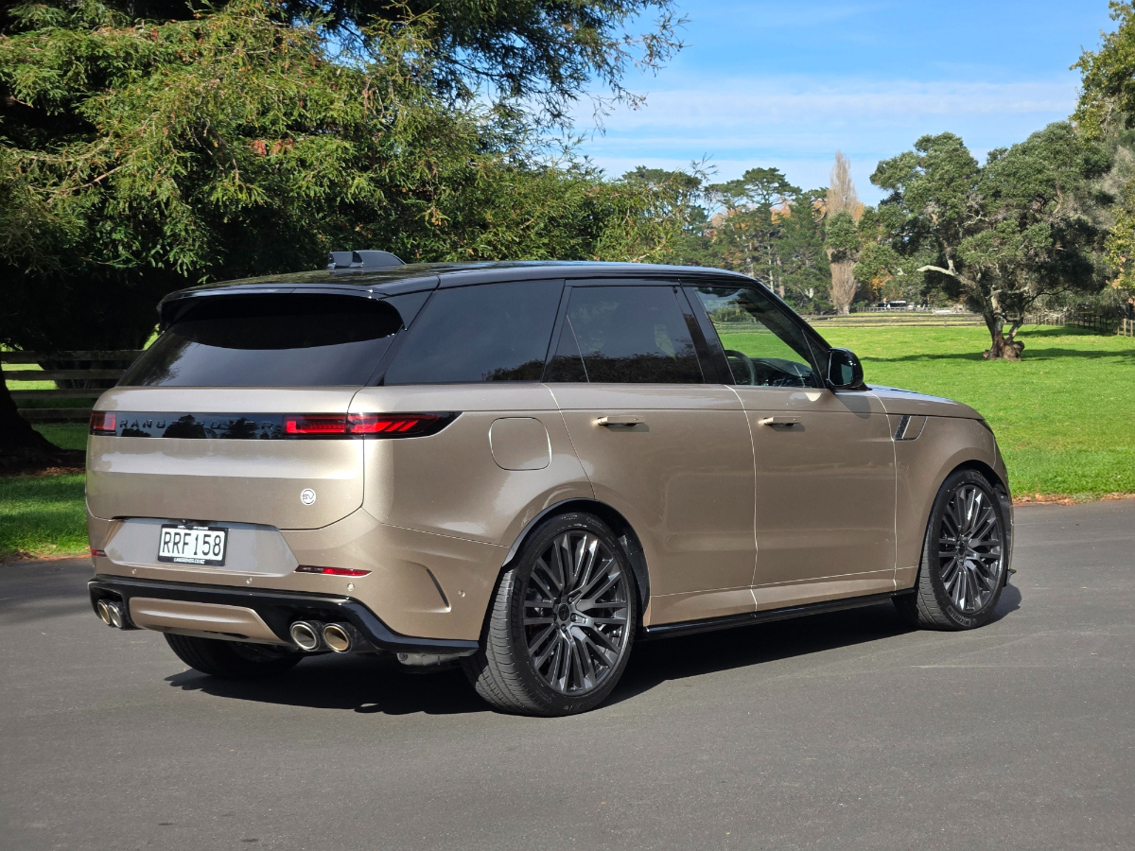
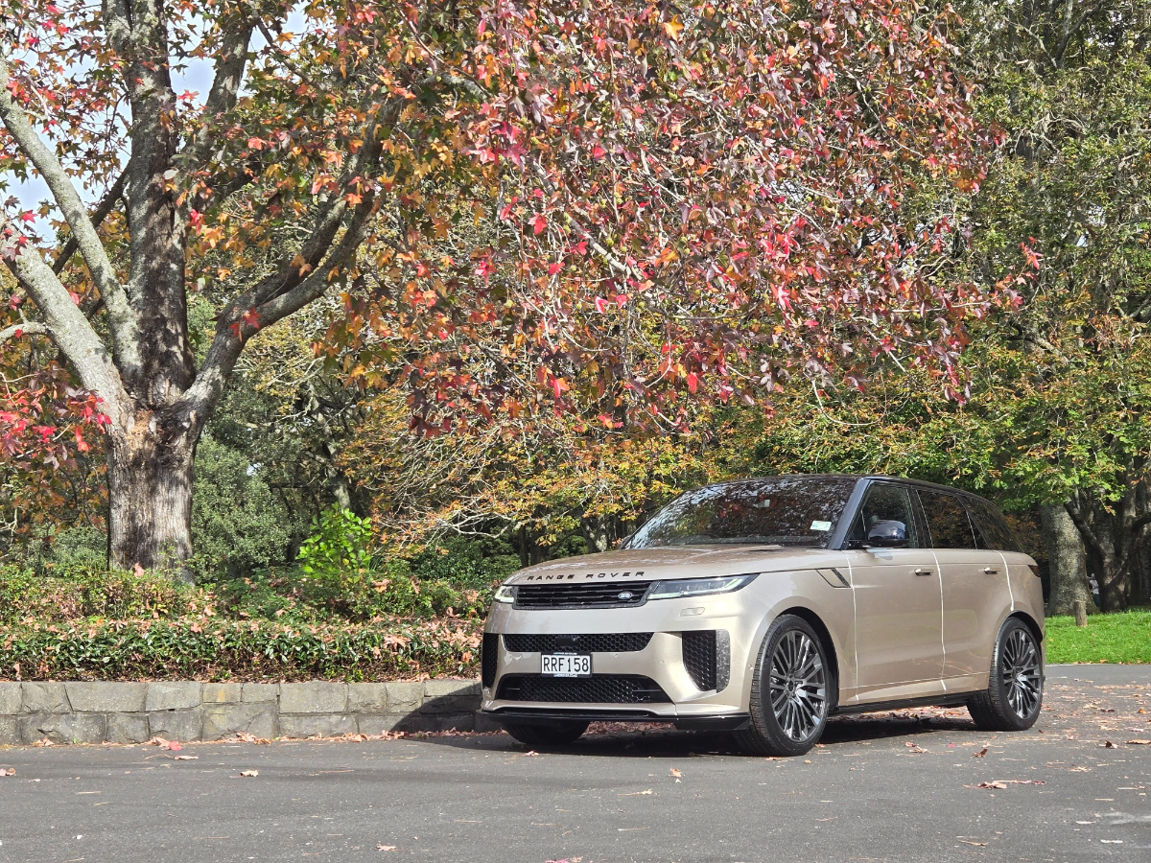
But there are some elements of our specific test car worthy of mention. First is the Sunset Gold paint colour, which initially seems a little like it's for... the older person, but it has a certain something when you see it in the metal (well, on the metal). As it should: it's a special SV hue and adds $16,000 to the price.
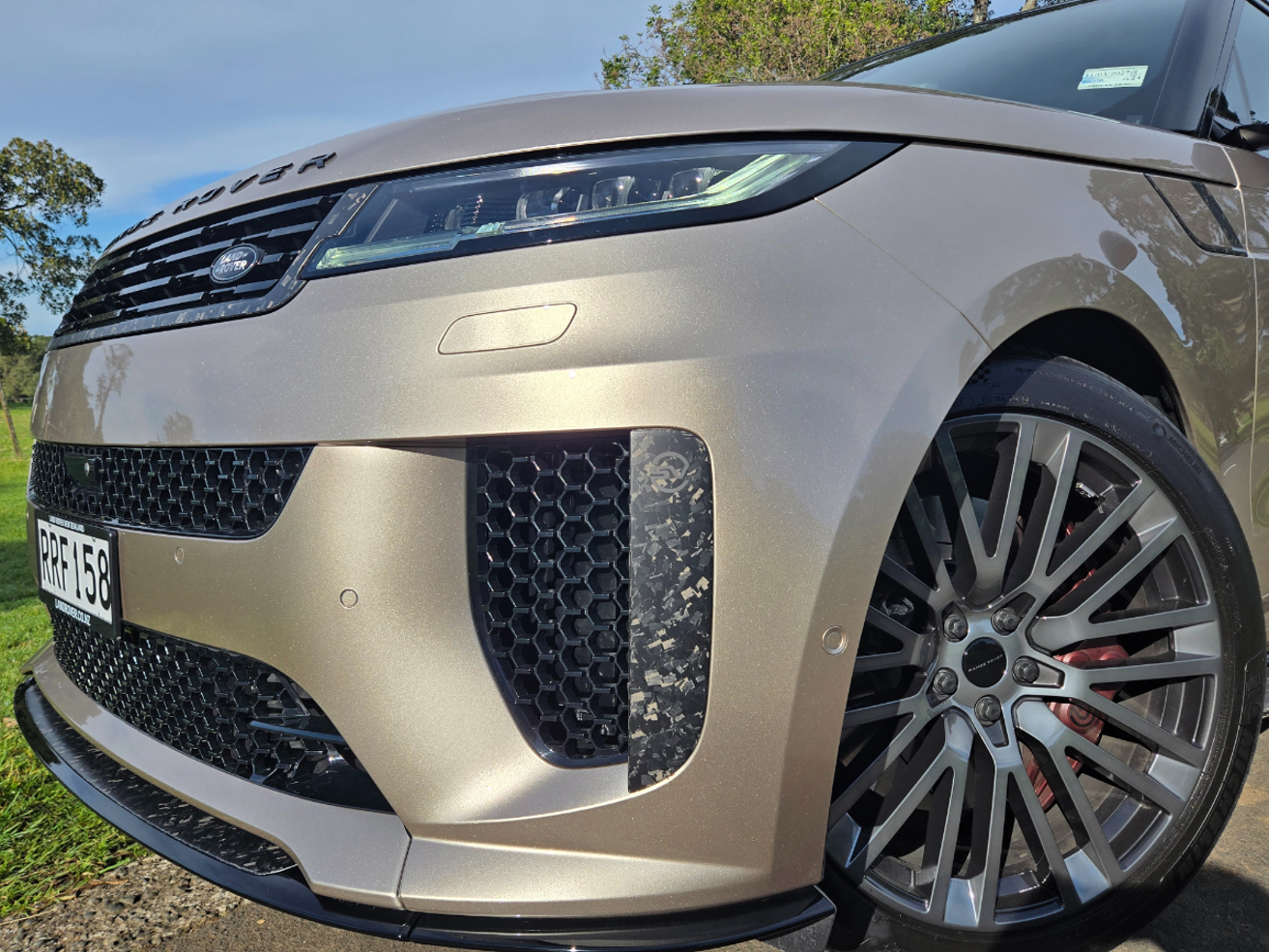
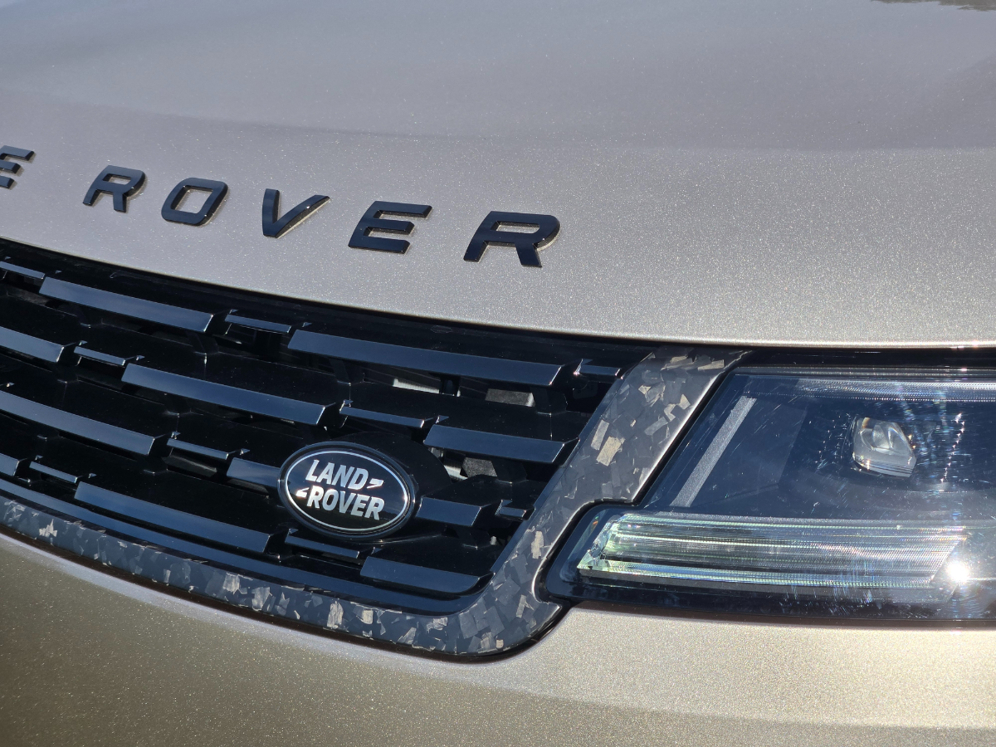
Second is the $11,900 Carbon Exterior Package, which applies distinctive forged (aka "chopped") carbon trim to the grille surround, front splitter, intake blades, fender vents and exhaust-pipe outer trims.
Carbon's a bit of a thing with this SV line; there's even a specific "Range Rover SV Carbon" model for $389,900 that has all of the above and more as standard.
OVERVIEW
| Price | $339,900 ($378,600 as tested) |
| Body style | 5-door SUV |
| Wheels and tyres | Optional 23in alloy wheels, 285/40 front and 305/35 rear tyres |
| Length | 4946mm |
| Wheelbase | 2997mm |
| Weight | 2560kg |
| Website | landrover.co.nz |
On the inside: what's the Range Rover Sport SV cabin like?
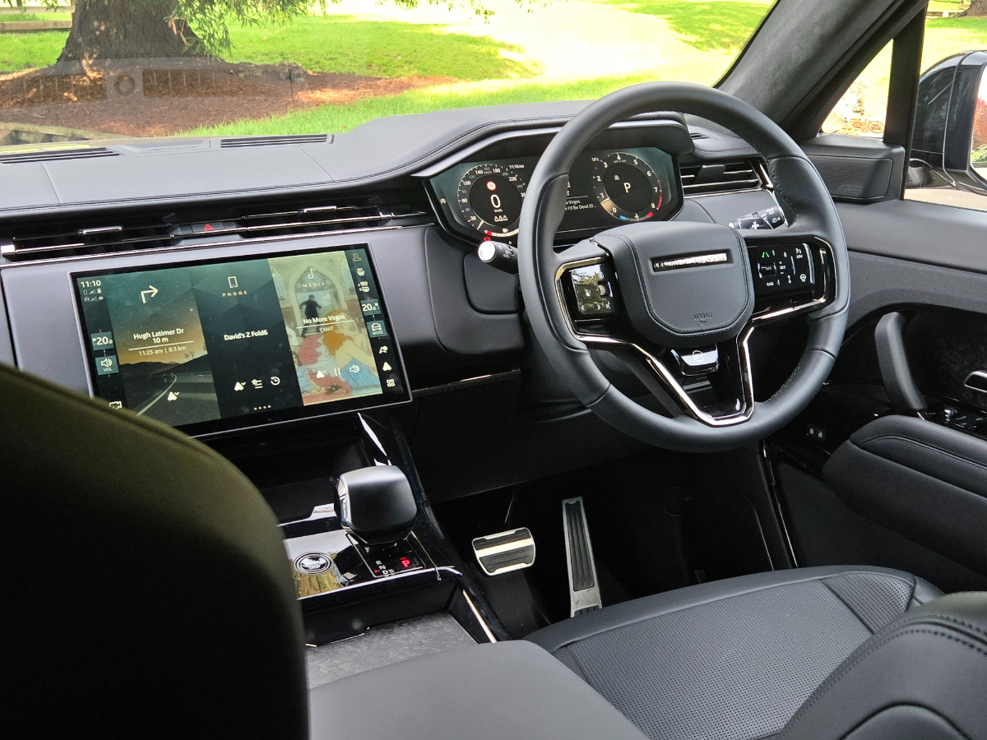
Inside, the SV is like... a Range Rover Sport. So it's understated and extremely elegant, but potentially disappointing for buyers who might expect this $340k model to look a little different.
Land Rover claims an automotive first with the SV's Body and Soul Seat System, which translates music audio signals into physical vibrations.
A recent Sport update has moved most cabin controls (including climate settings) into the Pivi Pro infotainment screen, which leaves the console looking very swish and clean, but also leaves the user experience less tactile and intuitive than it was before.
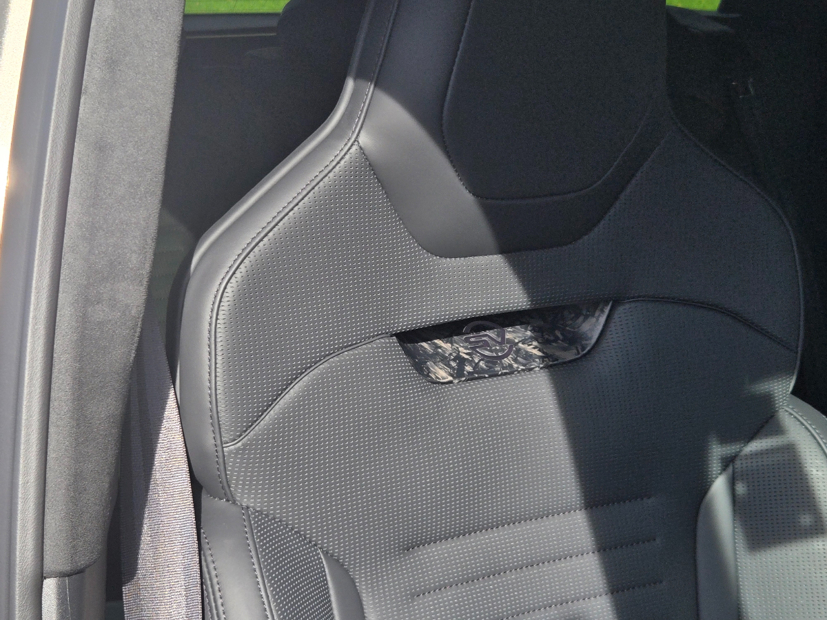
You can't see it, but you can feel it: Land Rover claims an automotive first with the SV's Body and Soul Seat System, which translates music audio signals into physical vibrations with "wellness benefits validated in collaboration with Coventry University". Who'd have thought a super-fast SUV could be good for your health?
Our test car did add some extra visual character to the cabin with the $3600 carbon-fibre seatback option, which certainly looks dramatic - although you have to be sitting in the back to even know it's there.
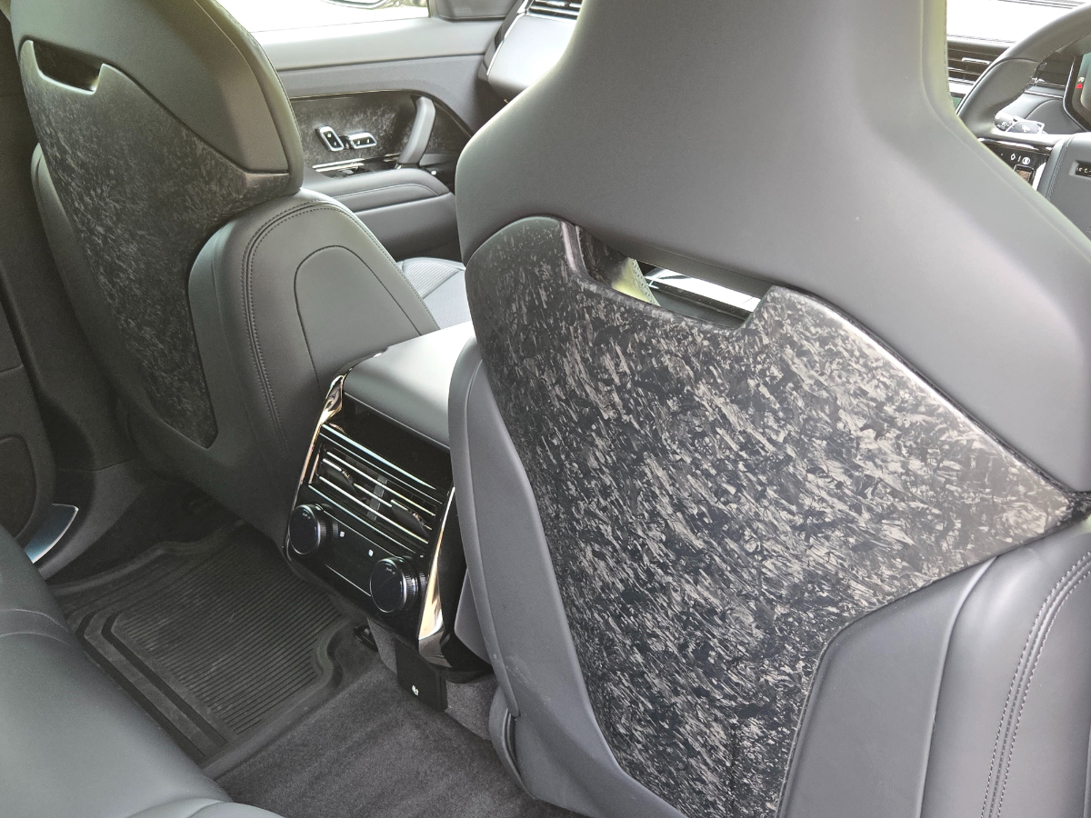
Another $2200 gets you a variety of carbon trim inserts around the cabin (they're called "finishers" in Range Rover world), including the centre console and door cards.
INTERIOR
| Head-up display | Yes |
| Infotainment screen | 13.1 inches |
| Phone projection | Wireless Android Auto and Apple CarPlay |
| Wireless phone charger | Single |
| USB ports | 2x USB-C front (1 concealed in console box), 2x USB-C rear plus 12-volt and 3-pin plug |
| Climate control | 4-zone |
| Front seat heating/ventilation | Yes/yes |
| Front seat adjustment | 14-way power with memory for driver and passenger |
| Boot capacity | 647 litres |
| Rear seat split/fold | 40/20/40 |
| Power tailgate | Yes, hands-free |
On the road: what's the Range Rover Sport SV like to drive?
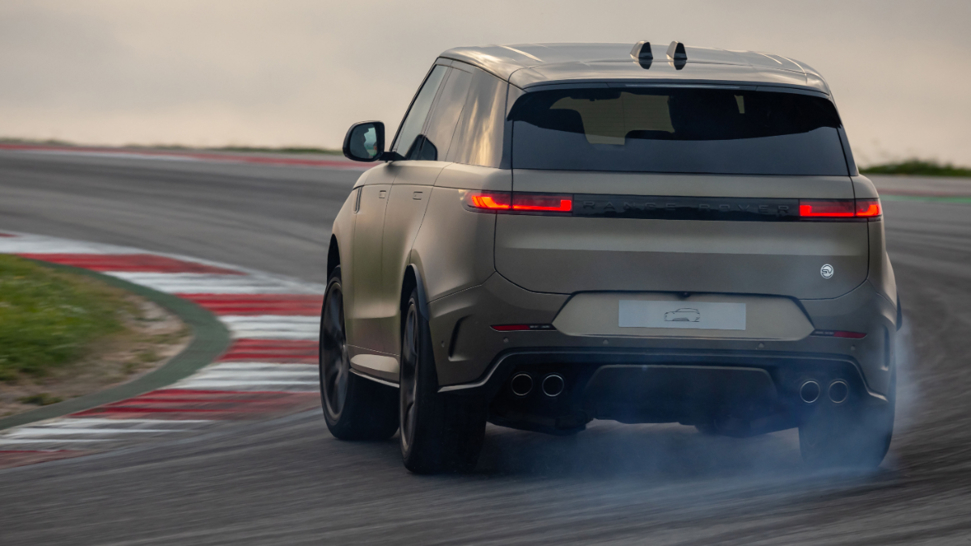
The Sport SV has quite a lot in common with the Land Rover Defender Octa: same tuned-up V8, similar 6D adaptive air-suspension technology. Not to mention a pricetag that also starts with a "3".
There's a lot of tech, but the SV feels remarkably natural at high speed. All those systems work together to create one incredible whole of physics-defying dynamic behaviour.
V8 engines are easy to understand and this one is awesome, albeit not as sonorous as the ancient supercharged powerplant from the previous SVR. Still sounds cool with the active exhaust flaps open, though.
6D suspension is not so easy to understand, and if you ask anybody affliliated with Land Rover you're likely to get a load of emotive technical fluff back. But basically, the suspension is a system of interlinked adaptive dampers that react to any driving scenario in synch with each other. The "6" references the various ranges of movement: lateral, longitudinal, vertical, pitch, yaw and roll.
The SV has another dynamic trick up its sleeve: specially configured 4-wheel steering. On a normal Sport, the rear wheels turn in the opposite direction to the front up to 50km/h for greater agility, then go in the same direction for smoother cornering and motorway lane-changing. In the SV, that changeover is delayed until 128km/h, meaning maximum handling response and very sharp turn-in even at relatively high speeds. Or any legal speed in NZ, really.
That's a lot of tech at work, but the thing about the SV is that it feels remarkably natural at high speed. All those systems do genuinely work together to create one incredible whole of physics-defying dynamic behaviour. It does not feel like a 2.5-tonne SUV, nor does it feel like technology has control of the driving experience (although it often does).
There's plenty of powertrain/chassis configuration available via the infotainment screen, but you want everything all of the time you can simply click the SV button at the base of the steering wheel: it glows red and so do the gearshift paddles. And so does the mist as you set off.
The AWD is rear-biased, with up to 70% of drive to the back in normal drive modes, or 80% in SV.
So yes, the SV is totally capable on the trickiest backroad and will please the most demanding driver. But Land Rover also knows its customers, and it's a fact that most of these cars will spend their days in city driving or cruising motorways. So it's not suprising that you can click that big red SV button on the steering wheel for the enhanced sound and response, but the car remains easy to live with and luxurious-feeling for day-to-day driving.
We can argue all day about whether a super-sports large SUV makes sense, but you can't can't argue that the SV has a spectacular range of talents.
SPECIFICATIONS
| Powertrain type | Twin-turbo petrol mild hybrid |
| Capacity | 4395cc |
| Power | 467kW |
| Torque | 750Nm |
| Transmission | 8-speed, AWD |
| Power to weight | 182kW/tonne |
| Adaptive suspension | Air suspension, 6D Dynamics |
| Efficiency | 13.5l/100km (3P-WLTP) |
| Tank size, fuel type | 90 litres, 95 octane |
| Tow rating | 3.5 tonnes |
On ownership: what's the Range Rover Sport SV warranty and servicing situation?
The vehicle is covered for 3 years/100,000km. Servicing is required every 12 months/15,000km.
On the whole: what do we think of the Range Rover Sport SV?
The SV seems much less boisterous and obvious than the previous-generation SVR, but it's a second quicker to 100km/h and infinitely more capable over tricky backroads. A lot more luxurious and versatile as a day-to-day driver, too.
The SV truly excels as both super-luxury and super-sporty SUV; it really can do it all. As it should for the money.
Range Rover Sport SV FAQs
What kind of car is the Range Rover Sport SV?
A luxury/performance 5-seat SUV.
Does the Range Rover Sport SV have hybrid or EV technology?
It's a V8-petrol with a 48-volt mild hybrid system.
What’s the fuel economy of the Range Rover Sport SV?
13.5l/100km under NZ's 3P-WLTP protocol (figure for Range Rover Sport P635 Edition One).
Is the Range Rover Sport SV safe?
All Sport models are rated 5 stars by ANCAP, valid until December 2028.
What safety and assistance features does the Range Rover Sport SV have?
| Intelligent lights | LED adaptive |
| Rain sensing wipers | Yes |
| Airbags | Dual front, front and rear side, side-curtain |
| Adaptive cruise control | Yes |
| Driver attention monitor | No |
| Traffic sign recognition | Yes |
| Forward collision warning | Yes |
| Blind spot warning/assist | Yes/no |
| Lane departure warning/assist | Yes/yes |
| Rear cross traffic alert/braking | Yes/yes |
| Reverse collision braking | Yes |
| Parking sensors | Front and rear |
| Camera system | 360 degree |
What are the Range Rover Sport's main rivals?
- BMW X5 M Competition ($249,400): Conceptually close. But SV money could actually get you the higher-up XM (and still a lot of change)
- Porsche Cayenne Turbo GT ($405,500): Monstrous flagship Cayenne is fully prepped for track days
- Mercedes-AMG GLE 63 S ($264,300): Never mind the "63" badge, this is a 4.0 turbo-V8
- Audi RS Q8 Performance ($291,490): Old-school Audi with powerful V8
- Land Rover Defender Octa ($347,900): Same engine/6D suspension in super-off-road package