



What’s this new car all about then?
The Volkswagen T-Roc was launched back in 2017 to fill a gap you might not have realised existed: a hybrid size/style between the Golf hatchback and Tiguan SUV. It adopted the ride height of an SUV but kept much of the profile of a passenger car, with a curvaceous D-pillar and sloping roofline.
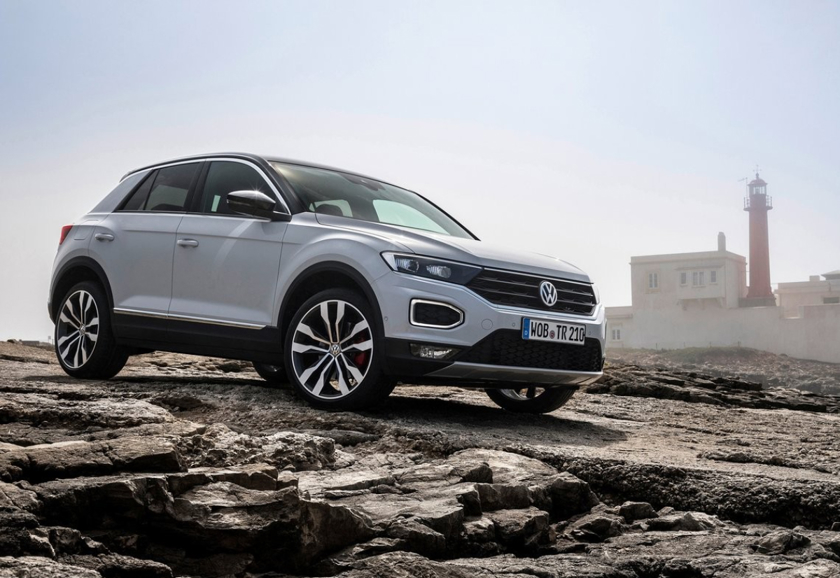
VW has done pretty well out of it. T-Roc is currently Europe's number one SUV, global sales have now ticked over 2 million and it's made a solid contribution to the brand's Kiwi count, with 3000 registrations since local introduction in 2018.
So don't be surprised that the second-generation T-Roc is more of the same, just a little bigger (120mm longer, 30mm in the wheelbase), sleeker-looking and with VW's latest tech.
But the new T-Roc, built in Portugal, is also something of a watershed moment for VW NZ because this is the company's first mild hybrid (MHEV). Yeah, yeah, we know: the market is awash with hybrids of the mild, full and plug-in kind (even among VW's sister brands), so Kiwi-Dub is a bit behind here. But T-Roc is now one-up on the larger Tiguan in terms of electrification.
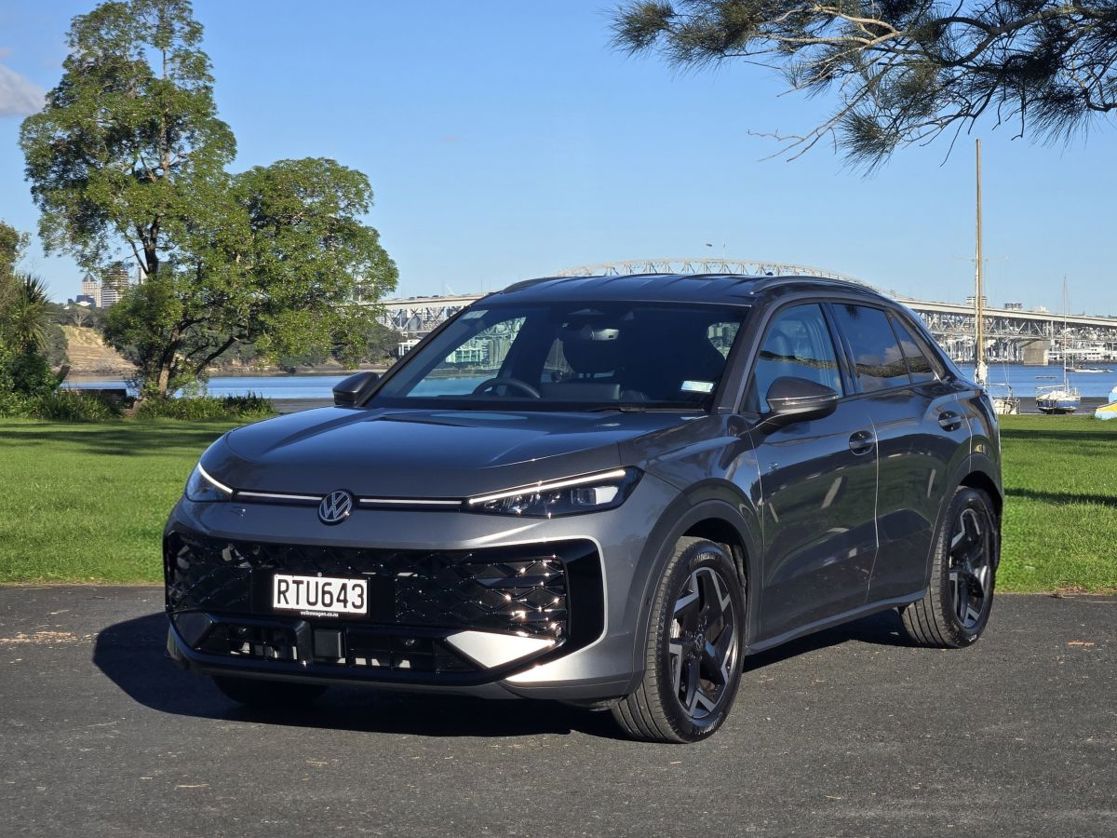
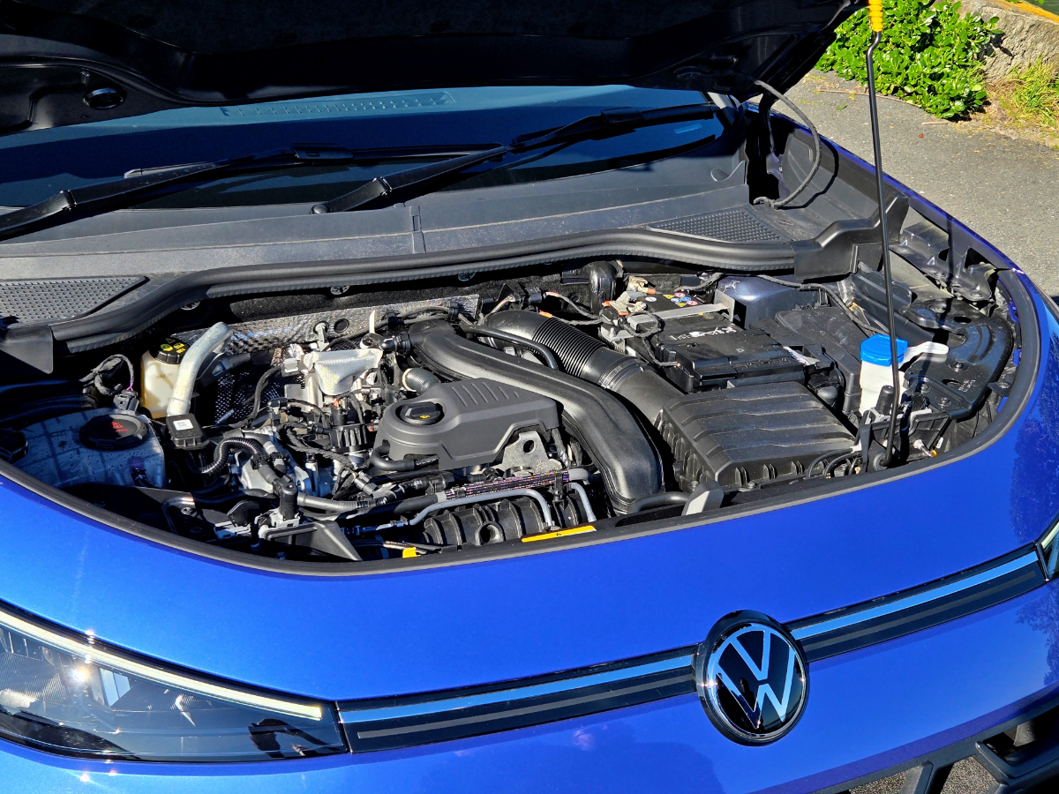
The new T-Roc comes to NZ in two forms; Life and R-Line, both with the same 110kW/250Nm MHEV powertrain that consists of a 1.5-litre four-cylinder turbo-petrol engine and a 48-volt lithium-ion battery-assist system. Both are front-drive; Life rides on 17-inch wheels, the R-Line on 18in.
The engine is matched to a 7-speed dual-clutch transmission, and both models sip fuel at the rate of 5.6l/100km (3P-WLTP), a massive improvement on the previous model's 7.0l/100km.
If you're wondering where the properly hot R (not to be confused with the dressed-up R-Line) is, there's one on the way, set to arrive around this time next year. VW has not shared a lot of technical detail or official images as yet, but it will be MHEV too and make 245kW.
Based on what we know about current VW Group outputs and platforms, expect it to also have some kind of fancy torque-vectoring rear axle (which the previous T-Roc R missed out on), like the VW Golf R, Cupra Formentor VZ and Audi S3.
How much is it?
The T-Roc Life kicks off the range at $53,990 and while it's the entry-level version of VW NZ's entry-level model line, it's far from basic. Standard are LED headlights and tail-lights, keyless entry/start ("Kessy" in VW-speak) and a handy double-floor boot (now 30 litres larger, at 475l).
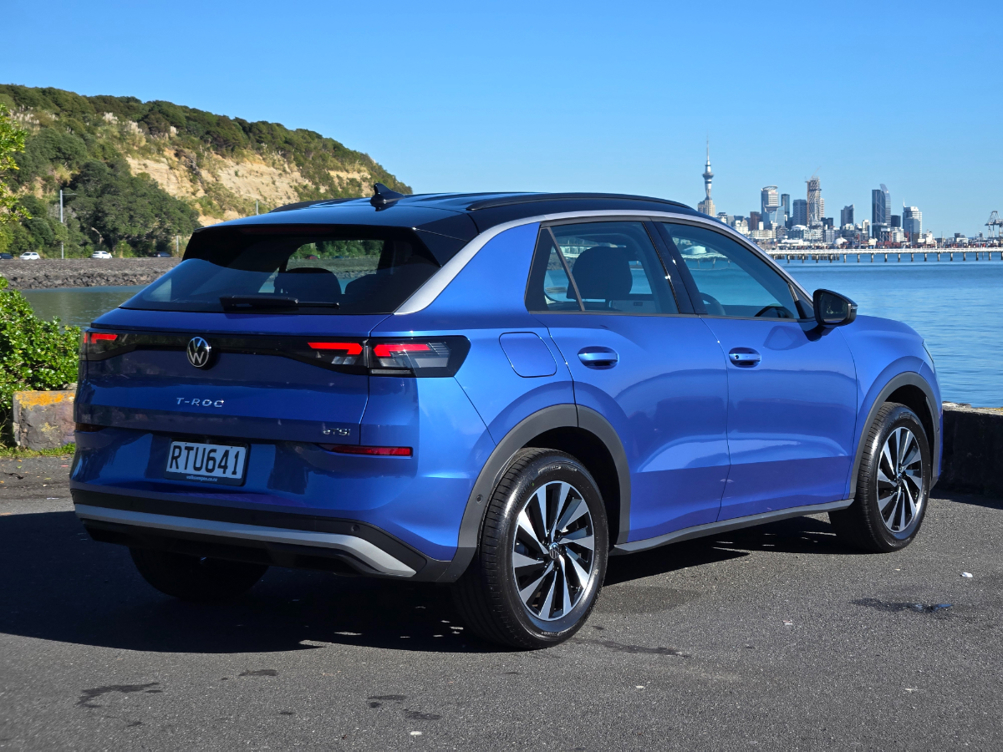
Significant upgrades for the Life over the previous T-Roc include a generously sized 12.9-inch infotainment screen, wireless Android/Apple phone projection, triple-zone climate control (now that's fancy) and hands-free power tailgate.
Several safety features have also been added or upgraded compared to the previous car, including pedestrian and cyclist recognition for the autonomous braking system, a centre airbag, cross-traffic alert front and rear with exit warning, oncoming vehicle braking, traffic sign recognition, driver attention monitor (the camera is hidden in the rearvision mirror) and fully automatic parking (gear selection, steering, throttle and braking all taken care of).
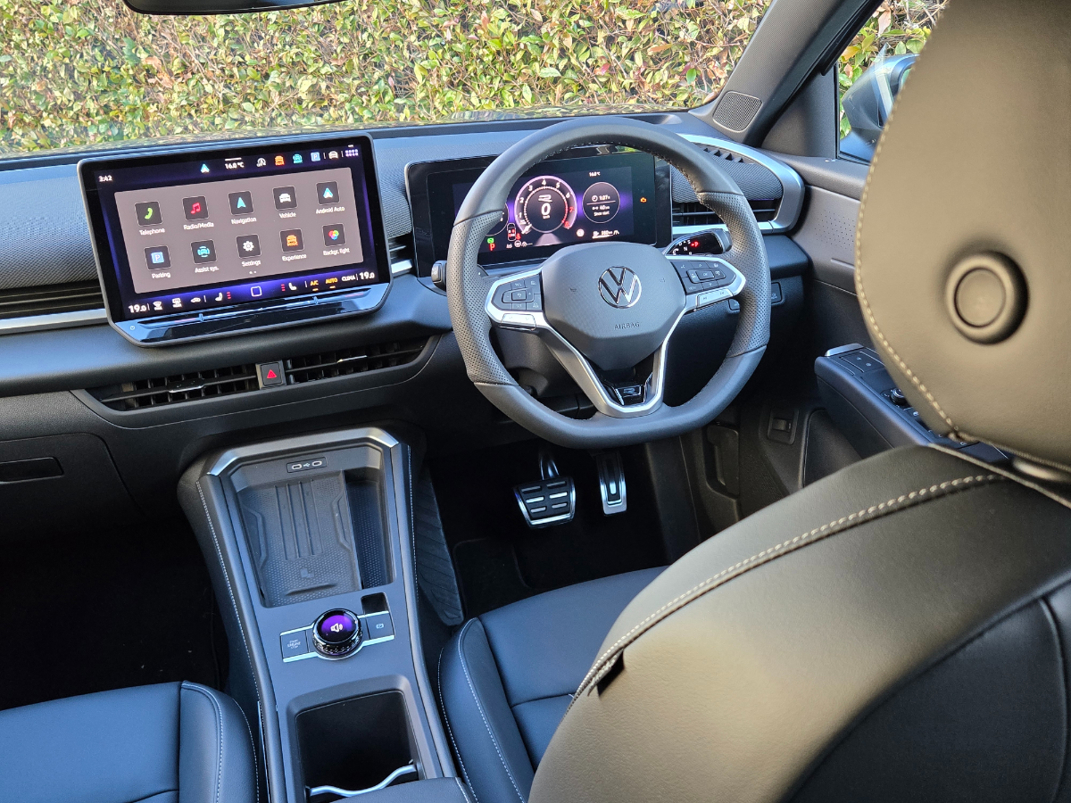
The T-Roc R-Line is a slightly more complex pricing story. The first shipment of cars (48 of the total 80) are R-Line First Edition models, priced at $65,490.
The standard R-Line gains unique exterior styling elements, sports suspension, progressive steering, head-up display, privacy glass, driving profiles and 30-colour ambient lighting (both adjusted via the Driving Experience Controller). The safety suite has gained a more comprehensive lane/side assist package, including lane-centring, and emergency assist to halt the vehicle if the driver becomes unresponsive.
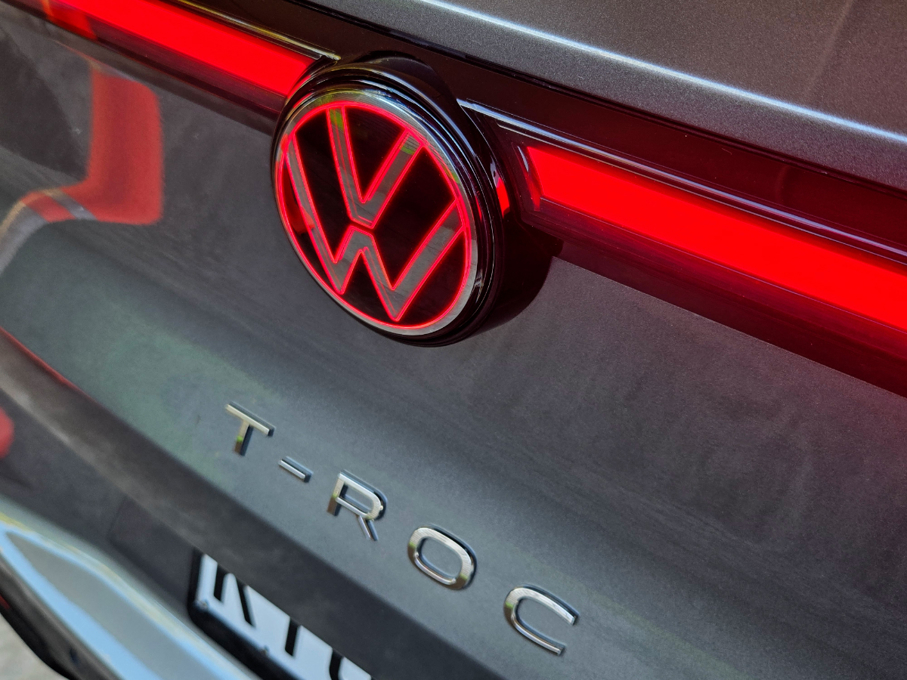
But unique to the First Edition are illumination for the grille-strip and front/rear VW badges, LED Plus headlights, Varenna leather upholstery with power-adjustable front seats, heating for all four outboard seats, and heated steering wheel. There's a lot of heating.
Sans that extra First Edition equipment, the T-Roc R-Line will revert to $59,990 from August-September.
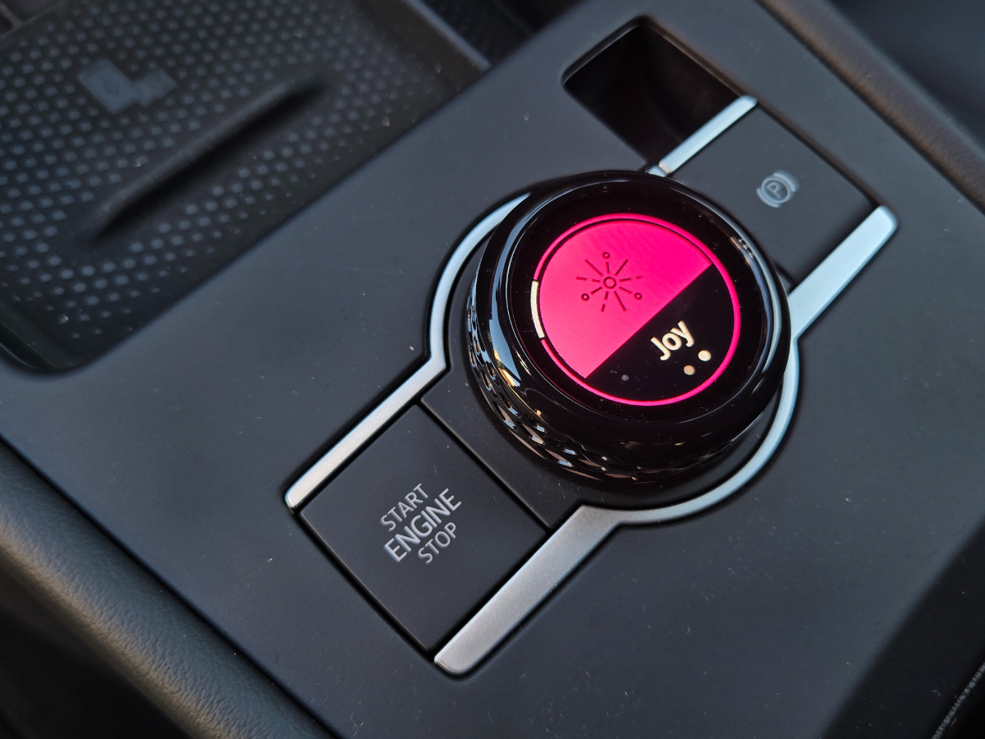
But from then, buyers will also be able to add all the First Edition gear plus Harman Kardon 480W sound system and panoramic sunroof for $7500, with the Touring Pack. There's also a Black Pack with 19-inch York Aero wheels for $1500, or the same exterior treatment with 20-inch Calgary wheels for $2500.
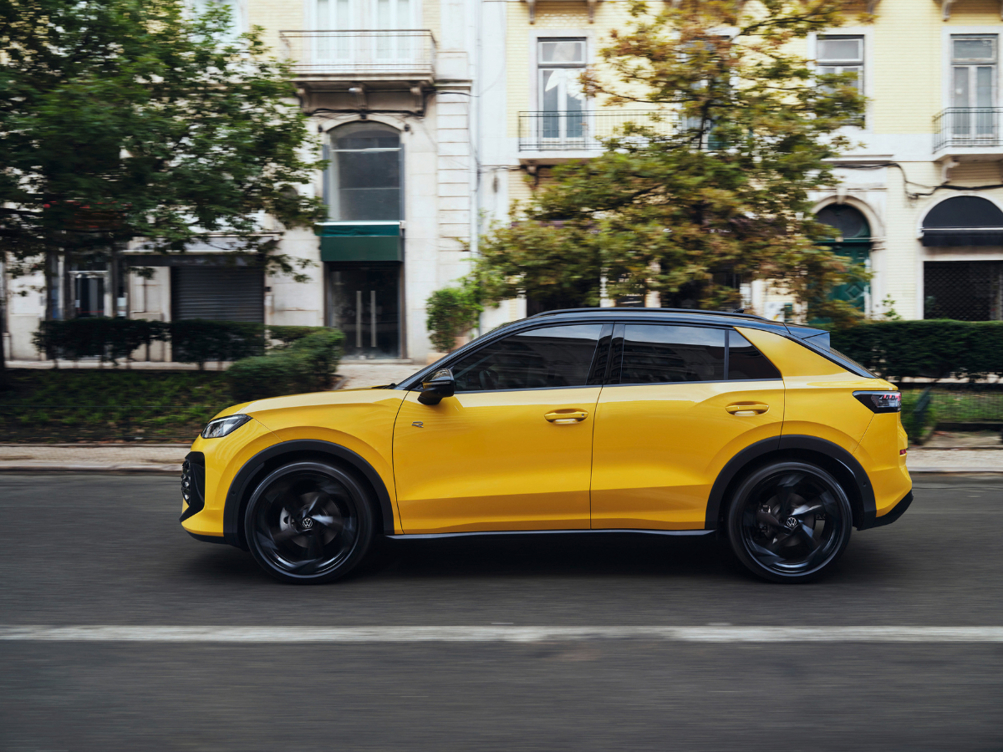
The T-Roc colour palette embraces what one humourist at the media launch called the "German Rainbow" of grey, black and white, but you can also have some genuinely bright hues such as Canary Yellow, Celestial Blue and Flame Red. A black roof adds $1000 to everything except a black car (obviously).
The more cheerful exterior finishes are also completely new colours for VW.
What’s it like to drive?
You don't perceive dramatic differences from MHEV technology: it can't drive the wheels on electric power, but it can add a little boost to the engine via a starter-generator, make start/stop seamless and generally help run electrical systems that would otherwise put extra load on the engine.
That stop-start superpower also allows the T-Roc to "sail" when appropriate, shutting down the engine and decoupling the transmission. Because it can fire up again in a jiffy.
Another imperceptible eco-feature is cylinder deactivation. The 1.5-litre powerplant has the ability to shut down 2 cylinders under light load to save fuel, and you really wouldn't know it save a small indicator on the dashboard. The technology has been used in other VW Group models previously.
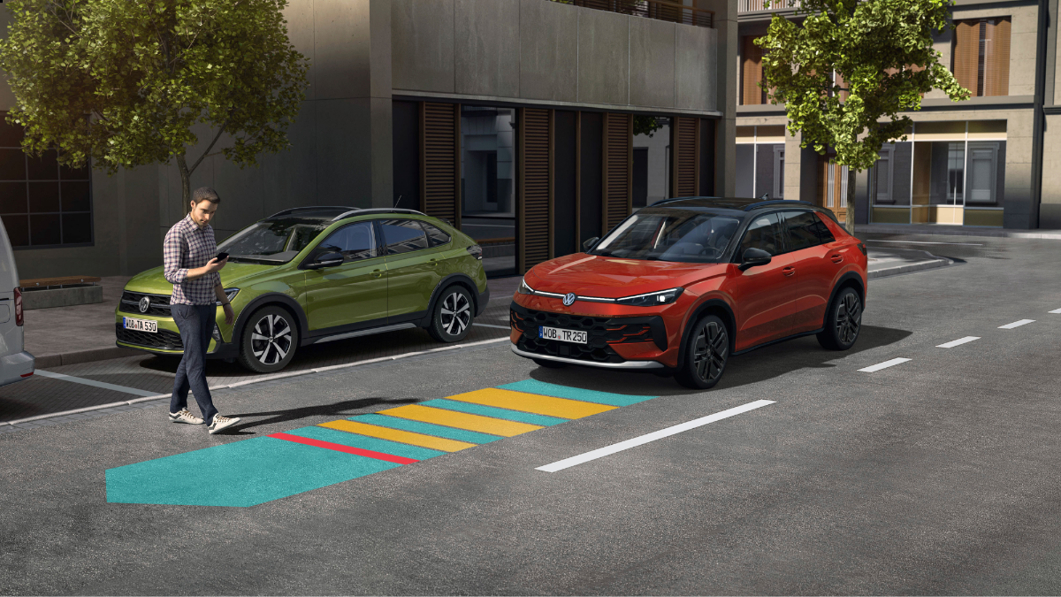
With all of the above in mind, the T-Toc impresses with smooth performance in city driving and on the motorway; we did a little of each on the media-launch day.
The Life has an assured feel on the road, especially in the steering. It's a welcome characteristic when so many modern small cars are devoid of steering weight/communication.
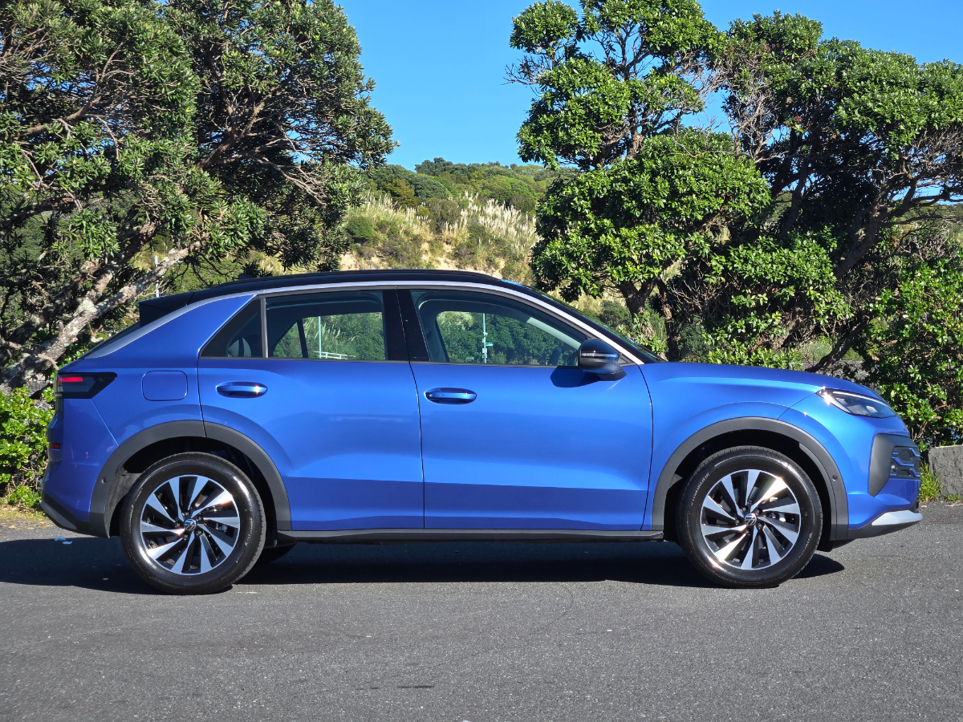
The chassis generally has taken a big step up because the rear suspension has moved from a torsion beam to a more sophisticated multi-link arrangement.
We're yet to spend much time in the R-Line, which has progressive steering, stiffer suspension and bigger wheels. But there's one in the Driven Car Guide garage as you read this, so stay tuned.
What’s the pick of the range?
The Life is generously equipped for an entry-level model, although hardly cheap. There's also a big price jump to the R-Line First Edition ($11k), but when the standard version comes on stream at $59,990, we reckon that's still a relatively appealing proposition.
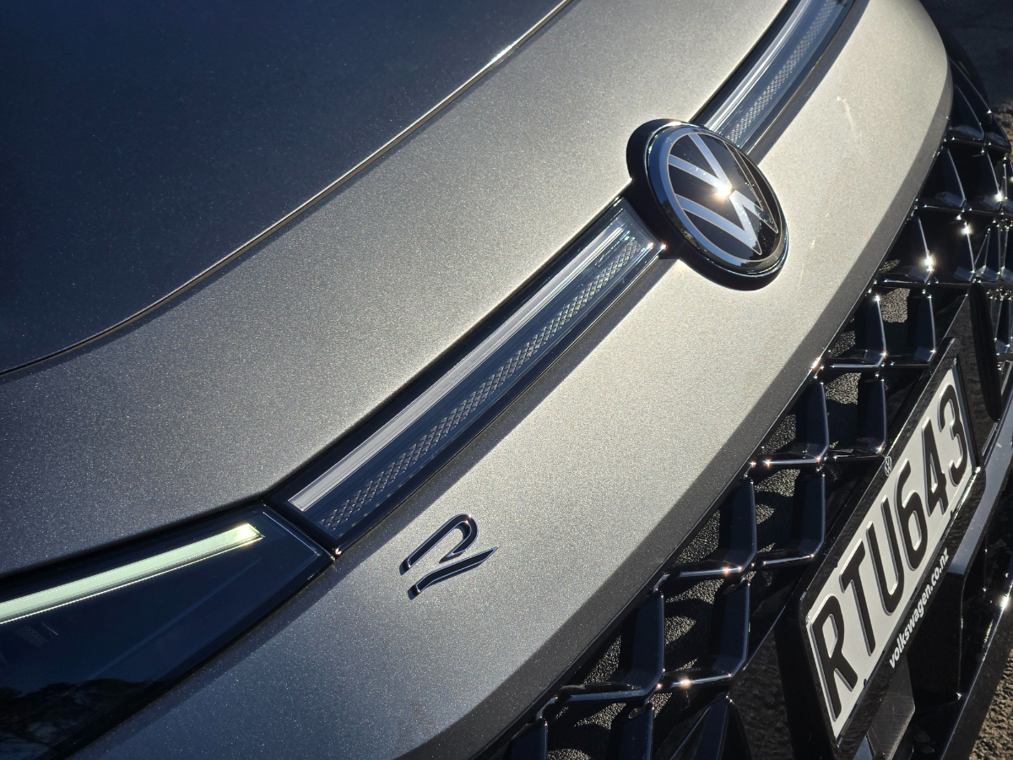
Most Kiwi buyers will go that way, says VW NZ. There's always a rush for the flagship model at launch, but even when things settle down the R-Line is expected to account for over 80% of sales.
What other cars should I consider?
The most obvious rivals for the T-Roc are essentially in-house, with Cupra Formentor ($57,990-$87,990) and Skoda Karoq ($59,500). VW also cites the Toyota C-HR, Mazda CX-30 and Kia Seltos as key competitors; guess you could say they're all compact SUVs with a stylish twist.
But there's no shortage generally of compact-SUVs in the market: Toyota Corolla Cross ($44,990-$55,990), Nissan Qashqai ($53,990-$62,990) and Hyundai Kona ($42,990-$59,990) to name a few, with full hybrid and AWD options in the mix.
You could even go fully electric with the likes of the BYD Atto 3 ($49,990 run-out), Jaecoo J5 ($42,990) and Leapmotor B10 ($39,990-$49,990), which also now comes in plug-in range-extender guise.