


- Ferrari has unveiled the Luce, its first-ever all electric car - a five-door, five-seat super sedan.
- The Luce packs four electric motors and will rocket to 100km/h in 2.5 seconds.
- Ferrari says the Luce has the lowest drag coefficient of any car it has ever built.
Ferrari has finally revealed its first fully electric model, the Ferrari Luce, and its almost certainly not what you were expecting.
You don't get to be one of the iconic niche supercar maker in the world by playing things safe, and Ferrari has clearly taken notice of the fact that previous all-electric high-end supercars that stuck to the traditional two-door mid-engine format have failed to entice buyers, so something radically different was needed.
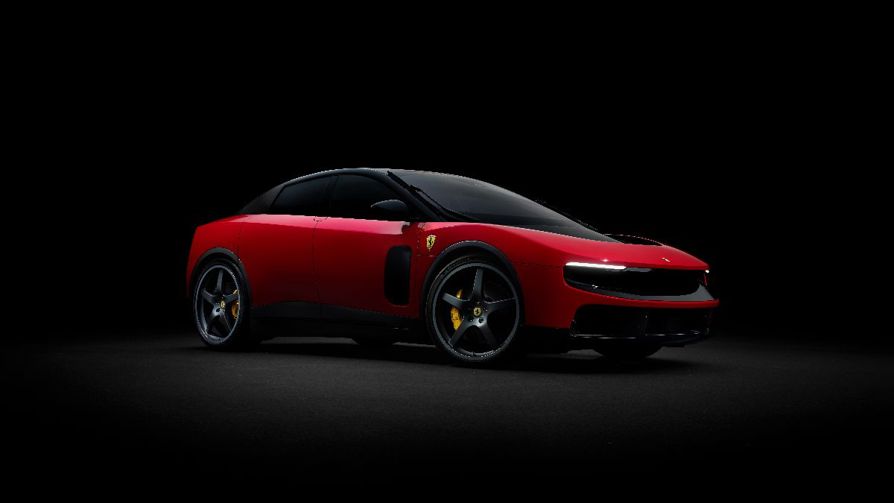
And, regardless of what you think of the Ferrari Luce's design, it certainly is radical.
The design is the result of a collaboration between the Ferrari Design Studio and the design collective LoveFrom, led by former Apple chief designer Sir Jony Ive and Marc Newson, and is an absolutely wild departure from traditional Ferrari design.
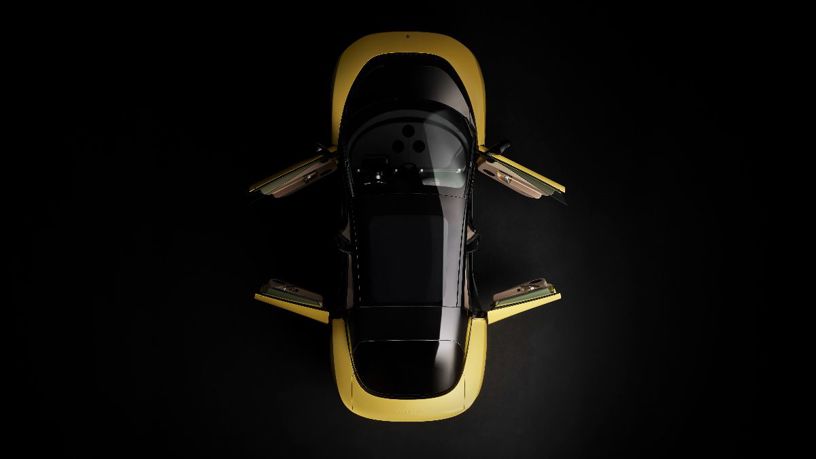
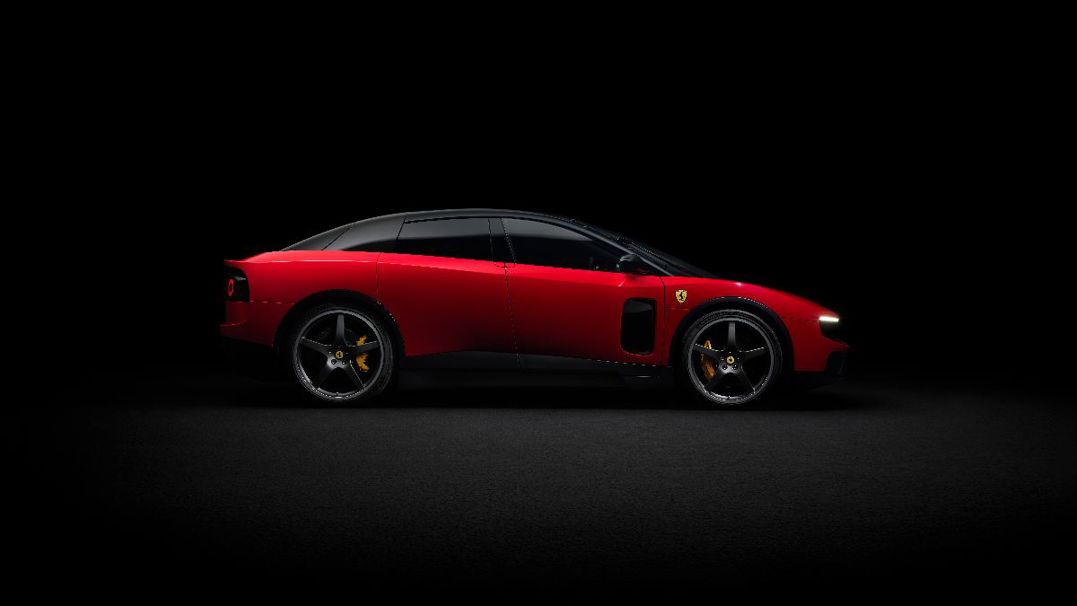
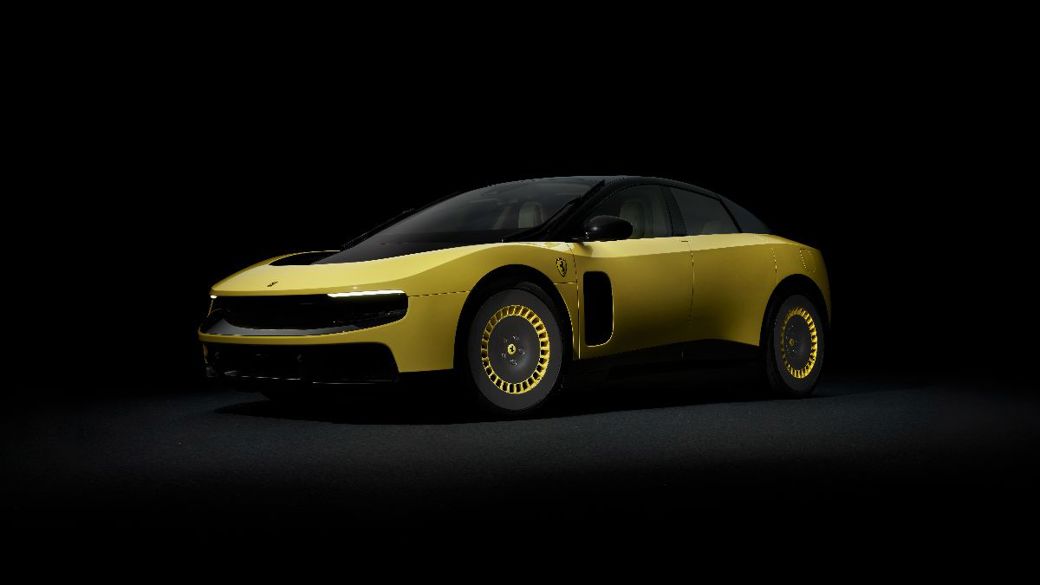
The vehicle’s aesthetic is defined by a "glass house" shell that extends below the belt line, complemented by floating front and rear aerodynamic wings - look closely at that nose; it's not a solid gloss black panel, its actually a floating wing that is suspended over the "bonnet", and the actual nose of the car sits aggressively low, flowing directly off the windscreen and giving the impression that it is all a single piece.
I order to not break the flow of the windscreen into the nose of the car, the windscreen wiper home position has been shifted so that they sit vertically at the outside edges of the windscreen, something that also aids the Luce's aggressive aerodynamics.
According to Ferrari, the lighting system uses transparent panels that "integrate into the body surfaces" when deactivated, and the Luce also features the largest staggered wheels on a production Ferrari, with 23-inch rims at the front and 24-inch at the rear.
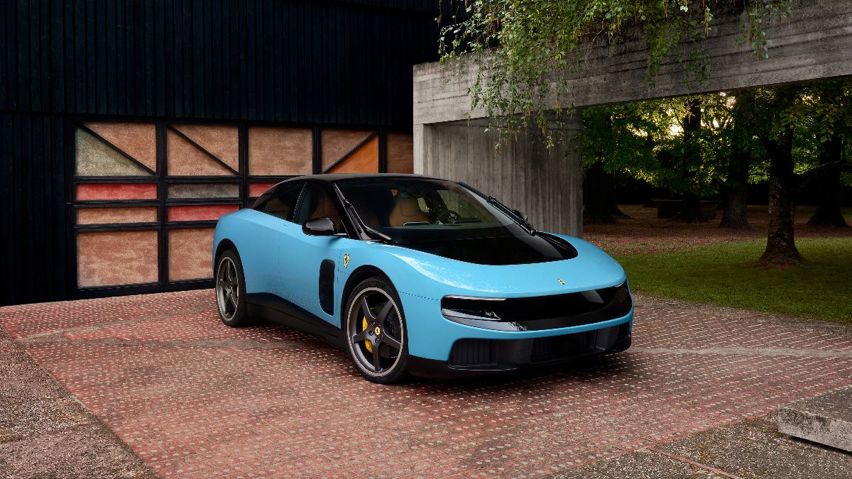
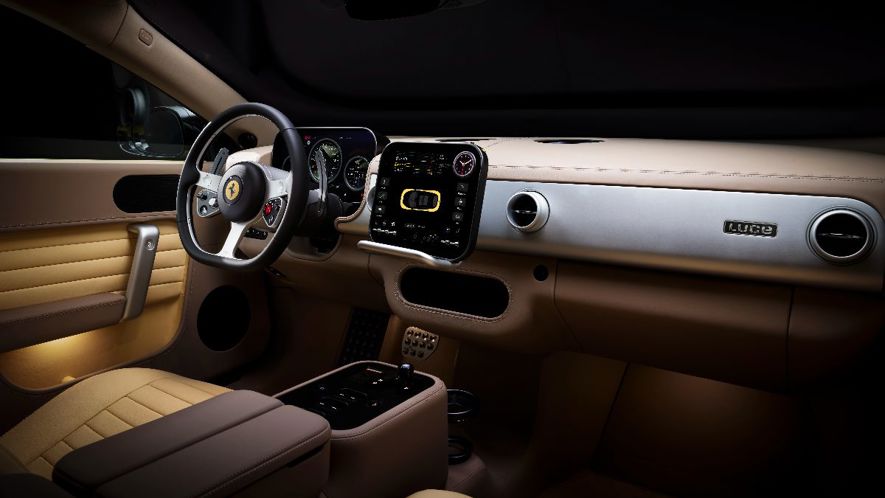
On the inside, the Luce is the first Ferrari to offer four doors and five seats, a configuration made possible by the absence of a traditional front-mid engine and rear gearbox transaxle, meaning that the cabin lacks a central tunnel, as the battery is integrated beneath the floor.
As previously revealed, the Luce's the interior combines mechanical controls - such as buttons and toggles - with multifunctional digital displays developed with Samsung. Construction materials include recycled anodised aluminium, Corning Gorilla Glass, and, of course, leather.
Developed entirely in Maranello, the Luce sits on a bespoke platform and uses an in-house manufactured powertrain that incorporates over 60 new patents.
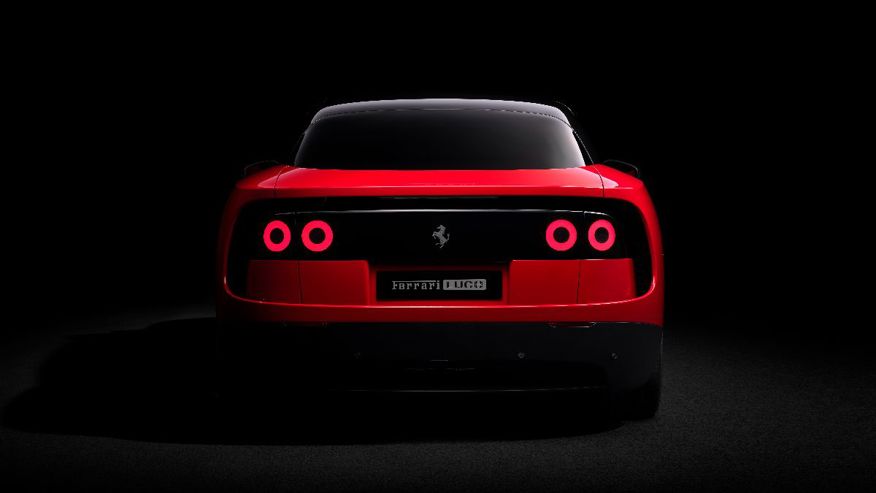
Of course, it goes without saying that the Luce is enormously powerful. With an 800V architecture, the Luce is powered by four permanent magnet synchronous motors - one on each wheel - that are derived from the F80, and are capable of reaching 30,000 rpm at the front and 25,500 rpm at the rear.
The rear motors deliver 310kW and 355Nm, while the front motors pack 105kW and 140Nm - that's each, by the way; the total combined output is a staggering 722kW and 990Nm, with a truly enormous maximum of 11,500Nm of torque measured at the wheels.
This translates into a 0 to 100km/h time of just 2.5 seconds, with a 0 to 200km/h sprint of 6.8 seconds, and a top speed of over 310 km/h.
The Luce is uses a 122kWh battery pack that serves as a structural element of the chassis. It supports fast charging up to 350kW and provides a range more than 530km. Despite the enormous battery, the Luce's kerb weight kept under control through the use of hollow castings and aluminium extrusions, clocking in at 2260 kg.
This may seem heavy for a Ferrari, but it is worth bearing in mind that the Luce is a big car - it is just over 5 metres long (5026mm) and is 2 metres wide, with a 3 metre wheelbase.
Ferrari says the Luce achieves the lowest drag coefficient in Ferrari’s road-car history through the use of active aerodynamic grilles for heat management and an active ride height system that can lower the front of the car by 10 mm at high speeds.
A new Vehicle Control Unit (VCU) coordinates the powertrain and the Side Slip Control X system, updating targets 200 times per second, and the Luce features electric all-wheel drive and an independently steering rear axle. A proprietary paddle-based system manages torque: the right steering wheel paddle provides progressive acceleration, while the left paddle controls energy recovery and deceleration.
Of course, sound is an important part of the Ferrari experience, and rather than using synthetic audio, Ferrari has developed a patented system to capture mechanical vibrations via an accelerometer on the axle, filtering and amplifing the signals through internal and external speakers to provide "functional feedback" to the driver based on the e-Manettino setting.
Initially Ferrari toyed with the idea of an F-80 hypercar-style EV, but quickly discounted the concept, with head of vehicle engineering, Matteo Lanzavecchia, telling Top Gear UK "If you have a mid-engined car and you remove the engine and fuel tank and replace them with a battery pack and electric motor, you’re not gaining anything in terms of centre of gravity or the moment of inertia. But by doing something bigger, we were able to deliver space for five people."
According to Lanzavecchia the Luce's centre of gravity is 95mm lower than the Purosangue SUV, and Ferrari has improved the torsional rigidity by integrating the battery pack into the body, essentially re-thinking everything about the car.
Regardless of what you think of the Luce's styling, it is exactly the sort of radical leap the Ferrari needed to take with its first fully electric vehicle, blending genres into a crossover vehicle that is entirely new for the segment; an SUV or two-door supercar would have been predictable, something the Luce most definitely isn't.
Pricing for the Luce is yet to be revealed, but is likely to be more than the Purosangue, meaning that you likely won't be getting much change out of a cool NZ$1 million, but you will be making one hell of a statement.


