

- Jaguar has finally revealed the car its future hinges on - the all-electric Type 01.
- The company says large GT will compete with the likes of Bentley and Aston Martin.
- New Zealand sales will start next year with the price likely to be around the $300k mark.
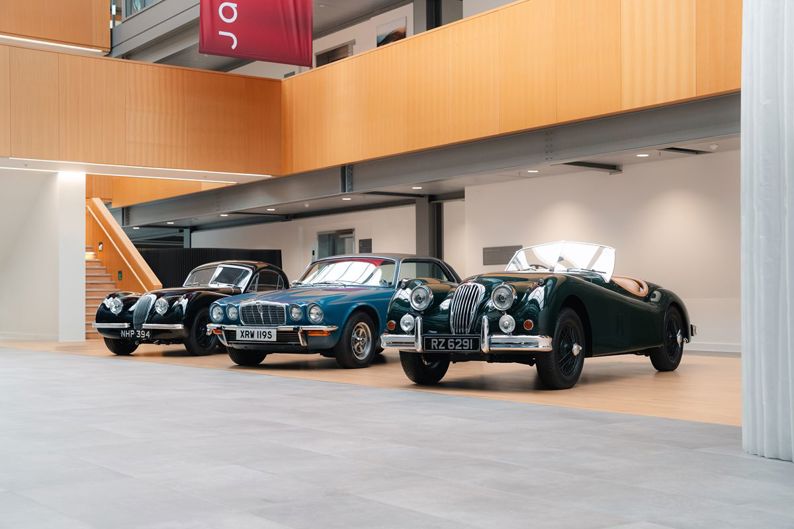
Back in 2024, Jaguar announced it would be axing its entire line-up. Everything from the E-Pace right up to the mighty F-Type was sunset as part of a huge effort from the British carmaker to transition into a fully electric, high-margin luxury carmaker.
Brave doesn’t quite cover it - most manufacturers would at least keep one or two models going to keep some money coming in, but Jaguar could lean on the bank accounts of Range Rover for survival while it rebuilt, but that well is only so deep. And then there was the rebrand, that was controversial to say the least...
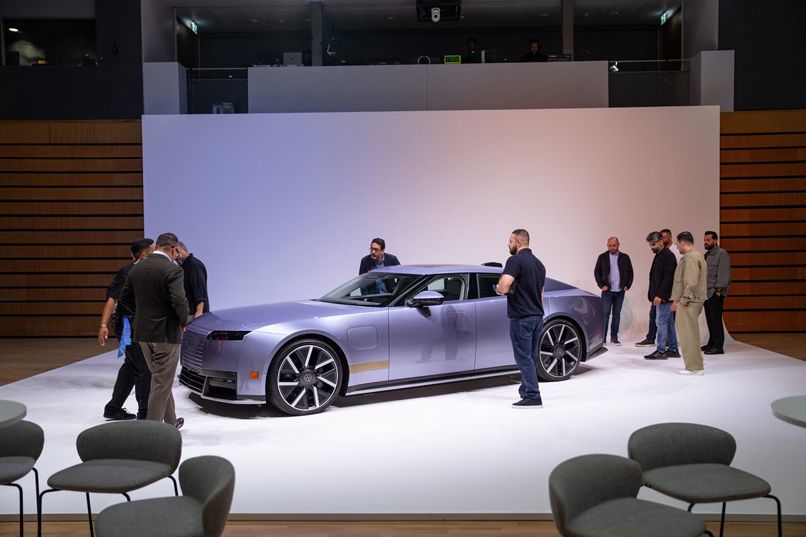
The fruits of that work are here now, in the form of the Type 01. It’s a huge undertaking, a ground-up new car with a brand new electric platform, bespoke motors and a handful of engineering breakthroughs. While it has an immense amount of pressure on it to perform financially, the most important part about the Type 01 is that it needs to be a true Jaguar.
That’s the message we’ve been told at the launch of the car, something Jaguar’s engineers and designers have gone to great lengths to achieve in the new age of electricity.
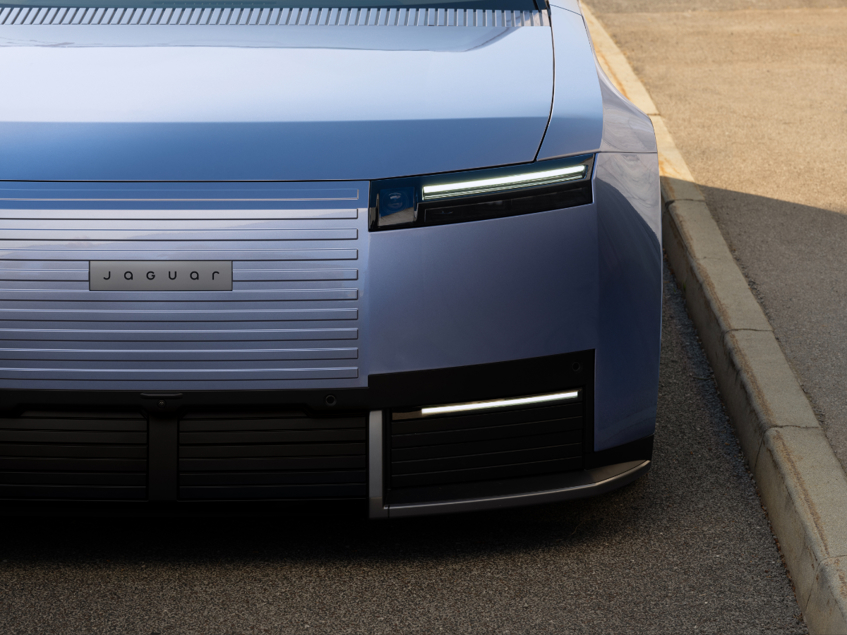
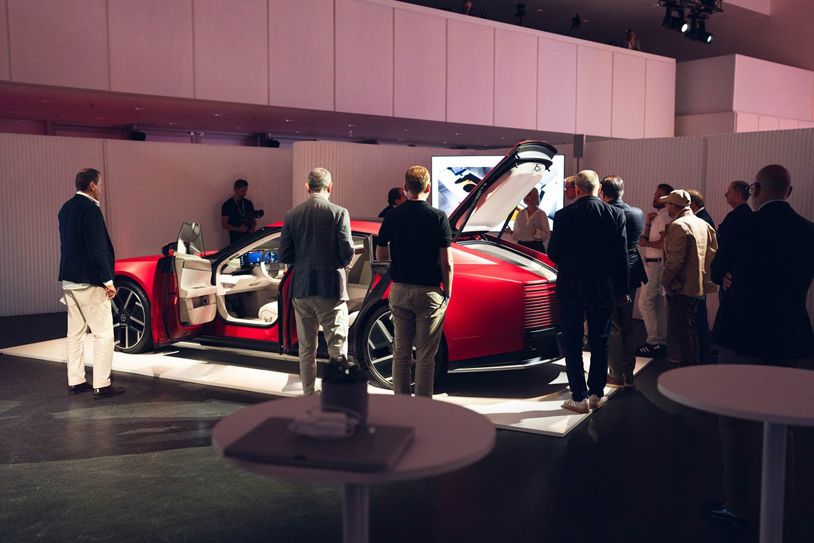
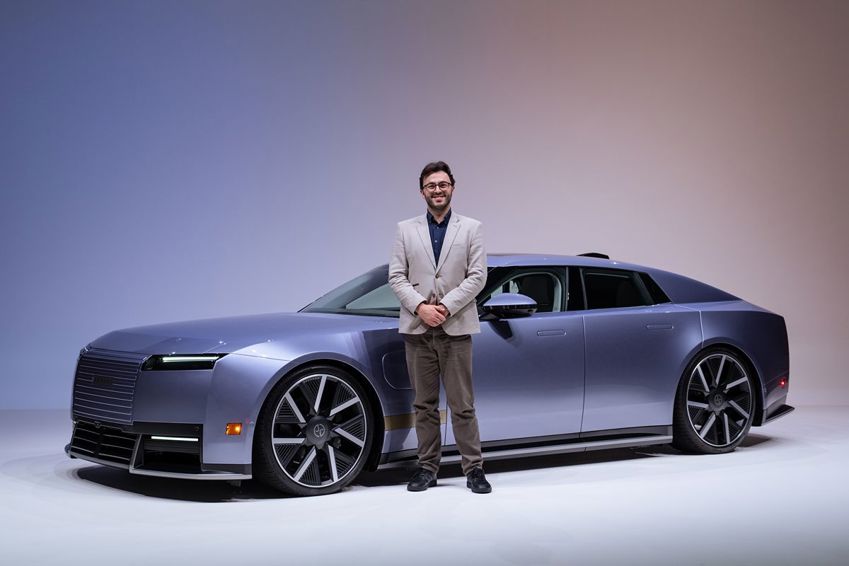
Starting with the design of the Type 01, you might notice it’s very similar to the Type 00 concept from 2024. So similar, in fact, that it’s basically the same design but with four doors, homologation-spec mirrors and some slightly tweaked taillights.
You’ve got some typical Jag characteristics; a low roofline sweeping into a fastback shape, short overhangs, and a long bonnet. More modern features include the blunt nose with strakes emulating the design of a traditional grille (also mirrored at the back), four slim light bars, one on each corner of the front end, active aerodynamics, and huge 23-inch wheels.
Around the back are four full-width LED taillights nestled in the rear end. There’s undoubtedly a lot of presence here, and it’s certainly not like anything else on the road right now.
A big highlight is the ‘Impossible Panel’, the exterior body section covering the extremely tight transition between the top of the wheel arch and the bonnet. Chief Engineer Jon Darlington's team dedicated 1500 hours of refinement to perfecting its geometry, and it took 22 weeks to achieve the first successful panel press in production testing.
Inside the Type 01 is a very snazzy, very stylish twin-spoke steering wheel that looks a tad from the 1980s (in the best way, of course), sitting in front of a long digital display that extends behind the dashboard on the passenger’s side.
A smaller display perches just north of the centre console which controls the main interior features of the car, and it’s very minimal and very suave, but that’s not even the main act: stretching from the front right through both rows of the seats to the back of the cabin is a thick central, brass-anodised aluminium spine which, Jaguar says, creates four individual spaces for each passenger.
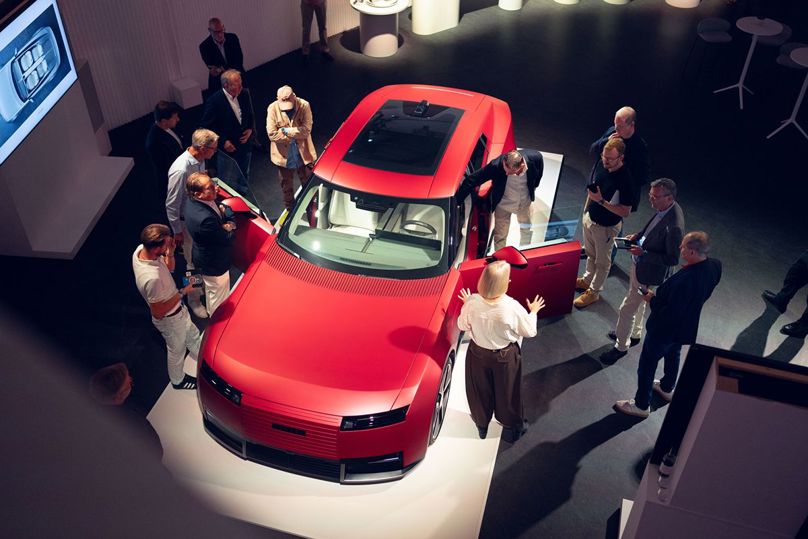
It certainly sets the Type 01 apart from the competition, which is stiff at this point (we’ll get to that soon). Other interesting bits about the interior? Concealed compartments, luxury materials inspired by “travertine stone and artisan textiles”, and “unexpected moments of colour”.
Under the skin is an all-new electric platform and tri-motor powertrain developing “up to” 1000 horsepower (or about 758kW in today’s money) along with 1345Nm of torque. The front motor develops 250kW while the twin rear motors push out 310kW each.
Integrated Traction Management and fast-switching silicon carbide inverters respond in one millisecond to deliver huge performance for what is, at the fore, a cushy grand tourer. Hitting 100km/h from standstill takes 3.3 seconds, but Jaguar’s philosophy of always having power in reserve means it’ll pull from 100km/h to 180km/h in under four seconds.
Aerodynamically, the Type 01 is the slipperiest Jag ever built with a drag coefficient of 0.23cd thanks to active vanes, a three-stage spoiler and very clever engineering. The rear of the car is designed to build positive pressure, which actually delivers an extra 4kg of thrust at 140km/h.
The battery is a huge 120kWh NMC slab, offering a range of more than 700km of range. An 850 volt subsystem means it can add more than 320km in 13 minutes on a 350kW fast charger, while parallel 425 volt charging allows up to 250kW fast charging on other chargers.
Tricky tricks like deactivating the inverter at highway speeds, a brand-new junction box built into the strut brace and variable silicon carbine computer trips all contribute to boosting efficiency.
As for driving, the chassis features a 50:50 weight distribution and is the stiffest ever built by Jaguar, so it should be pretty good in the bends (despite its enormous 5.2-metre length).
The suspension is a double wishbone and rear integral link layout with switchable dual-volume air springs on all four corners, using twin-valve active dampers working at 500 times per second.
There’s also rear-wheel steering, drive modes (Jaguar, Dynamic, Efficient, Ice and Snow) and regenerative braking, which includes a one-pedal drive mode. Of course, we’ll have to wait until we get behind the wheel to know for sure, but it looks like Jaguar has carried on its sporting pedigree into the electric age.
Production won’t kick off until early 2027, so it’ll be a while yet before we see the Type 01 on the road, but we’re excited. More intriguing is what Jaguar wants to sell the 01 for; it isn’t saying exactly, aside from the fact it’s going to compete in the top end of the premium market.
It’s a “white space” Jaguar wants to compete in, not quite toe-to-toe with Bentley or Lamborghini or Ferrari, but not far off. Early guesses are putting it at just shy of the $300,000 mark.


