


What are these new cars all about then?
After a few years of flailing wildly in terms of design and market approach across its range, Mercedes-Benz is pressing the reset button and taking a more holistic approach across its passenger vehicle range, including erasing the weirdly specific design distinction between its ICE and BEV vehicles.
This means the confusing electric family is no longer a mish-mash of bespoke EQ designs and ICE vehicles with electric powertrains, but rather a new series of platforms with a unified styling approach, similar to BMW's recent Neue Klasse pivot that still sees EVs and ICEs on separate platforms, but wearing unified styling.
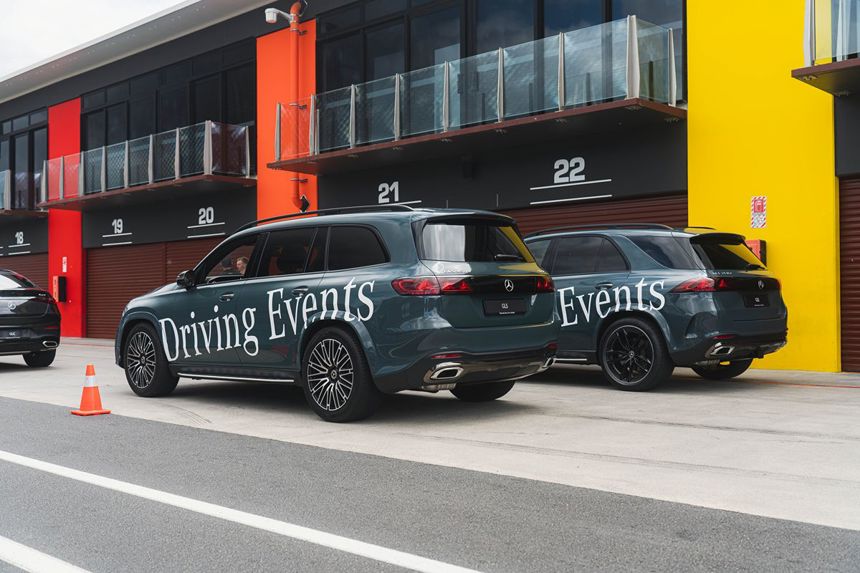
But while BMW is still laser-focussed on sharp handling and sportiness, even for its electric SUVs, the common thread running through Mercedes-Benz's latest SUV line-up is a concerted effort to bring its luxury models up to date with the brand's latest technology, while retaining the traditional strengths of comfort, refinement and long-distance ability.
At the recent customer drive event Mercedes-Benz held at Hampton Downs we had a chance to drive three new Mercedes SUV models that take quite different approaches to achieving this goal; the full-sized diesel-powered GLS flagship to the more conventional GLE and the all-electric GLC 400.
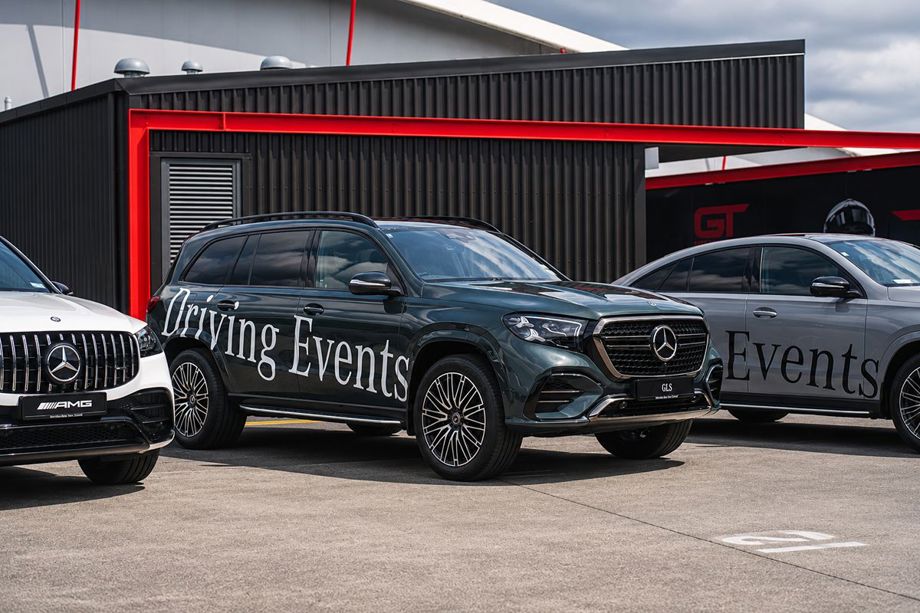
The GLS remains Mercedes-Benz's full-sized luxury SUV flagship, and the 2026 update reinforces its position as something of an S-Class for the SUV set. There's no shortage of road presence, but the latest styling brings a more contemporary face, with a redesigned grille, prominent three-pointed star detailing and updated lighting signatures.
The external changes are accompanied by a significant technology upgrade inside, where Mercedes-Benz's latest MBUX Superscreen brings three 12.3-inch displays together beneath a single glass surface, while the latest Mercedes-Benz Operating System (MB.OS) also brings improved connectivity, personalisation and over-the-air software updates.
Seven seats remain standard, with electric adjustment across all three rows, while air suspension with adaptive damping is also part of the package.
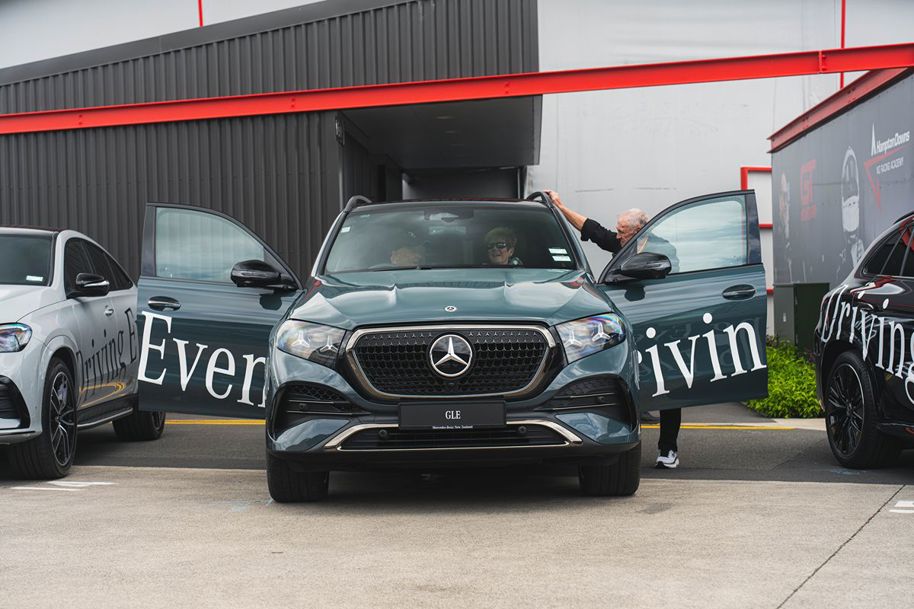
As always, the GLE occupies the middle ground in Mercedes-Benz's SUV family, offering much of the technology and luxury of the larger GLS in a more manageable package. For 2026, it receives a substantial refresh, with revised exterior styling, updated lighting and a new grille treatment.
The cabin also gets a particularly significant overhaul, adopting the same three-screen MBUX Superscreen arrangement as the GLS, along with the latest MB.OS software. Mercedes-Benz has also updated the steering wheel controls and driver assistance systems, bringing the GLE closer to the brand's newest passenger cars in terms of its digital experience.
The third SUV we sampled was the big one, however, despite physically being the smallest of the three: the all-new GLC 400 4Matic Electric. Representing a significant step for Mercedes-Benz, the GLC 400 is a medium-sized luxury SUV developed from the ground up around an electric drivetrain rather than adapted from an existing combustion-engine platform.
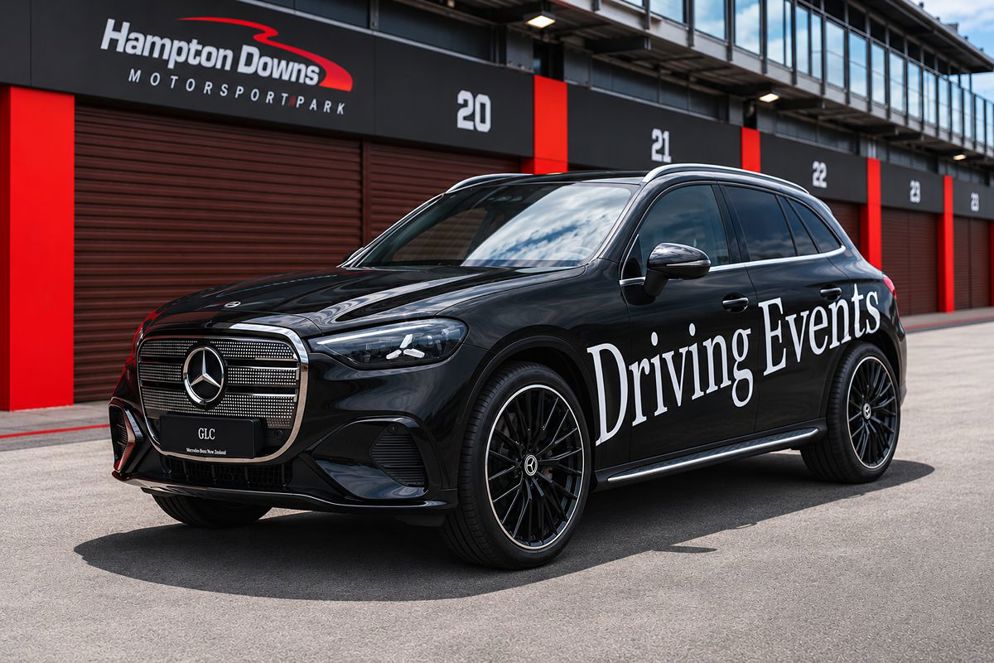
It retains recognisable GLC proportions, but introduces a more distinctive design language, most notably at the front, where the traditional Mercedes-Benz grille has been reimagined as an illuminated feature incorporating hundreds of individual LED elements.
Inside, the GLC takes the digital approach further still, with a massive 39.1-inch MBUX Hyperscreen stretching across the dashboard. The cabin also introduces some interesting touches, including a panoramic roof that can switch between transparent and opaque, while the latest software brings enhanced connectivity and personalisation.
But as well as being incredibly high-tech, the GLC retains five-seat practicality, offers a 570-litre boot and has a claimed braked towing capacity of up to 2400kg.
How much are they?
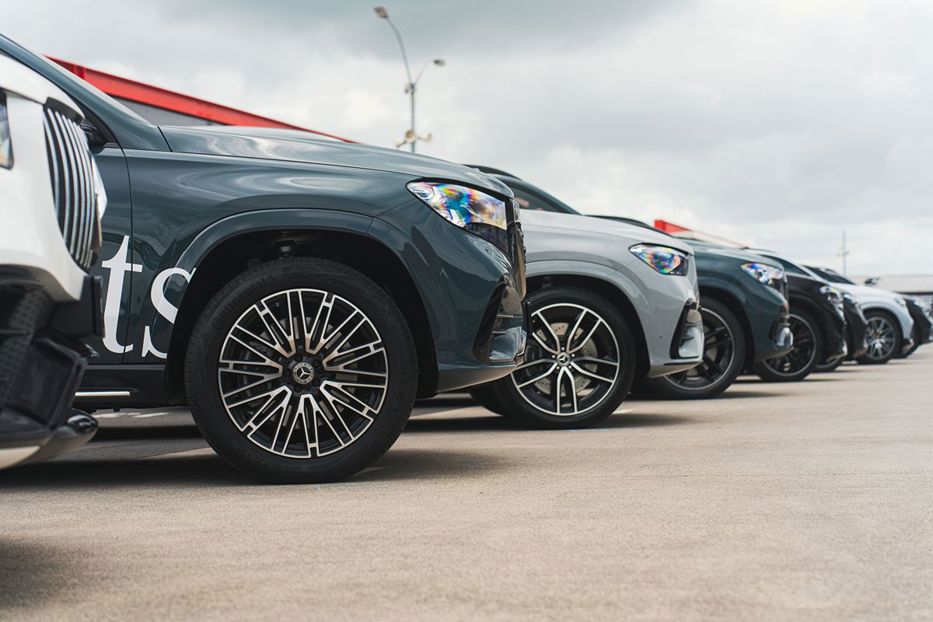
The GLS range starts with the GLS 450d at $198,900, before leaping up to the AMG GLS 63 at $310,900 and eventually the thoroughly over-the-top Mercedes Maybach GLS 680 at $383,900.
The GLE starts at $157,900 for the diesel-powered GLE 350d, rising to $179,900 for the 450e PHEV, and also gets a pair of AMG models that are available in either coupe or wagon forms, starting with the $199,900 GLE 53 coupe and rising to the $272,900 GLE 63 S coupe.
The GLC 400 basically mirrors the BMW iX3 launch range by offering a single model to start with for $128,900, but features a vast array of options that can elevate it to the $140k mark.
What are they like to drive?

The GLS 450d retains the fantastic 3.0-litre turbocharged inline-six diesel engine that is silky smooth and produces 270kW and 750Nm, with a 48-volt mild-hybrid system providing an additional 15kW of electric assistance.
Drive goes to all four wheels through Mercedes-Benz's nine-speed 9G-Tronic automatic transmission, and while it's a substantial vehicle - tipping the scales at more than 2.7 tonnes - the generous torque provides effortless progress rather than requiring the engine to work particularly hard.
On the track at Hampton Downs the big GLS felt impressively composed and effortlessly powerful, with a wonderfully well controlled body and a chassis the felt surprisingly at home when being hustled around the smooth, open corners of the Waikato track. Even the tighter corners exposed very little body roll and willing turn in, not something you expect from a massive luxury SUV.
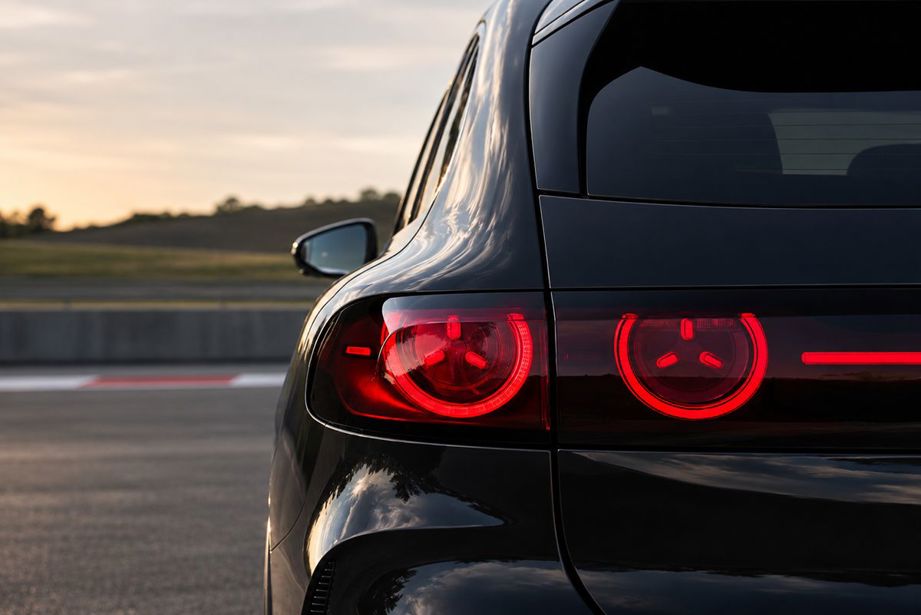
The GLE 350d packs a 3.0-litre inline-six that produces 210kW and 650Nm, with a 48-volt mild-hybrid system contributing a further 17kW. Like the larger GLS, it's also paired with the familiar nine-speed automatic transmission and 4matic all-wheel drive.
On the track the GLE feels, rather unsurprisingly, like a smaller GLS, something that is most noticeable when it comes to length. While the GLE feels a tad more responsive and agile through the tighter corners, the difference between the two is negligible through the faster, flowing stuff.
Underneath, the GLC 400 uses a 94kWh battery and dual electric motors producing a combined 360kW and 800Nm, which is enough for a claimed 0-100km/h time of just 4.3 seconds, putting it firmly into performance SUV territory. However, the GLC throws down its power in a considered, dignified way that never actually feels brutally fast.
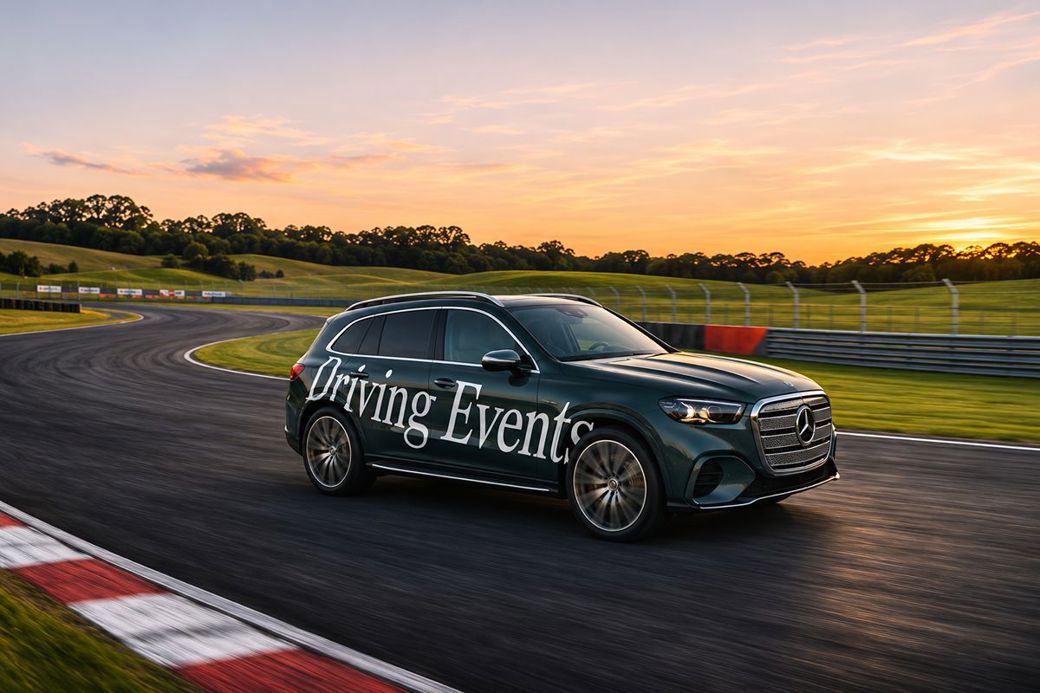
While it clocks in at a relatively hefty 2.5 tonnes thanks to that big battery, the GLC 400 never feels unwieldy - again, thanks to that battery keeping the centre of gravity nice and low. It feels as quick, agile and composed as the BMW iX3, but has a noticeably more luxurious bent to its ride quality around Hampton Down's smooth surfaces.
It will be interesting to drive it on the road to see if it betters the BMW's brittle ride on New Zealand roads. It should, with ease, if our short track experience is anything to go by...
What's the pick of the range?
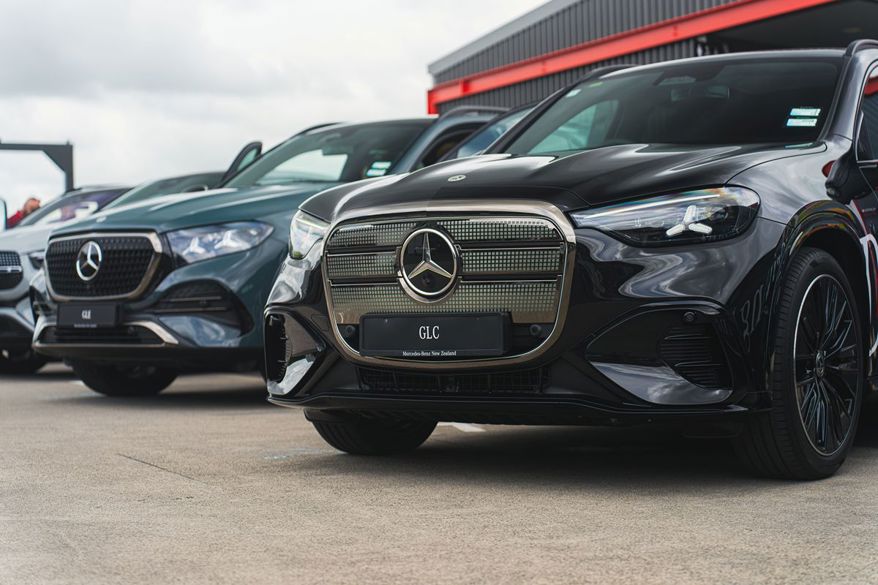
While almost literally no one will be cross shopping the three, the GLE shines as a thoroughly convincing alternative to the enormous GLS without the size and additional cost.
However, it is the GLC that was the star of the range, seemingly offering up a thoroughly convincing competitor to the excellent BMW iX3 in terms of equipment, performance and luxury, but possibly bettering it in terms of ride quality.
The advanced tech on show inside and the effortless grunt on hand could conceivably even convince a GLE buyer to consider downsizing slightly too, at least until the inevitable new-gen electric GLE arrives...
What other cars should I consider?
In terms of the GLS you have some equally enormous competitors like the BMW X7 ($190,900 to $240,800), GMC Yukon Denali ($184,990), new Audi Q9 ($194,990) and Range Rover ($271,900 to $421,900), while the GLE goes up against the upcoming new BMW X5, Volvo XC90 ($112,990 to $149,990) and EX90 ($149,990 to $159,990), the new Audi Q7 ($164,990) and the Range Rover Sport ($181,900 to $396,900),
The GLC 400 really only has one direct competitor in the form of the BMW iX3 ($128,500), although offerings like the Audi Q4 e-tron ($119,490) and Lexus RZ ($109,900 to $134,900) are pretty close competitors, while the Zeekr 7X ($69,990 to $94,990) and Cadillac Lyriq ($102,460 to $111,460) come in cheaper, but compellingly similar.


